






















































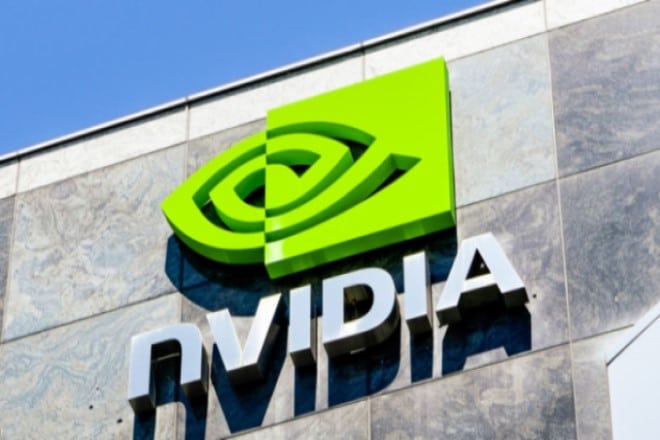

Nvidia’s open source NemoClaw platform could help India deploy sovereign defence AI systems, enabling autonomous agents for surveillance, logistics, cyber defence, and battlefield decision-making while keeping data and infrastructure under national control.
Nvidia has introduced NemoClaw, an open source, chip-agnostic AI platform designed to deploy agentic AI systems capable of planning, reasoning, executing complex multi-step tasks, and learning from outcomes in real time. The system could enable defence organisations to run autonomous AI agents while retaining full control over data and infrastructure.
For India, NemoClaw aligns closely with the ambitions of the IndiaAI Mission and the Defence Research and Development Organisation’s Evaluating Trustworthy Artificial Intelligence (ETAI) framework. The platform can operate entirely on domestic infrastructure, integrate with models such as BharatGPT, and run on approved hardware ranging from DRDO accelerators to edge devices deployed in extreme terrain.
Built on the Nemotron-3 model family, NemoClaw delivers up to nine times faster inference and 20 per cent higher reasoning accuracy on multi-step benchmarks. Its smallest variant uses about 3.6 billion active parameters per token, enabling deployment even in bandwidth-constrained forward locations.
India already uses AI operationally. During Operation Sindoor in 2025, AI tools analysed 26 years of intelligence data in real time, helping achieve 94 per cent strike accuracy. Currently, 129 AI projects are underway under the Defence AI Project Agency.
Potential applications include border surveillance along the Line of Actual Control, maritime monitoring across India’s coastline, predictive logistics, cyber defence, advanced training simulations, and coordinated unmanned combat aerial vehicle operations.
Chief of Defence Staff General Anil Chauhan emphasised the shift toward AI-driven warfare, stating, “Artificial intelligence is going to play a major role in warfare tomorrow, and so would autonomous systems.”
However, Chandrika Kaushik, Director General of DRDO, cautioned that reliance on foreign technologies must be carefully evaluated to ensure trustworthiness and strategic autonomy. Defence experts recommend audits, localised code forks, and air-gapped deployments before large-scale adoption.