















































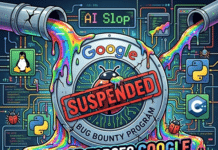

Researchers found that AI-assisted GitHub workflows are changing software development but creating new security and maintenance risks, forcing developers to rethink automation, workflow design, and software supply-chain protection.
Artificial intelligence is rapidly becoming part of software development workflows, but researchers are finding that increased automation may also introduce a new class of security and maintenance challenges. A recent study examining GitHub workflows shows that the growing use of AI-driven automation is reshaping how software is built, tested and maintained.
The study analyzed the evolution of GitHub Actions workflows—automation pipelines widely used for continuous integration and software deployment. Researchers observed that software teams increasingly rely on automated workflow systems to manage repetitive tasks, reduce development time and coordinate complex projects.
GitHub Actions has become a critical infrastructure layer in software engineering, enabling developers to automate code testing, deployment and repository management directly inside development environments. As projects scale, workflows have become more sophisticated and increasingly dependent on external components and intelligent tools.
The research found that workflow evolution is driven by changing project requirements, dependency updates and emerging development practices. However, maintaining these workflows over time is becoming more difficult as dependencies accumulate and configurations grow more complex. Researchers pointed to a need for stronger tooling and AI-assisted support to manage long-term workflow quality and security.
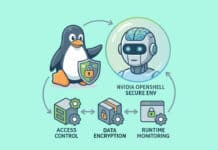
The findings arrive at a time when AI-powered coding agents and automated development assistants are being integrated directly into software pipelines. While these systems can accelerate development, researchers are warning that they may also create new attack surfaces if workflows process untrusted inputs or automate sensitive operations without sufficient controls.
Recent studies identified vulnerabilities where AI agents embedded in workflow systems could potentially be manipulated through external inputs such as pull requests, comments or issue descriptions, leading to unintended actions or security exposure.
For developers and software companies, the shift signals a broader transition in software engineering—from static automation toward adaptive and AI-assisted workflows. The challenge ahead may no longer be building automation itself, but ensuring that increasingly intelligent software pipelines remain secure, maintainable and trustworthy.