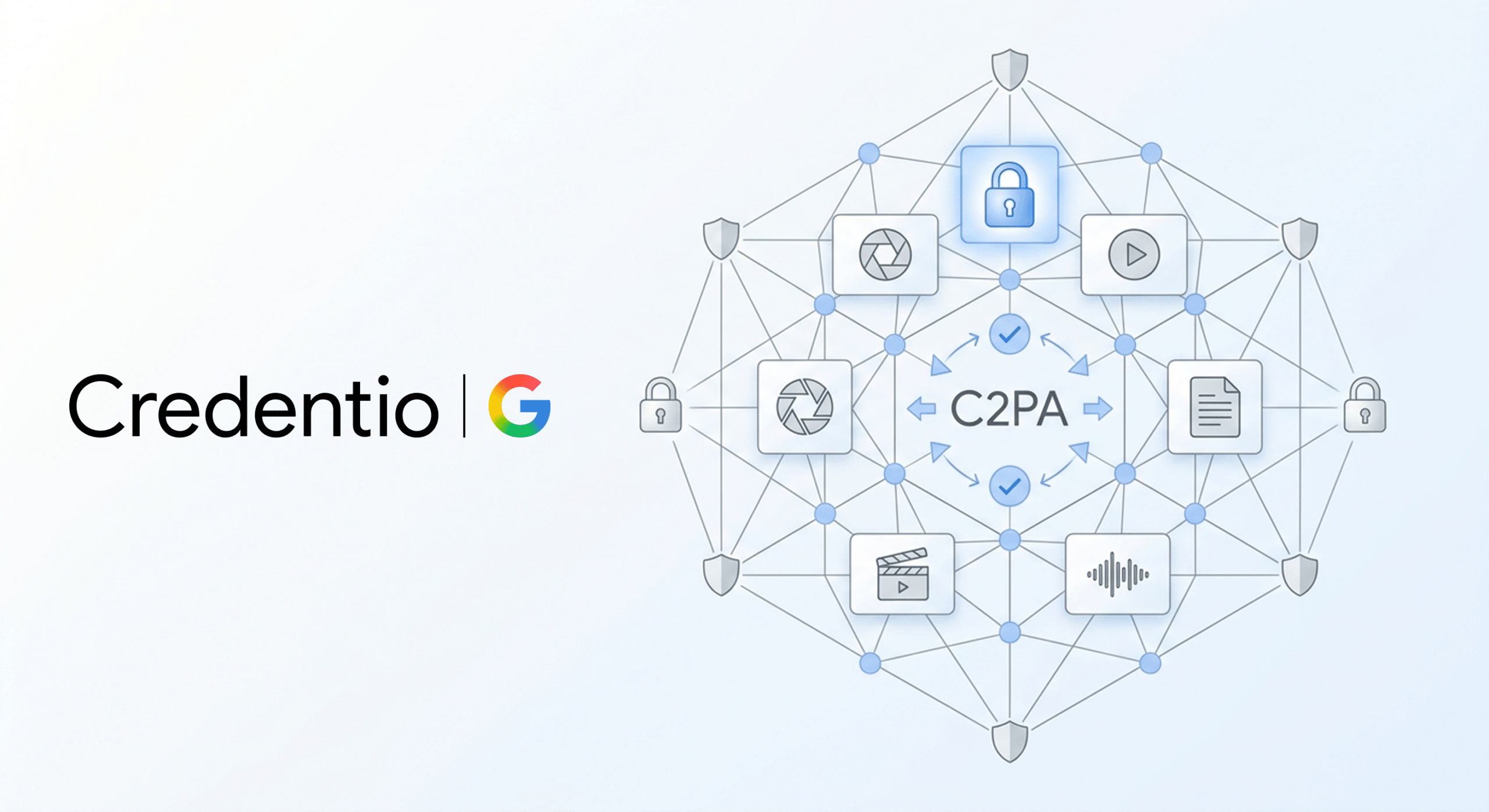
Credentio is an open-source C++ library for locally validating C2PA Content Credentials, with a focus on performance, privacy and integration into media applications.
Google has introduced Credentio, an open-source C++ library for working with the Coalition for Content Provenance and Authenticity (C2PA) Content Credentials. The library currently supports C2PA specification versions 2.2 and 2.4 and is designed to help developers build local content-provenance and validation tools. Google says the same code has been used across nearly 40 of its C2PA-conformant products, handling tens of billions of generated images, videos, audio files and documents.
Credentio is designed to perform validation locally within applications. This allows validation to be performed without sending media files to cloud servers or external validation endpoints. Keeping media within the developer’s local environment can reduce bandwidth use and latency. The approach is intended for high-throughput workflows where rapid validation and data privacy are important.
The library is designed to use memory efficiently when processing large digital assets such as videos and images, making it suitable for both client-side and server-side applications with strict memory constraints.
Credentio supports both official C2PA trust lists and custom trust lists through its application programming interface (API). The parser analyses manifests, assertions, signatures and claims within media files and provides results on their verification status and potential integrity issues.
Credentio currently focuses on validating existing Content Credentials. Google plans to expand the library to support the creation of Content Credentials and their embedding into media file formats as the C2PA specification evolves. The project is open source, and Google encourages developers, security experts and media ecosystem partners to contribute to it.