


















































An open-access forecasting framework combines satellite imagery, deep learning, optical-flow techniques, and weather prediction models to improve short-term photovoltaic power forecasting and support grid management.
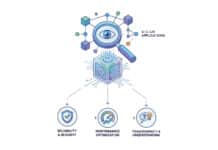
An international research team has developed an open-access framework for intraday, national-scale photovoltaic (PV) power forecasting. The framework combines satellite-based deep learning, optical-flow techniques, and physics-based numerical weather prediction (NWP) models to estimate solar power generation over short time intervals, helping grid operators and energy providers balance supply and demand more effectively.
These include SolarSTEPS, SolarSTEPS-pa, IrradianceNet, SHADECast, IFS-ENS, and bias-corrected IFS-ENS. The models used surface solar irradiance from satellites to analyse an hour of previous observation data and forecast the next eight time steps before estimating PV power through machine learning models that were trained on data from over 6,400 operating PV systems in Switzerland.
Deterministic and probabilistic forecasting is possible in the proposed framework through the incorporation of satellite imagery and weather prediction models. All satellite-based models outperformed the traditional numerical weather prediction models for short-term forecasting. Moreover, the two best PV power forecasting models included SolarSTEPS and SHADECast. Additionally, SHADECast offered better calibrated uncertainty estimates.
According to the researchers, intraday forecasting enables energy companies to predict changes in solar production, reducing electricity balancing costs. This approach is open-access and may be used by researchers, utility companies, and businesses to analyse and develop the methodology further.
Combining an open-access forecasting approach with the use of deep learning based on satellite images and weather forecast models, the researchers created a scalable system that may be helpful in improving photovoltaic power forecasting.