





























































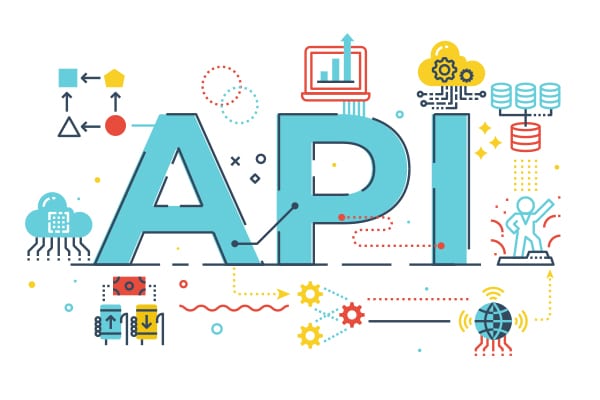
APIs are fundamental building blocks of the digital world, acting as crucial bridges that enable communication and data exchange between diverse software systems. Let’s delve into their significance in modern software development, including their role in microservices and event-driven architecture (EDA).
Digitisation of society has brought immense benefits but has also highlighted and, in some cases, exacerbated the disparities in access to technology and its advantages. At the heart of modern digital infrastructure lie application programming interfaces (APIs), often unseen but critical conduits of information and functionality. Understanding their role is paramount to fostering greater digital equality. For developers and tech enthusiasts, leveraging APIs can significantly enhance the functionality and efficiency of their applications.
API is a software intermediary that enables two distinct applications to communicate and exchange data with each other. In essence, APIs function as precisely defined contracts or bridges that specify the rules and protocols for how software components should interact. This allows developers to access and utilise the functionalities or data of other software platforms and services natively within the applications they are building, without needing to understand the intricate internal workings of those external systems. APIs operate through a request-response mechanism between a client and a server. The client or the application making the request calls the server through the API. The server then processes this request and sends back the appropriate response. For example, when you use a third-party payment system like PayPal on an e-commerce site, an API call is made to process the payment. The API facilitates secure and efficient communication between the e-commerce site and PayPal, ensuring that transactions are completed seamlessly.
The core components of an API define this interaction. These include:
API specification: A structured description detailing the API’s capabilities and how to interact with it, outlining available functions, parameters, and expected responses.
Endpoints: Specific uniform resource locators (URLs) that designate where requests should be sent to access particular API functionalities.
Methods: Instructions that dictate the type of action the client wishes to perform. Common hypertext transfer protocol (HTTP) methods include GET (to retrieve data), POST (to send data or create a resource), PUT (to update an existing resource), and DELETE (to remove a resource).
Parameters: Specific details required for a request, such as location data for a weather API or authentication credentials for accessing a secure service.
Responses: The data sent back by the server application in reply to a request, commonly formatted in JavaScript Object Notation (JSON) or Extensible Markup Language (XML).
Additional components supporting the API ecosystem include API designers, developer portals for discovering and understanding APIs, the API backend that executes the requested actions, and API gateways that manage incoming requests, apply usage rules (such as authentication and rate limiting), and route them accordingly.
APIs are not merely technical conveniences; they are fundamental enablers of interconnected digital ecosystems. The design, openness, and accessibility of these interfaces directly shape the diversity and inclusivity of these digital environments. If APIs are complex, poorly documented, or proprietary and expensive, they can inadvertently create barriers, limiting participation to only those with significant resources or technical expertise. Conversely, well-designed, open, and standardised APIs can foster broader participation, democratising access to digital tools and services. The widespread adoption of standardised API protocols, such as Representational State Transfer (REST) and GraphQL, alongside standard data formats like JSON, has been a crucial factor in their success. This standardisation simplifies the process of integrating disparate systems, reducing complexity and lowering the barrier to entry for developers and organisations of all sizes, including those in underserved regions. This broader capacity for participation in the digital economy is a direct mechanism through which APIs can help bridge digital divides.
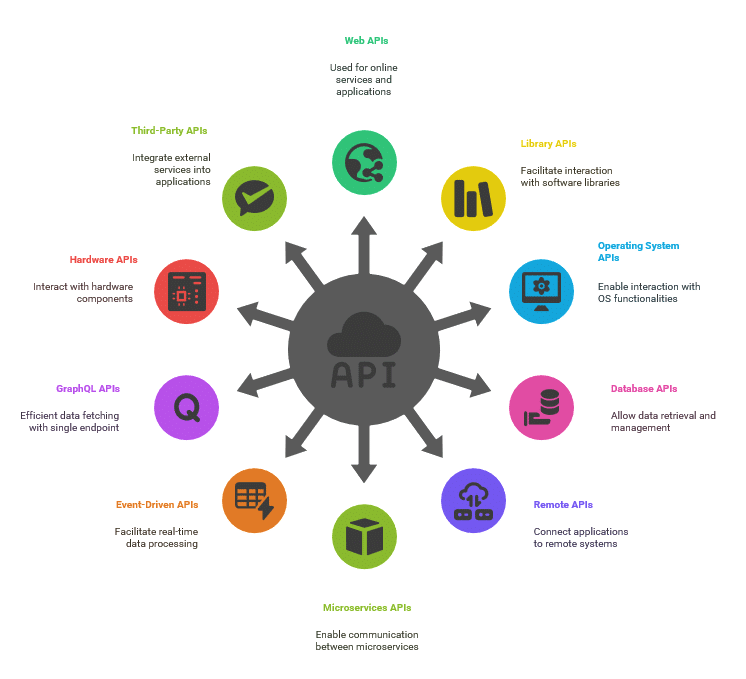
APIs come in various forms, each serving different purposes. Web APIs are the most common, allowing web applications to interact with each other over the internet. Examples include RESTful APIs and SOAP APIs. Library APIs provide functions and procedures for developers to interact with software libraries. Operating system APIs enable applications to interact with the system, allowing functionalities such as file management and process control. Database APIs enable applications to interact with databases, allowing for the retrieval, insertion, and management of data.
The real-world benefits
The numerous benefits of using APIs make them indispensable in modern software development. By leveraging existing functionalities, APIs save developers time and effort, allowing them to focus on building unique features. APIs enable applications to scale by integrating with other services and systems, ensuring seamless performance even as user demand grows. They provide a controlled way to access data and functionalities, ensuring only authorised applications can interact with the system. APIs foster innovation by enabling developers to build upon existing services.
APIs act as bridges that connect disparate systems and unlock data and functionalities. They are ubiquitous in today’s digital landscape, powering many applications and services. Social media integration is a prime example, where APIs enable applications to integrate with social media platforms, allowing users to share content and interact with their social networks. Payment processing is another critical application, where APIs facilitate secure and efficient payment processing, enabling e-commerce sites to accept payments from various providers. Weather APIs provide real-time weather information to applications, allowing users to access accurate forecasts and conditions. Travel booking platforms rely on APIs to aggregate data from airlines, hotels, and car rental services, providing users with comprehensive travel options. APIs provide enhanced accessibility to services and information, facilitating innovation for underserved populations and empowering developers with localised solutions.
APIs play a crucial role in enabling the modular approach to software development in the realm of microservices. Microservices architecture breaks down applications into smaller, independent services that can be developed, deployed, and scaled independently. Each microservice communicates with others through APIs, ensuring that they work together seamlessly. This approach enhances flexibility, scalability, and resilience, allowing organisations to respond quickly to changing business needs and technological advancements.
APIs are also indispensable in event-driven architecture (EDA), a design paradigm in which the program’s flow is determined by events such as user actions, sensor outputs, or messages from other programs. APIs facilitate communication between event producers and consumers, enabling real-time data processing and decision-making. This architecture is instrumental in high responsiveness and scalability scenarios, such as financial trading systems, IoT applications, and real-time analytics.
The emerging trend of ‘API-as-a-product’, where APIs themselves are treated as valuable commercial offerings, also holds potential. If adopted by local enterprises or community organisations in underserved areas, this approach can empower them to offer their unique local data or specialised services to a broader market. For instance, a local agricultural cooperative could expose real-time local market price information via an API. This data could then be used by other developers or businesses to build valuable services for farmers, such as pricing tools or market access platforms. This not only creates potential revenue streams for the cooperative but also disseminates valuable local information, empowering the community and fostering self-sufficiency and local innovation.
The AI-API connect
Artificial intelligence (AI) is fundamentally transforming the API industry. As noted by Marco Palladino, CTO of Kong, “There is no AI without APIs,” underscoring the symbiotic relationship between these technologies. AI is influencing API creation, definition, and description, with AI agents increasingly relying on API usage to perform tasks and automate processes. This includes AI guiding the development and consumption of APIs, and APIs themselves becoming more machine-readable through schema-based generation, which facilitates interaction with large language models (LLMs). Specialised AI gateways are also emerging to handle AI-specific features and security requirements.
The rise of AI agents consuming APIs to automate access to digital services presents a dual prospect. On one hand, it could simplify interactions for users with low digital literacy, making services more accessible. On the other hand, biases embedded within AI agents or the APIs they interact with could disproportionately harm underserved communities. If an AI agent used for accessing social services, for example, carries inherent biases from its training data, it could unfairly deny or misdirect vulnerable users, thereby reinforcing existing inequalities. This underscores the need for robust governance, ethical considerations, and responsible AI regulation.
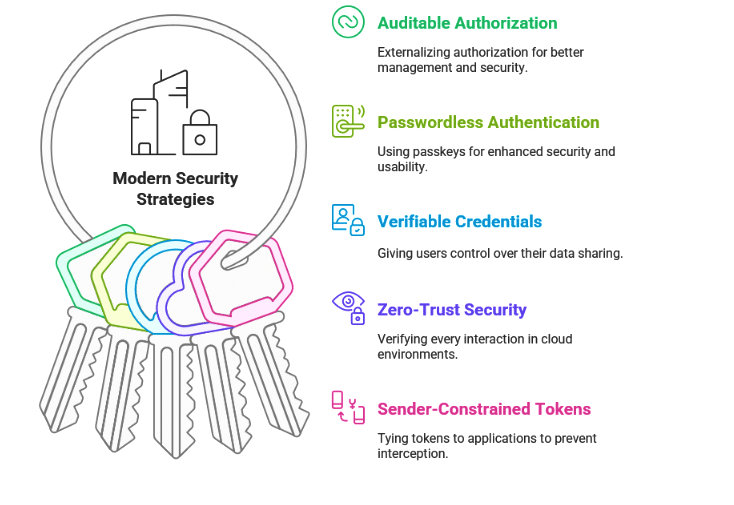
Data privacy and security within integrations are also critical, demanding compliance with regulations such as GDPR and CCPA. For APIs to effectively bridge the digital divide, they must be inherently trustworthy. Weak governance frameworks or security vulnerabilities can disproportionately affect vulnerable users, who may have limited recourse or awareness of the associated risks. Such incidents can erode trust and hinder the adoption of potentially beneficial digital services, thereby undermining inclusion efforts.
A comparative analysis of leading open source API gateways
| Gateway name | Core technology | Key features | Suitability for small enterprises | Suitability for large enterprises | Community strength/support |
| Kong Gateway | NGINX, Lua | High performance, extensive plugin ecosystem, Kubernetes-native, declarative configuration, hybrid/multi-cloud support. | Good (OSS version), scalable | Excellent (enterprise version adds more) | Very strong |
| Apache APISIX | NGINX, etcd, Lua | Ultimate performance, dynamic routing, hot plugins, multi-protocol (HTTP, gRPC, MQTT, etc), rich security plugins | Good, very performant | Excellent, highly scalable | Strong (Apache project) |
| Tyk.io | Go | Fully open source, cloud-native, REST/GraphQL, developer portal, auth, rate limiting, versioning, good documentation | Excellent, easy to start | Good, scalable | Strong |
| KrakenD | Go | Stateless, high throughput, microservices focus, visual designer, GraphQL support, declarative config | Excellent, lightweight | Good, particularly for microservices | Moderate to strong |
| Gravitee.io | Java | Modular (API management, access management, alert engine), API designer, OAuth2/OIDC native, policy enforcement | Good, comprehensive features | Excellent, robust for enterprise needs | Moderate to strong |
The role of open source
Open source software has long been a catalyst for innovation and democratisation in the technology sector. When applied to APIs—through open source gateways, development frameworks, and management tools—this paradigm offers significant value, particularly in efforts to bridge the digital divide by lowering costs, enhancing flexibility, and fostering collaborative communities.
Open source REST API frameworks and tools provide enterprises, including small and medium-sized enterprises (SMEs) and non-profit organisations, with powerful resources to innovate and deliver digital services without the often-prohibitive costs associated with proprietary solutions. The core benefits include:
Cost-effectiveness: Unlike proprietary software that can involve substantial upfront and recurring costs, open source alternatives are typically free to acquire and use. This significantly lowers the financial barrier to entry for developing and deploying API-driven services, making it more feasible for organisations with limited budgets to undertake digital inclusion projects.
Flexibility and customisation: Open source software grants users the freedom to inspect, modify, and extend the source code to meet specific requirements. This adaptability is invaluable for digital inclusion initiatives that often need to tailor solutions to unique local contexts, user needs, or infrastructure constraints. Enterprises are not locked into a vendor’s roadmap and can adapt the software as their needs evolve.
Community support and collaboration: Open source projects are typically supported by active global communities of developers and users who contribute to their development, provide support, share knowledge, and ensure the software remains up-to-date and secure. This collaborative ecosystem offers a wealth of resources, including documentation, forums, and peer support, which can be crucial for organisations lacking extensive in-house technical expertise.
The community aspect of open source is particularly beneficial for digital inclusion projects. These initiatives often grapple with complex, multifaceted challenges that go beyond pure technology, requiring adaptation to diverse social, cultural, and economic contexts. An active open source community can become a repository of shared experiences and innovative solutions for these adaptations, offering best practices for deployment in resource-constrained environments or for engaging specific user groups.
API gateways are crucial components for managing, securing, and scaling API traffic. They serve as a single-entry point for all API requests, enforcing policies, authenticating users, controlling traffic flow, and providing monitoring and analytics capabilities. The availability of robust open source API gateways has democratised access to these enterprise-grade capabilities, allowing organisations of all sizes to manage their APIs effectively. Several prominent open source API gateways cater to the needs of both small and large enterprises (see Table below).
Open source API development frameworks provide the foundational tools and libraries that developers use to build their own APIs. They streamline the development process, enforce best practices, and offer pre-built components for common tasks, significantly accelerating the creation of robust and scalable APIs. The choice of an open source API framework can profoundly impact the speed, cost, and maintainability of digital inclusion solutions. Frameworks that emphasise rapid development and ease of use, such as FastAPI with its automatic documentation and validation, or Flask with its minimalism, can be particularly advantageous for projects with limited resources or tight timelines.
While API gateways handle runtime traffic, comprehensive API management platforms provide a broader suite of tools for the entire API lifecycle, encompassing design, documentation, publishing, analytics, and monetisation. Several open source options offer these capabilities, enabling organisations to strategically govern their API ecosystems. The availability of comprehensive open source API management tools empowers organisations to adopt a more strategic and governed approach to their API initiatives, particularly those focused on digital inclusion. This moves beyond ad-hoc API development towards creating sustainable, well-managed, and secure API ecosystems. Features such as developer portals can encourage broader use and innovation around APIs designed for social good, while analytics can provide insights into their impact and areas for improvement.
By understanding the fundamentals of APIs and their applications, we can appreciate their pivotal role in driving innovation and efficiency in modern software development.