

























































Restoring key features, adding new hardware support, and advancing its move away from Mbed OS toward a faster, more scalable embedded platform.
In a decisive step toward modernizing its firmware ecosystem, Arduino has rolled out Core v0.3.2, the latest update in its ongoing transition from Arm’s now-discontinued Mbed OS to the Zephyr real-time operating system (RTOS). While still in beta, the release delivers critical bug fixes, restores key hardware features, and introduces new capabilities to selected boards.
Zephyr RTOS—an open-source, high-performance OS for low-power, resource-constrained devices—offers a scalable and actively maintained platform. Arduino’s move ensures continued support for developers while unlocking a richer feature set, including advanced threading, interprocess communication, real-time scheduling, and dynamic sketch loading. The latter compiles Arduino sketches as ELF executables, enabling them to run atop a precompiled Zephyr firmware for improved performance and flexibility.
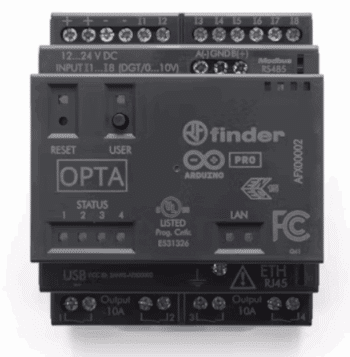
The migration traces back to Arm’s decision to shutter Mbed OS, leaving a gap for boards that relied on it. Arduino’s initial Zephyr-based cores, seeded from a 2022 Google Summer of Code project, debuted in late 2024. The Zephyr transition focuses on a subset of hardware previously tied to Mbed OS: Arduino GIGA R1 WiFi, Arduino Opta PLC family, Portenta H7, Portenta C33, and Nano 33 BLE.
With Core v0.3.2, Arduino upgrades its Zephyr implementation to version 4.2.0, bringing improved stability and feature parity. Notable additions include:
- Portenta H7: SPI, PWM, video, and ADC support.
- Portenta C33: Wi-Fi and Bluetooth Low Energy functionality.
- Imaging: Support for the GalaxyCore GC2145 image sensor.
- Display: Early-stage integration with the Arduino GIGA Display Shield.
These enhancements build on Arduino’s long-term Zephyr vision: faster compilation, reduced binary size, and access to Zephyr’s extensive subsystem ecosystem. Developers can expect a platform that not only matches Mbed OS’s capabilities but extends beyond them, offering a more future-proof foundation for advanced embedded projects.
By aligning with Zephyr’s active, collaborative development model—supported by the Linux Foundation and a broad industry coalition—Arduino positions its hardware ecosystem for sustained innovation, particularly in IoT, automation, and real-time control applications.