





























































gpt-oss-120b and gpt-oss-20b offer advanced reasoning and flexible deployment—optimised to run on laptops, servers, or the cloud.
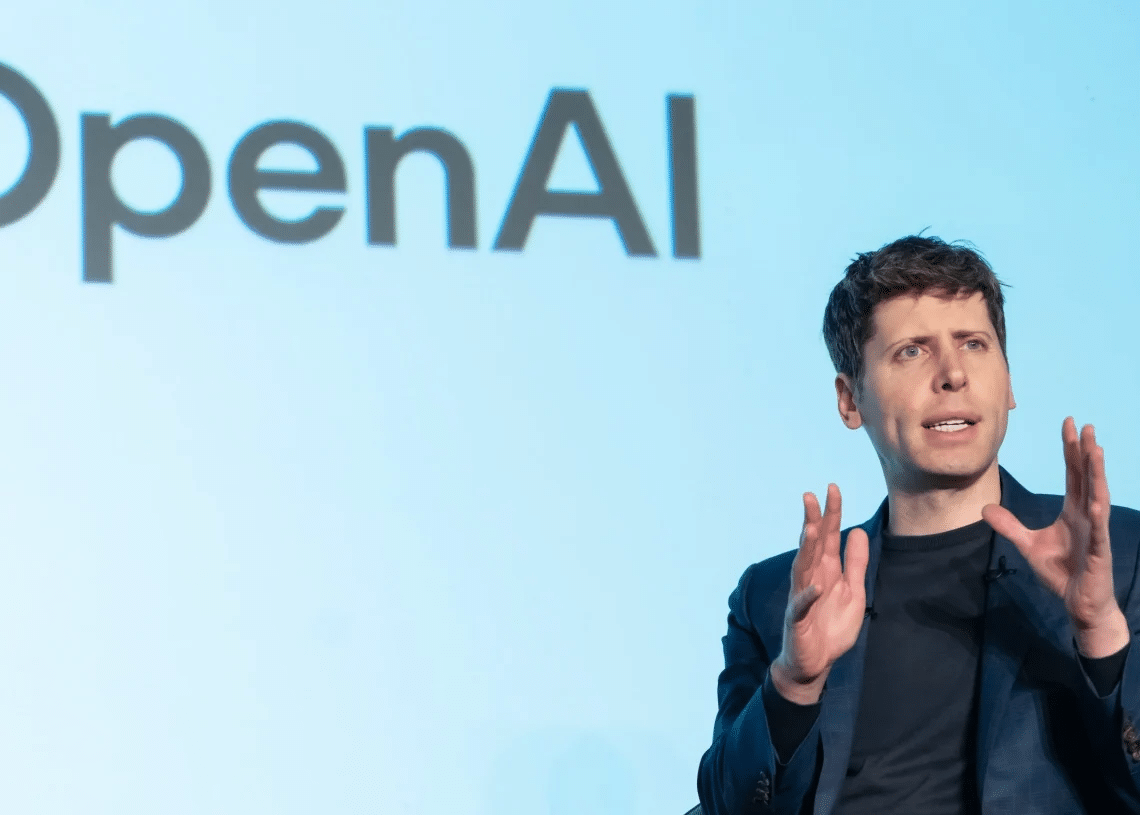
OpenAI has released two open-weight AI models, gpt-oss-120b and gpt-oss-20b, designed to run on local devices with no need for cloud dependency—marking the company’s first open release since GPT-2 in 2019.
The models are designed to provide developers with greater autonomy and flexibility. Unlike open source models, which include access to source code and training datasets, open-weight models provide only the trained parameters (weights), enabling developers to fine-tune them for specific applications without retraining from scratch.
“One of the things that is unique about open models is that people can run them locally. People can run them behind their own firewall, on their own infrastructure,” said Greg Brockman, OpenAI co-founder, during a press briefing.
Two models, two use cases
The larger model, gpt-oss-120b, features 117 billion parameters, but leverages mixture-of-experts architecture to activate only 5.1 billion parameters per task. This efficient routing allows it to run on a single 80GB GPU, making it viable for developers with access to powerful—but not specialised—infrastructure.
Its smaller counterpart, gpt-oss-20b, is tailored for broader accessibility. It can operate on a standard laptop with 16GB RAM, delivering performance similar to OpenAI’s o3-mini model. Both models are optimised for reasoning-heavy tasks, including coding, mathematical problem-solving, and health-related queries.
According to OpenAI, the models were trained on a text-only dataset, with emphasis on science, maths, and coding knowledge, and are especially capable of tool use, such as web browsing, executing Python code, and chaining reasoning steps. They can also optionally connect to OpenAI’s cloud models when multimodal tasks like image processing are required.
Broad deployment options
The models are designed to be infrastructure-agnostic, meaning they can be deployed on laptops, private servers, or cloud platforms such as Azure and AWS. Optimised versions are also available for Windows devices, developed in collaboration with Microsoft. Additionally, both models are already live on Hugging Face and other major AI distribution platforms.
The models are released under the Apache 2.0 license, giving developers permission to modify and deploy them as needed. OpenAI has also conducted internal safety assessments, including adversarial testing, to understand and limit potential misuse.
Industry reception and market expansion
In a related move, Amazon announced that OpenAI’s models are now accessible via Bedrock, its AWS-based generative AI marketplace—a first for OpenAI on the platform.
“OpenAI has been developing great models and we believe that these models are going to be great open-source options, or open-weight model options for customers,” said Atul Deo, Bedrock’s director of product. He declined to provide details on contractual terms between AWS and OpenAI.
The release arrives during an intense period of competition in the open-weight model space. Meta’s Llama models were long considered the benchmark until DeepSeek, a China-based company, launched a high-performing, cost-effective alternative earlier this year, while Meta faced delays with Llama 4.
Although OpenAI has not published benchmark comparisons against rivals like DeepSeek-R1, the company stated that gpt-oss models perform similarly to its o3-mini and o4-mini proprietary reasoning models.
OpenAI, backed by Microsoft and currently valued at $300 billion, is also said to be in the process of raising up to $40 billion in a new funding round led by SoftBank Group.