
























































On India’s 79th Independence Day, the IIT Alumni Council launched the world’s first open source health and longevity platform, anchored by Dr Shantaram Kane’s five-volume compendium Ayurveda Revisited.
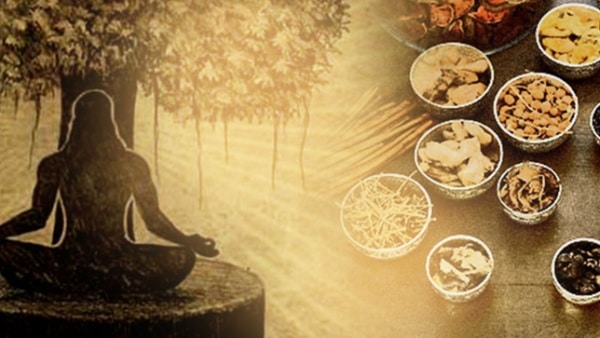
The IIT Alumni Council (IITAC) has launched what it calls the world’s first open-source health and longevity platform, announced on India’s 79th Independence Day. The initiative is positioned as a global healthcare commons, intended to be free, non-commercial and accessible to all. It begins with ‘Ayurveda Revisited: Process Technology Breakthrough’, a five-volume work by Dr Shantaram Kane, which seeds the platform.
The platform aims to integrate ancient practices with modern sciences such as genetics and epigenetics, fostering a collaborative ecosystem where knowledge is openly shared. Ravi Sharma, President of IIT Alumni Council, explained, “On Independence Day, we celebrate freedom. There is no greater freedom than freeing healthcare from exclusivity, with healthcare options freely available to all. Ayurveda can play the same role in medicine that Linux played in computing — rigorous, credible, and open to all. This is not about replacing allopathy, but about standing alongside it — together with Ayurveda and other traditional systems — as part of an integrated, universal healthcare model.”
Dr Kane’s work is central to this movement. Over four decades, drawing on expertise in process engineering and nanoscience, he developed ways to transform complex herbal and mineral formulations into potent ‘Super-Extracts’, effective in only a few drops. Recalling his journey, he said, “I began as a curious tinkerer, much like our ancestors who explored the natural world and its healing powers. My first breakthrough was simplifying the preparation of siddha taila, and to my utter amazement, I found that a dose diluted by a thousand-fold was equally potent. That spurred me to keep experimenting with herbs, minerals and bhasmas. This book brings together the Super-Extracts, along with the process methods, observations and applications as my open-source contribution — knowledge placed in the public domain for families, practitioners and researchers to adapt and expand.”
Supporters within IITAC have framed the launch as part of a larger transformation. Satish Mehta, convener of the IIT Alumni Social Fund, remarked, “Dr Kane combines the precision of an engineer with the vision of a technocrat. His deceptively simple approach opens the way to more accessible, affordable, and research-ready healthcare solutions, spanning the preventive to curative spectrum. His contribution enriches India’s scientific heritage and lays the foundation for a global open-source health and longevity platform.” He added, “The launch builds on IITAC’s Megaspheres framework. Dr Kane has been felicitated as Vishwaguru — the IIT Alumni Council’s highest honour, reserved for members who embody and demonstrate a rare combination of foresight, scientific contribution and enduring impact.”
The publication of Dr Kane’s compendium was supported by Wellness Lifestyle and Beeja House.