





























































EPFL’s open source platform BindCraft is making advanced protein design accessible worldwide by integrating AlphaFold2, slashing barriers for labs and enabling rapid therapeutic applications.
BindCraft, an open source protein design platform developed at EPFL’s Laboratory of Protein Design and Immunoengineering (LPDI) under Bruno Correia, is reshaping how researchers create protein binders. Released last year, it has already disrupted protein design and seen rapid uptake across academia and industry.
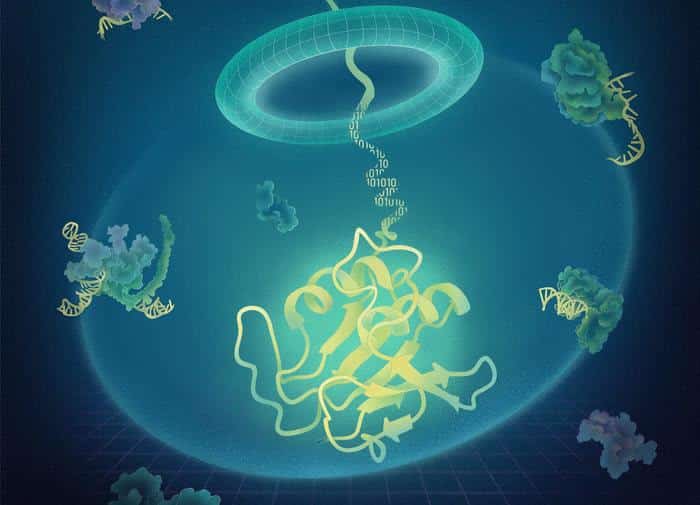
Traditional binder discovery requires screening tens of thousands of protein candidates, a costly and inaccessible process for many labs. BindCraft changes this by directly generating novel binders from protein structure predictions, reducing reliance on large-scale experimental infrastructure. Developed in collaboration with MIT, the platform uses Google DeepMind’s AlphaFold2 to generate sequences with targeted functional properties, shifting the focus from quantity to quality.
“Traditional binder discovery methods involve screening tens of thousands of protein candidates, which requires experimental capabilities and computational expertise that not every lab can afford or has. BindCraft grew out of a desire to develop a more accessible, user-friendly tool that would only need to test a handful of proteins to get a binder,” says Lennart Nickel, PhD student at LPDI.
“With BindCraft, we essentially reverse-engineer the current pipeline by using the protein structure prediction network right from the start to generate novel binders that have the properties we’re looking for,” adds PhD student Christian Schellhaas.
The team validated binders designed to interact with adeno-associated viruses (AAVs), CRISPR-Cas9, and allergens, achieving a 46% average success rate. “For AAVs, the idea is to use these new binders to enable gene delivery only to specific cells and tissues while minimising the risk of potential side effects. In the case of CRISPR-Cas9, our binders can stop its gene editing activity and keep it from acting when and where it shouldn’t,” explains first author and LPDI scientist Martin Pacesa.
Since its preprint release last fall, BindCraft has been swiftly adopted, with applications already in industry. “We were surprised by how quickly our tool has been adopted… We are already working on adapting BindCraft for smaller therapeutically relevant molecules like peptides,” Pacesa adds.