




























































A new open-source Python package streamlines how engineers and makers interface with oscilloscopes, cutting down development time and expanding flexibility across electronic test setups.
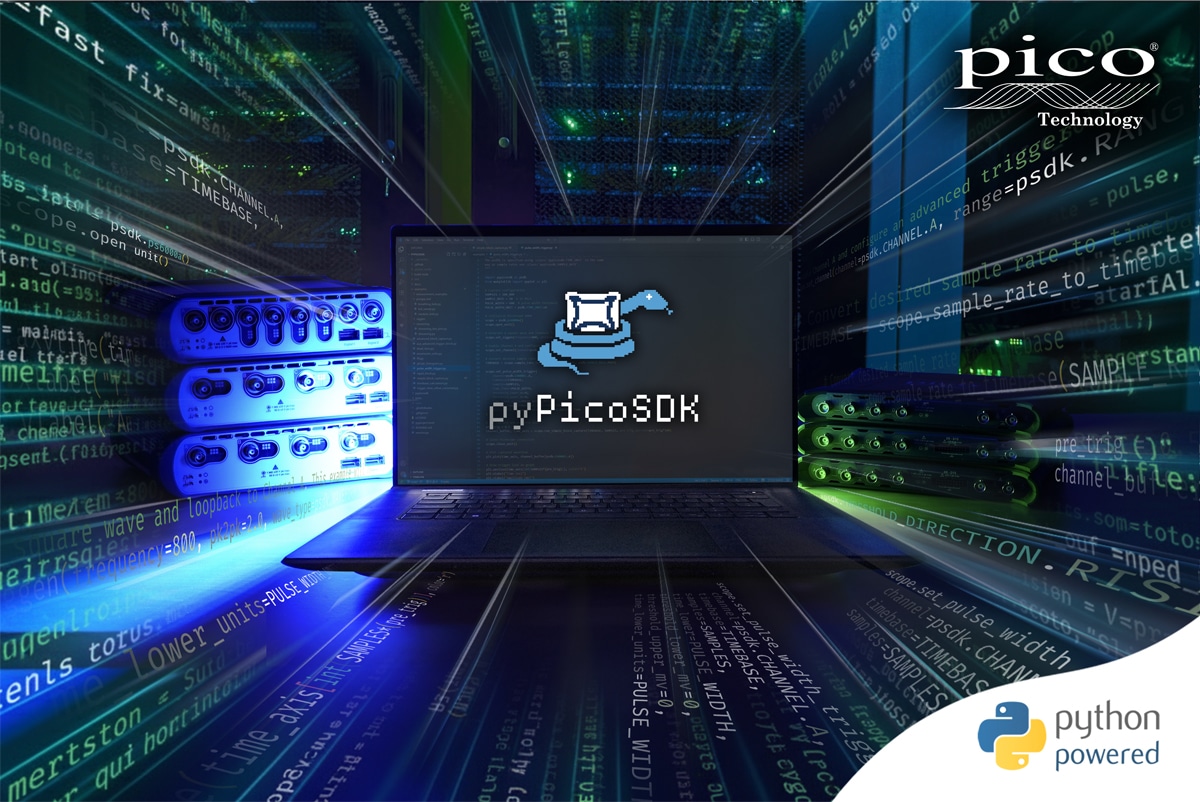
A new open-source Python library, pyPicoSDK, has been released to make controlling oscilloscopes through Python scripts faster and easier. Designed for engineers, researchers, and electronics hobbyists, the library simplifies integration of PicoScope instruments into custom workflows, experiments, and automated testing setups.
Built as an evolution of the earlier picosdk-python-packages, the new package consolidates all driver functions into one unified module. It also introduces a range of helper functions that automate complex commands, aligning closely with Python’s philosophy of readable, efficient, and intuitive programming. Users can now access scope features like data capture, signal processing, and analysis through simple, high-level commands — without writing low-level driver code.
Among its major upgrades, pyPicoSDK supports code completion, type hints, and inline documentation, making it fully IDE-friendly. The inclusion of docstrings within the codebase allows developers to discover function usage without leaving their workspace. A comprehensive “Getting Started” guide, complete documentation, and real-world examples further lower the entry barrier for first-time users.
The initial release supports the PicoScope 6000E and 3000E Series, with more device drivers expected soon. Thanks to built-in compatibility with Python’s scientific stack, users can seamlessly integrate the package with libraries like NumPy, paving the way for advanced data acquisition and signal analysis pipelines.
The open-source project encourages community participation. Users can propose new features, report issues, or share their own application scripts via the project’s GitHub repository. A dedicated forum and support channels provide additional technical assistance and peer discussions. By blending open-source flexibility with robust hardware control, pyPicoSDK underscores the growing shift toward Python-based automation in test and measurement systems — empowering developers to prototype, analyze, and iterate faster than ever before.