
























































A new alpha build of an open middleware core for vehicles moves the industry closer to unified, safety-ready software foundations—paving the way for truly standardized, interoperable software-defined mobility.
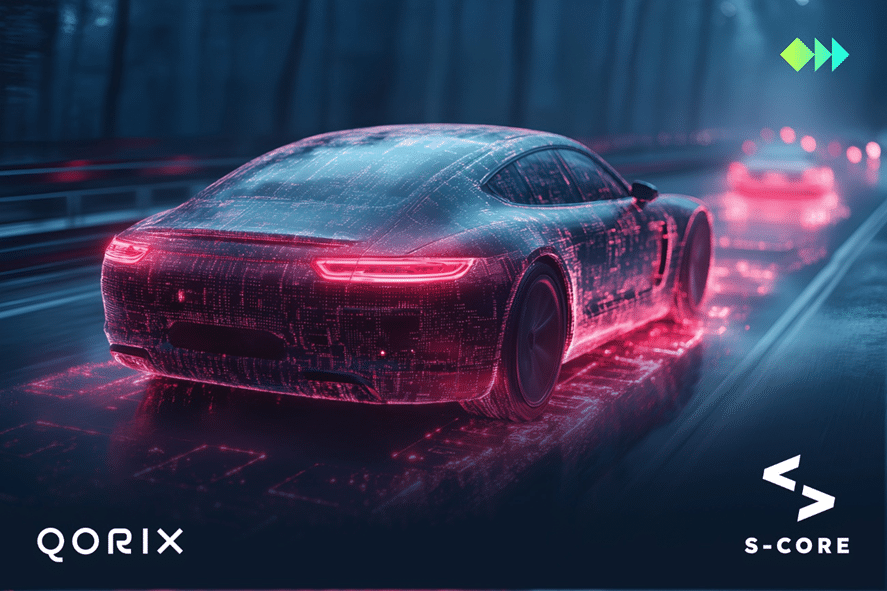
A new push toward standardizing the software guts of tomorrow’s cars is taking shape as Eclipse S-CORE hits version 0.5-alpha—an early but important milestone in building a common foundation for safety-critical vehicle software. The open-source project, developed under the Eclipse Software Defined Vehicle Working Group, aims to reshape how automakers build the brains of software-defined vehicles (SDVs). And one company, Qorix, is emerging as a key force behind the effort.
At its core, it tries to solve a long-standing industry issue: every carmaker and supplier builds its own middleware stack to manage deterministic, safety-critical functions on high-performance vehicle computers. Those bespoke stacks are expensive, slow to evolve, and often incompatible with each other. S-CORE’s answer is an open software base that sits between the operating system and automotive applications, handling communication, execution control, data flows, and safety logic in a consistent way.
The key features are:
- Open, common software base for safety-critical vehicle functions
- Deterministic orchestration of mixed-criticality workloads
- Platform-independent middleware layer for modern vehicle HPCs
- Declarative model for timing, error handling, and cause-effect chains
- Production-ready distribution with long-term support and tooling
The project’s 0.5-alpha release signals a structured shift toward a shared architecture for functions tied to driver assistance, powertrain control, and chassis systems—areas where deterministic behavior isn’t optional. By giving the industry a collaborative codebase instead of a patchwork of proprietary ones, it aims to cut development time, reduce redundant engineering, and give suppliers and OEMs a clean, interoperable platform to build on.
The company has turned into one of the most influential contributors. As a founding member and the main developer of the orchestration module—software’s centerpiece for deterministic runtime control—the company helped define how the platform schedules, monitors, and manages mixed-criticality workloads. The orchestrator introduces a declarative model that maps cause-effect chains, timing constraints, and error-handling without developers manually juggling task sequences. That makes it easier to deploy on real automotive hardware, where predictability and safety certification dictate design choices.
Beyond contributing code, the company is also commercializing the stack. Its Performance Distribution wraps the software with long-term support, hardened components, integration tools, functional safety documentation, cybersecurity services, and the polish required for production environments. The idea is to make open-source middleware not just technically viable for vehicles—but actually shippable.