


























































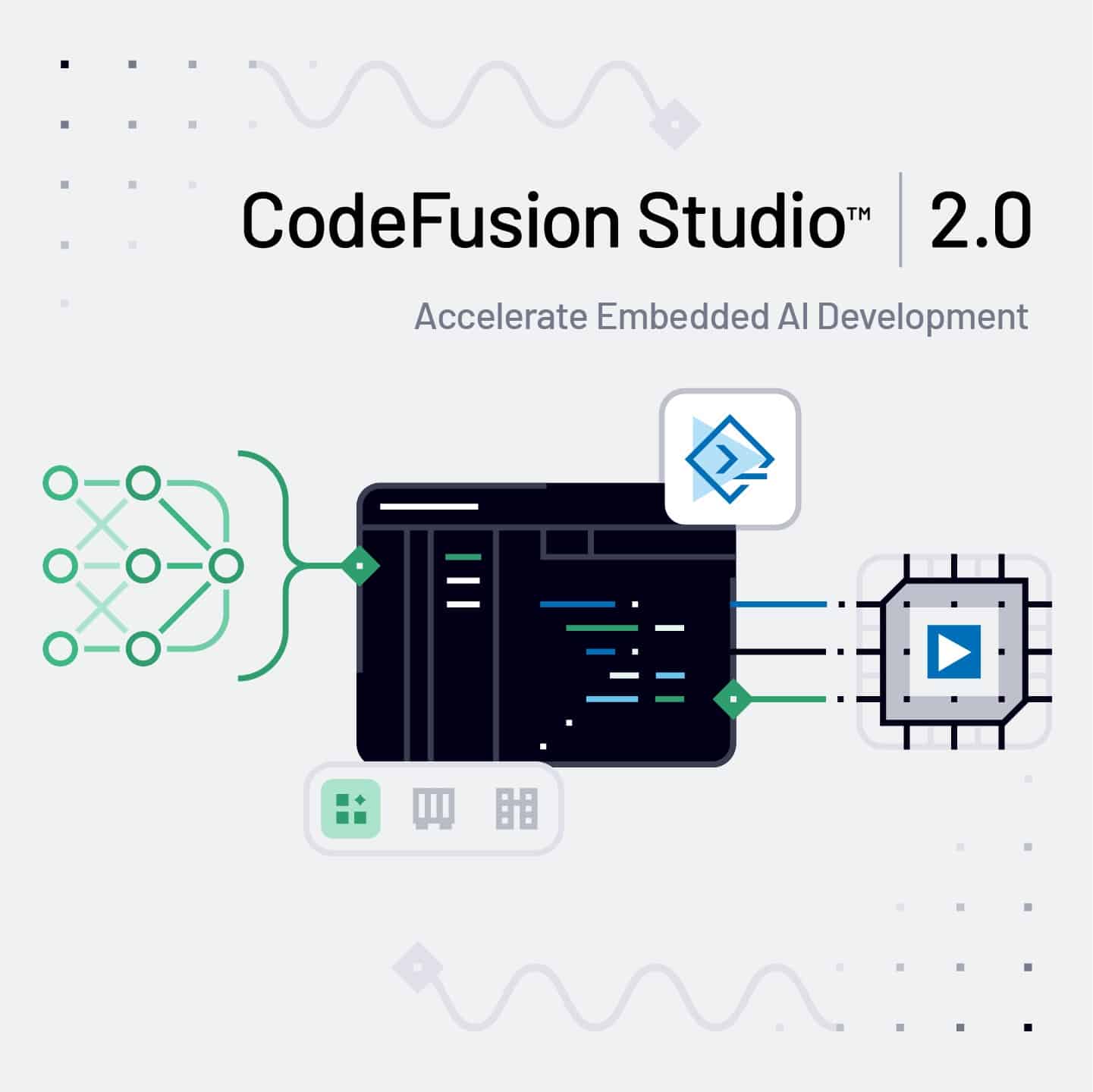
A major update to an open-source development platform is reshaping how engineers build, test, and deploy embedded AI — bringing unified workflows, real-time profiling, and a Zephyr-powered framework to the heart of intelligent systems.
A new upgrade to an open-source embedded development suite is changing the pace of embedded AI innovation. CodeFusion Studio 2.0 introduces end-to-end AI workflow support, model profiling, and modular runtime analysis — bridging the long-standing gap between AI experimentation and deployment on real hardware.
At its core, the platform now enables developers to “bring their own models” and deploy across a full range of processors and microcontrollers, from low-power edge nodes to high-performance DSPs. Built on Microsoft’s Visual Studio Code, the environment integrates AI model checks, performance profiling, and optimization tools — turning what was once a fragmented process into a seamless experience.
The release also introduces a Zephyr-based modular framework, a standout feature that enables runtime AI/ML profiling and layer-by-layer performance analysis. This architecture provides visibility into how each component behaves in real time, making it easier to diagnose bottlenecks and tune models for specific hardware. By building on Zephyr, CodeFusion 2.0 strengthens its open-source foundations and eliminates toolchain fragmentation — a common pain point in embedded AI development.
On the system side, developers gain multi-core application support, unified configuration tools, and integrated debugging through Core Dump Analysis and GDB. The result is a smoother workflow that simplifies building, testing, and deploying applications across heterogeneous systems — whether on an MCU, DSP, or AI accelerator.
More than just an IDE upgrade, this release signals a deeper shift toward “physical intelligence” — where AI models not only process data but adapt to the physics of their environment. Future updates promise expanded runtime environments, deeper hardware-software co-optimization, and simulation tools that allow developers to test models even without a physical board. For embedded developers, CodeFusion Studio 2.0 isn’t just an update — it’s a bridge between digital design and real-world intelligence, advancing the frontier of AI that can perceive, reason, and act at the edge.