



















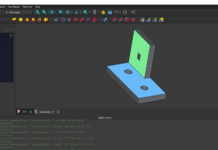










































Microsoft has open-sourced its Quantum Development Kit for chemistry and error correction, allowing developers to use Qiskit, Cirq, and Q# in one environment.
Microsoft has released an open source Quantum Development Kit (QDK) focused on quantum chemistry and error correction, expanding its Azure Quantum developer ecosystem. Announced on January 22, the tools are available now, with full availability expected through a phased rollout concluding in 2026.
A key differentiator of the release is cross-framework compatibility. Developers can work seamlessly across Q#, OpenQASM, IBM Qiskit, and Google Cirq within a single environment, eliminating the need to switch tools or rewrite programs. By embracing Qiskit rather than competing against it, Microsoft positions itself as a framework-agnostic platform, directly challenging ecosystem lock-in.
The QDK integrates deeply with existing developer workflows through native VS Code support, including Python and Jupyter integration, circuit rendering, IntelliSense, breakpoint debugging, local simulators, and resource estimation. GitHub Copilot further accelerates code generation, testing, and job submission.
“With GitHub Copilot and the QDK, programming tasks such as code generation, unit tests, and job submissions are faster and easier than ever before,” said Matthias Troyer, Technical Fellow and Corporate Vice President of Quantum at Microsoft.
At the core of the release is a chemistry toolkit designed by chemists for domain scientists. Chemistry-aware algorithms can reduce quantum circuit depth from thousands of gates to single digits for certain molecular simulations, enabling near-term applications on existing hardware, particularly in pharmaceutical research.
Industry validation came from Algorithmiq, a Finnish quantum computing startup specialising in computational life sciences. “We believe the modular design of the platform will be a true game changer for quantum chemistry,” said Guillermo Garcia-Perez, Chief Scientific Officer at Algorithmiq.
The open-source release also includes error correction tooling for characterising, validating, and debugging encoded quantum programs, supporting Microsoft’s broader Quantum OS strategy focused on portability, reproducibility, and developer freedom across quantum hardware platforms.