




























































Can India spark a true manufacturing renaissance by shifting from push-driven tech to pull-driven solutions, powered by simplicity, talent, open collaboration, and frugal, scalable innovation?
Why do I call it the Indian manufacturing renaissance? Before diving into meaningful innovation in smart manufacturing, let me begin on a lighter note. Imagine wrapping a Fitbit around a factory. If factories could express emotions, they would reflect varying energy levels, stress points and operational moods. In many ways, smart factories already help us sense these signals.
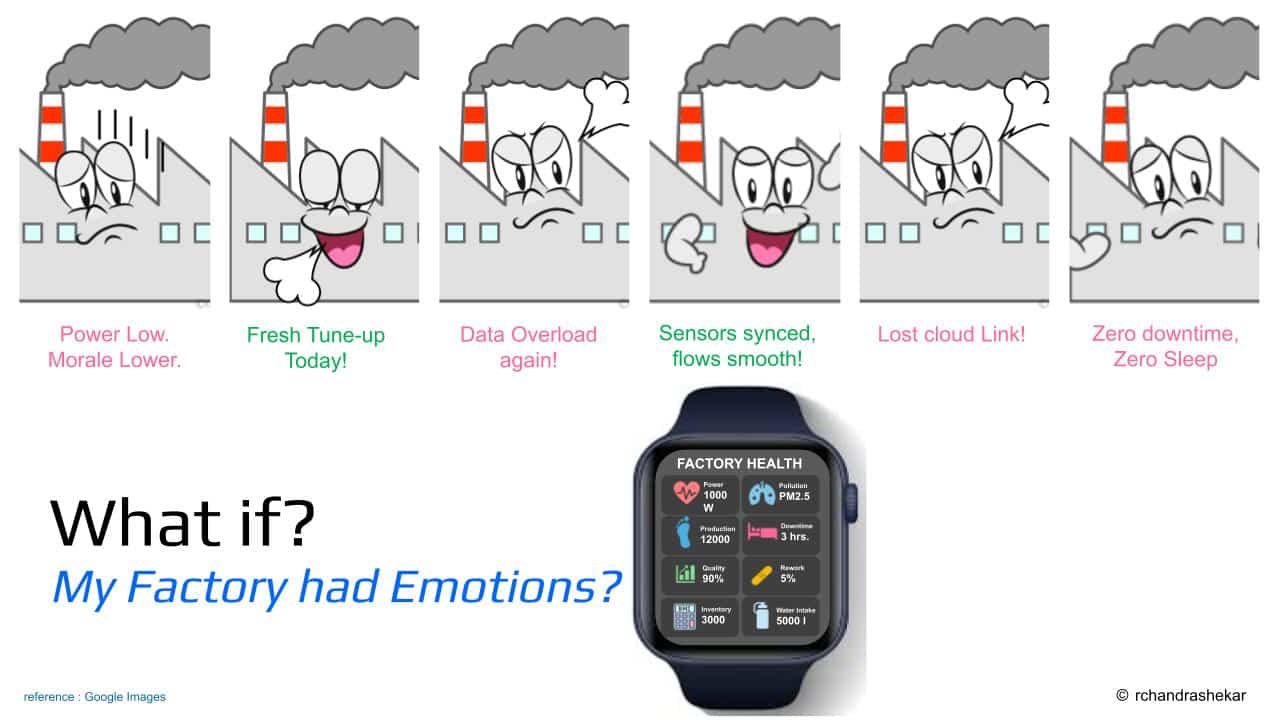
However, my focus today is not on smart factories themselves. The real question is how to harness meaningful, sustainable smart manufacturing for the Indian manufacturing ecosystem. To set the context, it is important to look at the global manufacturing landscape. Manufacturing has evolved through multiple epochs, from localised precision craft production to today’s hyper-connected fourth and fifth waves driven by consumers and social manufacturing models. This evolution frames where we stand and where India must go next.
Where India stands in the global manufacturing evolution
If we are honest with ourselves, India still largely operates in the realm of mass manufacturing. The real challenge is how we leapfrog into the next generation of manufacturing.
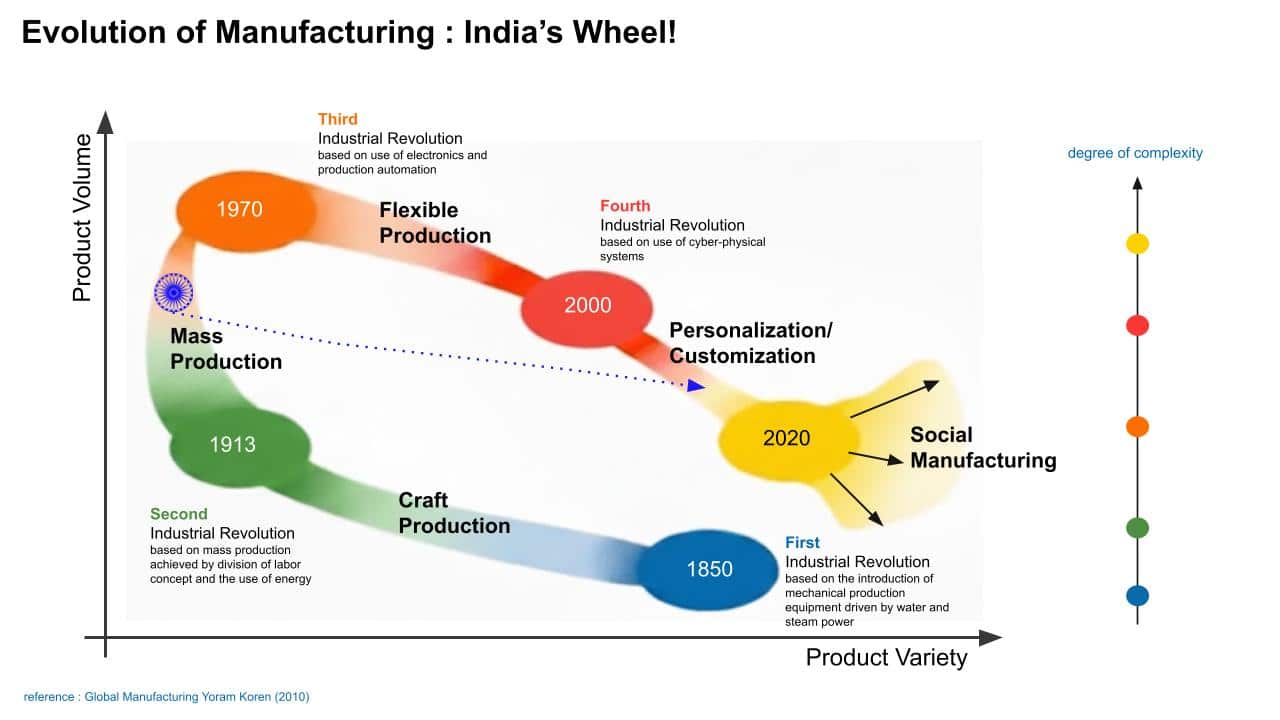
The common response to this challenge is smart manufacturing. But that immediately raises another question for me. What do we actually mean by smart manufacturing? When we look closely, it appears as a mix of technologies brought together through cross-pollination. The deeper issue, however, is whether these technologies are truly suited to Indian manufacturing realities.
This is where sustainability becomes critical. Most of these technologies are push-driven. They exist because they are available, not because industry is ready to adopt them. As some speakers before me also noted, adoption is constrained by scalability, maturity, and cost. Industries often invest millions in building models but hesitate to invest even a few thousand rupees in building quality data. That imbalance creates friction and limits meaningful impact.
Democratising smart manufacturing for India’s fraternal economy
Looking inward at Indian manufacturing itself, India’s economy is largely powered by what I call the fraternal economy, driven by small and medium manufacturing units. These enterprises are not just job creators. They are wealth creators and form the backbone of industrial growth. This segment is also the true force multiplier that can lead India toward a manufacturing renaissance.
A clear disconnect which persists is that on one hand, we have advanced technologies and on the other, the end users who need solutions that are simple, affordable and reliable. Bridging this gap becomes essential for making smart manufacturing meaningful and sustainable in India. Which brings us to the next question: how do we Indianise smart manufacturing technologies? While much has been said about tools and platforms, the real drivers of empowerment are talent and tenacity. The first step toward unlocking both is the democratisation of technology.
Let us look at a real-world example to understand this better. Consider a small-scale factory operating within the fraternal economy. Such factories often struggle with transaction settlement, traceability, and digital record-keeping. Typically, one individual handles everything from operations to accounting. It is unrealistic to expect this person to embrace sophisticated industrial technologies. We must expand on what already works rather than adding more layers of complexity. Digital payments offer a clear example. Unified payment interface (UPI) is one of India’s strongest digital backbones, and it can be extended into manufacturing workflows. In fact, we have done exactly that by integrating UPI with open source technologies to create a simple, sustainable smart solution that addresses real operational needs.
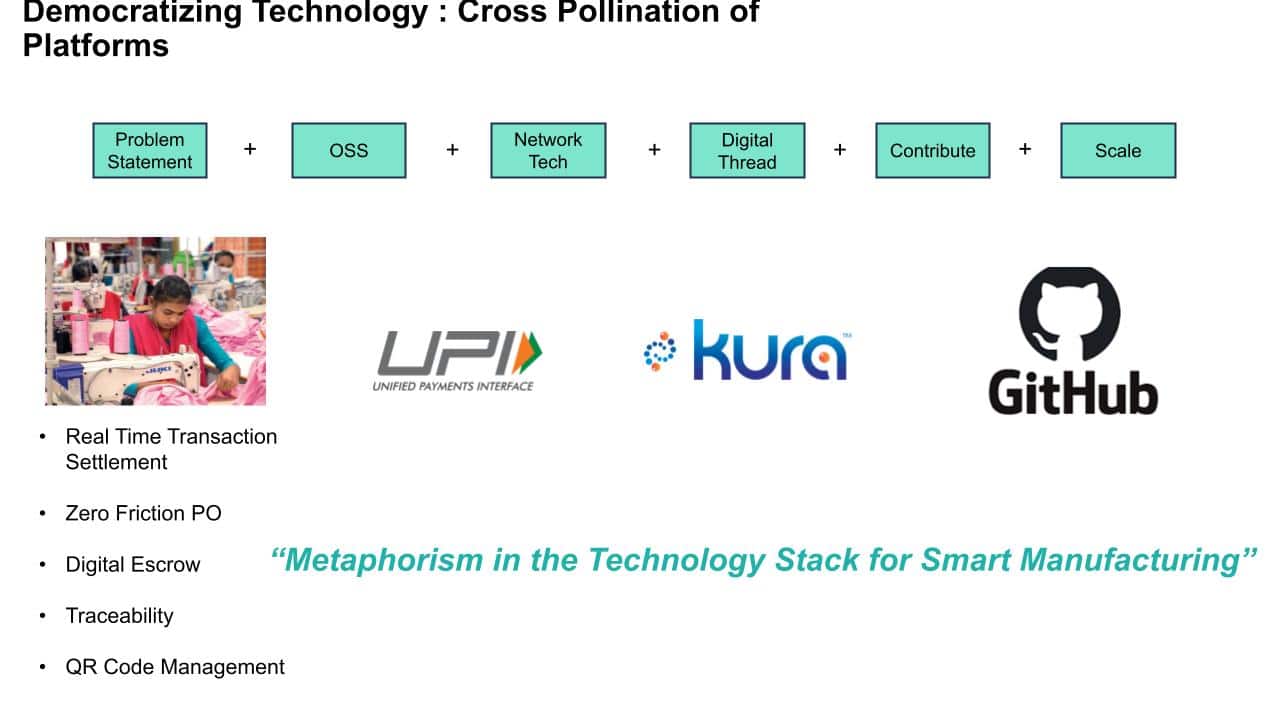
Democratisation, however, has another side. When I explored UPI-related repositories on GitHub, I was surprised to see very limited contributions, despite UPI being central to India’s digital economy. This suggests a more serious problem. In spite of having one of the world’s largest engineering communities and a wealth of talent, India continues to have one of the lowest rates of open source contributions globally. Access is only one aspect of democratisation. It is about responsibility. Engineers and institutions must learn to identify real industry problems and actively contribute solutions, a point that also emerged during earlier discussions on creating industry-ready engineers.
Building the ecosystem for shared innovation
At Endurance, we have built an open source ecosystem that anyone can use. It follows a prosumer model, where users both consume and contribute and is freely available to communities and industries. The intent is simple: to enable collaboration, shared learning and collective growth rather than isolated innovation.
Stepping back, this journey reflects what I have tried to highlight throughout. We examined the global manufacturing landscape and India’s position within it, recognising that while push-driven technologies exist, India needs pull-driven solutions built on simplicity, accessibility, and relevance. Real progress lies in marrying existing technologies to solve real problems, not in chasing complexity for its own sake.
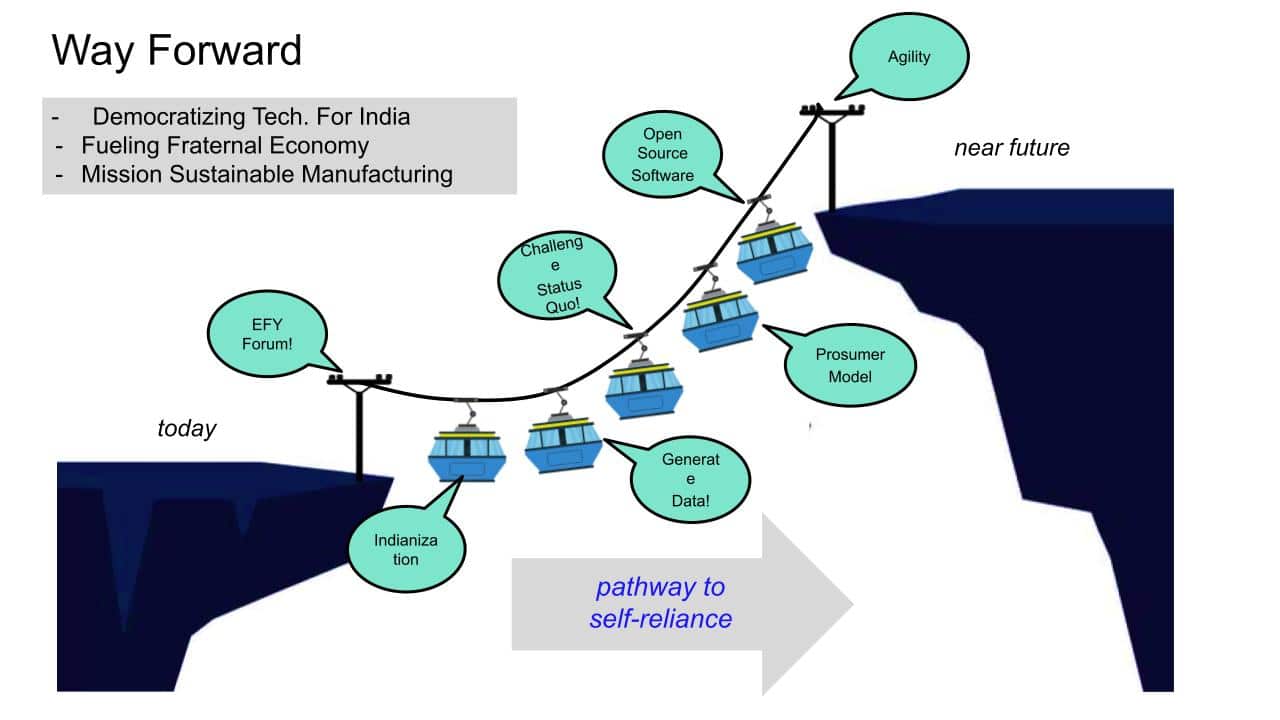
The pathway to resilience, in my view, lies in democratising technology, empowering contributors, and turning intelligence into both profit and progress. This is how we create a new renaissance for Indian manufacturing. I would also like to acknowledge EFY as a platform that bridges creators and contributors, because meaningful innovation truly begins when technology is not just built, but shared.
The article is based on the talk at the EFY Expo Gujarat 2025 called ‘The Indian Manufacturing Renaissance: Turning Intelligence into Profit’ featuring the opening speech by Rahul Chandrashekar, General Manager, Endurance Technologies. It has been transcribed and curated by Saba Aafreen, Technical Journalist at EFY.