
























































Researchers at Northwestern Polytechnical University have released the world’s first free open source flight controller for bamboo-frame drones, solving a major vibration-control challenge that has slowed sustainable UAV development.
A research team from Northwestern Polytechnical University’s School of Civil Aviation in China has released what it describes as the world’s first open-source flight control system for bamboo-frame drones, making the software freely available to accelerate the development of low-cost, eco-friendly UAVs.
The release addresses a long-standing bottleneck in bamboo drone engineering: combining bamboo’s non-traditional structural behaviour with high-performance autonomous flight control. Unlike composite airframes, bamboo structures generate low-frequency vibrations in the 8–20Hz range, a condition conventional flight controllers struggle to stabilise.
According to the team’s paper published on 28 February in Heilongjiang Science, “existing commercial flight controllers are either closed-source and inflexible, or open-source but poorly adapted to local development needs, limiting the industrialisation of bamboo-based UAVs.”
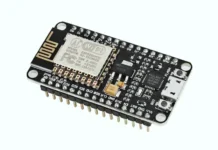
To overcome this, the researchers developed a custom flight control board built around an industrial chip, supported by a dual inertial measurement unit (IMU) architecture. The team also redesigned the control algorithms specifically for bamboo’s structural dynamics, using a tuned extended Kalman filter and leveraging bamboo’s natural vibration-damping characteristics.
The optimisation reduced control latency from 15–20ms to 8–10ms, significantly improving responsiveness while maintaining flight stability.
By removing reliance on rigid closed-source controllers and introducing a purpose-built open platform, the project positions open source as a practical enabler for the industrialisation of sustainable bamboo-based UAVs.