

























































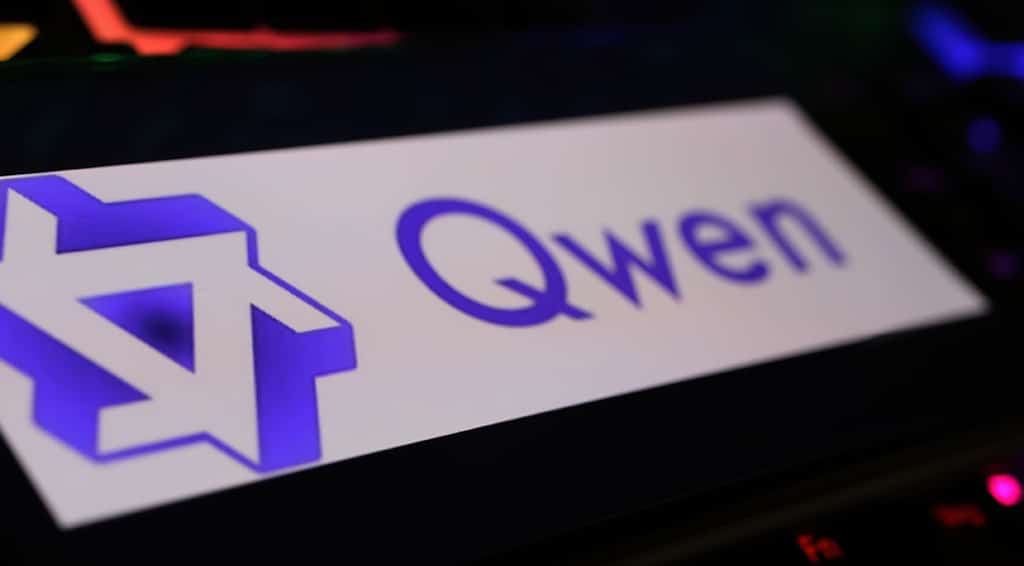

Qwen-Image, Alibaba’s open source image model, stands out for its precision in multilingual text rendering—an area where many AI tools still struggle.
In a strong challenge to closed AI systems from companies like Google and OpenAI, Alibaba has launched Qwen-Image, a powerful open-source image generation model that brings a new level of accuracy to one of generative AI’s most persistent weak spots: text rendering within images.
Released under the Apache 2.0 licence, Qwen-Image allows developers and businesses to use, modify, and redistribute the model for commercial purposes, provided they credit the source appropriately. The model is now globally accessible through platforms like Hugging Face, and also available directly via Qwen Chat, where users can toggle to “Image Generation” mode to test its capabilities.
Developed by Alibaba’s Qwen Team, Qwen-Image is especially designed for use cases where visual fidelity and text clarity must go hand-in-hand. From handwritten poems and product labels to bilingual posters and classroom diagrams, the model can handle both alphabetic (like English) and logographic scripts (like Chinese), offering a rare degree of precision in multilingual visual outputs.
Its architecture combines several key components:
- Qwen2.5-VL, a frozen multimodal language model that serves as the condition encoder to understand complex prompts;
- A Variational Autoencoder (VAE), fine-tuned on text-rich visuals like posters and PDFs to preserve fine visual details;
- MMDiT, a Multimodal Diffusion Transformer, responsible for generating high-resolution images with accurate spatial layout and text placement.
This dual-encoding system helps the model strike a balance between semantic understanding and low-level visual detail. As the technical report explains, “Qwen2.5-VL extracts high-level semantic features, while a Variational Autoencoder (VAE) captures low-level reconstructive details.” Both streams are then integrated by the MMDiT engine to produce output that is contextually accurate and visually clean.
Qwen-Image is just one part of Alibaba’s broader AI play. In recent months, the company has launched a series of open-source models, including Qwen3-Thinking-2507, a flagship reasoning model that topped several industry benchmarks, and Qwen3-Coder, a coding-focused agentic model.
Alibaba Cloud has made it clear that it is abandoning hybrid models in favour of training “Instruct” and “Thinking” models separately. As per an official statement, “after discussing with the community and reflecting on the matter, we have decided to abandon the hybrid thinking mode. We will now train the Instruct and Thinking models separately to achieve the best possible quality.”
The company also recently released Wan2.2, an upgrade to its video generation model, featuring a Mixture-of-Experts (MoE) architecture aimed at boosting quality and efficiency in AI-generated video.