



























































AI- powered sqEEG implant offers precise epilepsy tracking at home
A small, AI-powered implant placed beneath the skin could change how epilepsy is monitored, giving doctors objective, round-the-clock seizure data without relying on patient memory or manual reporting.
The device, known as subcutaneous electroencephalography (sqEEG), was developed through research at the Institute of Psychiatry, Psychology & Neuroscience (IoPPN) at King’s College London, in collaboration with the Mayo Clinic and UNEEG medical. The study, published in Epilepsia and funded by the Epilepsy Foundation of America, tested the system’s ability to track seizures in real-world settings over long periods — an approach researchers say could reshape treatment for people with hard-to-control epilepsy.
Current seizure monitoring largely depends on patient diaries, which can be unreliable because episodes often involve impaired consciousness or memory gaps. This is particularly problematic for the one-third of epilepsy patients whose seizures persist despite medication.
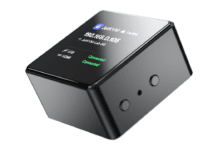
The sqEEG system is about the size of a UK pound coin, with a thin 10cm wire attached. Implanted behind the ear under local anaesthetic, it uses AI to analyse brainwave activity continuously and transmits the data wirelessly to an external recorder worn discreetly behind the ear. Clinicians can then review precise information on seizure frequency, type, and timing.
In the trial, ten adults with treatment-resistant epilepsy from King’s College Hospital and St George’s University Hospital used the device for up to 15 months while also keeping seizure diaries and wearing fitness trackers. Over the study period, the sqEEG captured almost 72,000 hours of brainwave data, logging 754 seizures. Half of the participants recorded more than 20 hours a day, and most found the implant unobtrusive.
When comparing the AI-powered recordings to diary entries, researchers found patients had correctly logged only 48% of their seizures, while 27% of diary-reported episodes showed no seizure activity. The system also proved more accurate at identifying seizure types than self-reporting.
Professor Mark Richardson, Paul Getty III Professor of Epilepsy at King’s IoPPN and the study’s senior author, said, “It is vital that people with treatment resistant epilepsy are able to access the best possible care. This is made significantly more challenging by the fact that clinicians must rely on patient reporting to establish when episodes have taken place. Our study has been able to provide a vital and viable alternative to relying on self-reported episodes. A small tracker placed under the skin was able to detect seizures far more accurately than the participants themselves.”
Dr. Pedro Viana, Senior Clinical Research Fellow and Neurologist at King’s IoPPN and the study’s lead author, added, “The ability to monitor seizures in the real world, accurately collecting data on the type and timing that they occur will be an invaluable tool for clinicians moving forwards, and should hopefully have a big impact on how we approach the treatment of this life-threatening condition. While this is an important step forwards, it’s now vital that we conduct larger trials to further validate this technology, with a view to hopefully making this available to everyone in need.”
The Mayo Clinic’s Dr. Benjamin Brinkmann, Professor of Neurology, noted, “Overall, these results demonstrate that Subscalp EEG devices are able to provide objective information about seizures and brain activity over long timeframes. This technology could provide physicians and patients with new insights about long-term patterns and help optimize their epilepsy treatment.”
Jonas Duun-Henriksen, Senior Director AI & Science at UNEEG medical, said, “This study is a significant milestone for UNEEG medical. While we’ve long heard from both people living with epilepsy and their treating physicians that they are very satisfied with our system and helped improve outcome, this is the first time a study based on more than a full year of continuous EEG recordings confirms those experiences. We’ve gained valuable quantitative insights throughout the study, and we’re especially grateful for the valuable feedback from the clinicians at King’s College London – which we have already started incorporating into our solution to further enhance its clinical value.”