





















































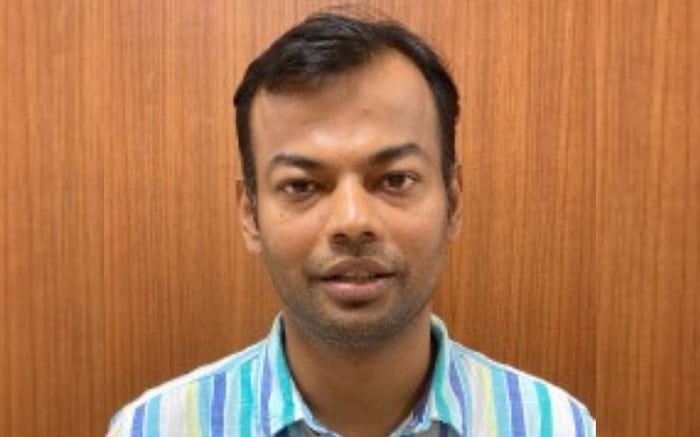

IIT Madras professor Mitesh Khapra joins TIME’s 100 AI list for pioneering open-source Indian language datasets powering startups, global tech firms, and India’s Bhashini mission.
Mitesh Khapra, Associate Professor at IIT Madras, has been named in TIME magazine’s 2025 list of the 100 most influential people in artificial intelligence (AI). He joins global figures such as Elon Musk and Sam Altman on the prestigious list, which is regarded as one of the most respected recognitions for those shaping the future of AI.
Khapra has been honoured for his research in natural language processing and machine learning, with a distinct focus on Indian languages. Unlike many of his peers on the list who lead global AI companies, his work is largely academic, grounded in building technology that benefits society at scale.
Central to this recognition is AI4Bharat, the initiative he co-founded to create open source tools and datasets for Indian languages. TIME noted that nearly every Indian startup working on voice technology for regional languages relies on datasets developed by Khapra and his team. Even global technology companies have incorporated these open source resources to improve models for widely spoken languages such as Hindi and Marathi.
AI4Bharat spearheaded a massive data collection drive, gathering thousands of hours of voice recordings from nearly 500 districts across India. The project covered all 22 official Indian languages and included contributions from speakers across diverse educational and socioeconomic backgrounds. This effort helped fill a crucial gap where Western AI models perform poorly on underrepresented languages.
Khapra’s contributions have also been instrumental to the Indian government’s Bhashini mission, which aims to deliver digital services in local languages through AI.
“Fifteen years ago, an average PhD student in India working on language technology would mostly focus on English-related problems. But now, with the availability of these datasets, I see a shift, Indian students are increasingly working on challenges specific to Indian languages,” Khapra told TIME.