

























































PostgreSQL, enhanced with the pgvector extension, brings semantic search capabilities into a traditional SQL environment. With support for both structured queries and AI-driven search, pgvector enables developers to build intelligent, cost-effective applications within a familiar ecosystem, positioning PostgreSQL as a future-ready, AI-native database. Let’s learn more….
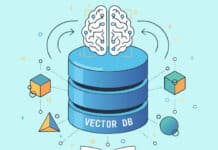
Traditional SQL is excellent for exact matches and structured querying. But in an age of language models, recommendation engines, and semantic search, we need databases that can answer questions like: “Show me documents similar in meaning to this query, not just those with exact words.” This is where vector similarity search shines—mapping unstructured content like text, images, and code into multi-dimensional embeddings and comparing them using mathematical distance metrics.
As AI becomes more deeply integrated into our digital systems, there’s a growing need to store and search not just exact matches, but meaningful, semantic information. Vector embeddings come into play here. A vector embedding is a numeric representation of text, images, or even user behaviour. It captures the semantic meaning in a high-dimensional space.
Imagine you walk into an ice cream shop and tell the server: “I want something cold, sweet, and fruity.” Now, how can the computer understand what ‘cold’, ‘sweet’, or ‘fruity’ means? It converts that sentence into a vector like:
[0.8, 0.6, 0.1, 0.0, 0.7, 0.3, ...] (a list of numbers)
Each number in this list has some meaning — like ‘fruitiness’, ‘coldness’, ‘creaminess’, etc. Then, it compares this vector to the fingerprints of all ice creams it knows and recommends the closest match! These vectors are used to power recommendations, chatbots, anomaly detection, and more. Traditionally, we relied on search indices, relational joins, or keyword match. But they fall short in answering questions like:
- “What items are similar in meaning to this one?”
- “Which users behave similarly to this one?”
What is a hybrid SQL database and why do we need it?
A hybrid SQL database combines traditional relational (SQL-based) capabilities with modern AI-native features — like vector search, full-text search, unstructured data handling, or graph relationships — all in a single engine. It merges structured + unstructured data handling to support both analytical and AI-driven use cases.
In today’s applications, we deal with:
- Structured data: Tables, rows, columns (names, prices, dates)
- Unstructured data: Text, images, conversations, embeddings
-
Semantic tasks: Finding ‘similar’ items, understanding intent, detecting patterns
Traditional SQL databases (like PostgreSQL, MySQL) are great at structured queries but can’t handle semantic search or AI directly. Dedicated vector databases can handle AI tasks, but don’t support SQL joins, filters, or business logic. Hybrid SQL databases give you the best of both.
Table 1: Key capabilities of hybrid SQL databases
| Features | Traditional SQL | Vector DB only | Hybrid SQL DB |
| Relational joins (e.g., SQL JOIN) | Yes | No | Yes |
| Vector similarity search | No | Yes | Yes |
| Text, graph, or time-series data | No | No | Yes |
| Business filters (e.g., WHERE) | Yes | No | Yes |
| Unified query language (SQL) | Yes | No | Yes |
| AI + analytics in one system | No | No | Yes |
Table 2: Why use PostgreSQL for vectors instead of a specialised vector DB?
| Vector DBs | PostgreSQL (with pgvector) |
| High-speed ANNs (artificial neural networks) | Good enough for low to medium workloads |
| Limited to vector search | Full SQL, joins, transactions, etc |
| Hosted-only or managed | Full control, open source, no vendor lock-in |
| Separate stack | Integrate into existing Postgres apps |
PostgreSQL meets vectors: The rise of ‘pgvector’
pgvector is an open source extension that turns PostgreSQL into a fully capable vector database by allowing similarity search using operators like:
- Store embeddings generated from OpenAI, Hugging Face, or other LLMs
- Perform similarity searches using inner product, cosine, or Euclidean distance
- Leverage GIN, IVFFlat, or HNSW indexing (via integrations like pgvecto.rs) for efficient ANN search
PostgreSQL is ideal for hybrid workloads: structured + unstructured, analytics + AI, all in one place.
Example: Semantic document search in PostgreSQL:
- Store document text and its embedding

CREATE TABLE documents (

id serial PRIMARY KEY,

title text,

content text,

embedding vector(1536) -- assuming embedding size

);

-- Query top 5 most similar documents

SELECT title, content

FROM documents

ORDER BY embedding <-> ‘[0.11, 0.93, ..., -0.44]’

LIMIT 5;

-- Query top 5 most similar documents

SELECT title, content

FROM documents

ORDER BY embedding <-> ‘[0.11, 0.93, ..., -0.44]’

LIMIT 5;
Real world use cases of hybrid SQL databases
Use case 1: Early detection of aircraft engine failure risk through semantic anomaly pattern matching
Problem: Aircraft engines generate massive amounts of structured telemetry data (temperature, pressure, vibration, fuel flow) and unstructured maintenance logs (technician notes, fault descriptions, pilot complaints). Most failure events are preceded by subtle signals across both data types, but:
- These signals are not always identical across aircraft.
- Descriptions vary (e.g., “hot start anomaly” vs “unusual exhaust temperature spike”).
- Traditional monitoring tools focus on hard thresholds, missing context-based risk indicators.
Solution: Vector-based semantic monitoring for engine anomalies using pgvector.
Goal: To proactively detect early warning signs of engine failure by matching current sensor anomalies and pilot/maintenance notes with historical incidents stored as semantic vectors.
How it works:
- Historical incident embedding: Thousands of engine fault incidents (text logs + sensor signature descriptions) are embedded into vectors. Each vector encodes semantic meaning — including symptoms, causes, and resolutions.
- Real-time data matching: A new engine report from the flight crew says: “Slight engine vibration during cruise, EGT slightly elevated but stable, auto throttle fluctuated briefly.” This report is embedded using OpenAI or AeroBERT. A pgvector similarity search identifies past cases with similar descriptions, even if the wording is different.
SELECT incident_id, root_cause, resolution
FROM engine_failure_history
ORDER BY embedding <-> ‘[new_incident_embedding]’
LIMIT 3;
3. Preventive action triggered: One match involved a fuel control unit fault that escalated to engine shutdown mid-air. Based on match confidence and metadata, the airline flags the aircraft for preventive maintenance before the next flight.
Real advantages in aviation safety
| Feature | Benefit |
| Semantic similarity of fault patterns | Captures meaning across wording variations |
| Low-latency Postgres querying | Fast enough for maintenance triage |
| Hybrid filtering | Combines structured filters (aircraft_type = ‘A320’) |
| Cost-effective and on-premises | Meets airline data compliance needs |
Example output (simplified)
| Incident ID | Match % | Root cause | Action taken |
| ENG-2047 | 92% | FCU calibration drift | Engine swapped |
| ENG-1879 | 89% | Vibration sensor under-reading | Sensor replaced |
| ENG-1935 | 84% | Compressor stall in early stage | Cleaned and recalibrated |
Safety and compliance alignment
- Data stays within airline infrastructure (critical for DGCA/EASA compliance).
- Enables building an airline-specific semantic failure library.
- Reduces false positives by combining sensor + log embeddings.
Use case 2: AI-assisted diagnosis support in rural health centres
Problem: In many rural or Tier-2/Tier-3 areas of India, Primary Health Centres (PHCs) often operate without specialist doctors. Health workers or junior doctors have to diagnose and treat patients based on limited experience and documentation. And the consequences are misdiagnosis or late diagnosis, inconsistent treatment, and increased mortality in emergency or complex cases.
Solution: Semantic case retrieval using pgvector in PostgreSQL.
How it works
- Historical medical case data (symptoms, treatments, outcomes) from urban hospitals and research institutions are stored in a PostgreSQL database.
- Each case is converted into a vector embedding using a language model trained on Indian medical context (e.g., BioBERT, IndicBERT).
- When a new patient arrives at a rural PHC, their symptoms are entered (in simple English or regional language, which is translated and embedded).
- A semantic similarity query is run using pgvector to retrieve similar past cases, diagnoses, and outcomes.
SELECT case_id, likely_diagnosis, treatment
FROM historical_cases
ORDER BY symptoms_vector <-> ‘[new_patient_vector]’
LIMIT 3;
Why this use case is possible only with pgvector in PostgreSQL/hybrid database
| Challenge | Traditional SQL | Vector DBs only | PostgreSQL + pgvector |
| Complex filtering by region, age, etc | Yes | No | Yes |
| Real-time, offline query in rural areas | No | No (Cloud-based) | Yes (Runs locally) |
| Semantic match between cases | No | Yes | Yes |
| One system for structured + vector data | No | No | Yes |
| Cost-effective for government roll-out | No (Needs multiple tools) | No (SaaS expensive) | Yes (Open source, local) |
Real impact in India:
- Enable frontline health workers to consult an AI-backed system that suggests possible diagnoses and treatments.
- Use regional and public health data to make localised decisions (e.g., ‘dengue vs chikungunya’ symptoms in Kerala).
- Reduce referral load on tertiary hospitals.
- Train junior medical staff by exposing them to similar cases.
Possible enhancements:
- Add patient history and lab report embeddings to refine suggestions.
- Integrate with Indian EHR systems (eSanjeevani, Ayushman Bharat Digital Mission).
- Run entirely on low-cost local servers or edge devices (offline).
pgvector vs other vector databases
As vector search becomes mainstream in AI and data applications, a growing number of vector databases (e.g., Pinecone, Weaviate, Qdrant, Milvus) are entering the market. However, the cost structure and integration complexity of these solutions vary greatly, especially when deployed in real-world enterprise scenarios (Table 3).
Table 3: A comparison of pgvector with other vector databases
| Feature/Cost | pgvector (Postgres) | Pinecone/Weaviate (SaaS) | Faiss (self- hosted) |
| Setup cost | Minimal (Postgres extension) | High (requires account and integration) | Medium (needs hosting + config) |
| Hosting | On-prem/Cloud/Docker | Cloud only | On-prem or cloud |
| Vector + SQL integration | Seamless | Limited or non-existent | Requires custom dev work |
| Security | Full data control | Vendor-managed | Fully controlled |
| Multi-modal search | Hybrid (SQL + vectors) | Mostly unstructured | Complex to integrate |
| Annual cost (mid-scale) |
Rs 50,000–150,000 ($700–1800) | Rs 600,000–1.2 million ($7000–15,000) | Rs 200,000–350,000 ($2500–4500) |
Here’s a key insight. If you’re already using PostgreSQL, adopting pgvector is almost cost-free in terms of setup and maintenance. You gain vector capabilities without sacrificing relational power or requiring new infrastructure.
The future of vector search in hybrid SQL databases
As AI continues to evolve, the convergence of semantic intelligence and structured querying is redefining how data systems are designed. This has led to the rise of hybrid SQL + vector databases, a category in which PostgreSQL with pgvector is emerging as a front-runner.
Most real-world data systems involve both structured filters (e.g., WHERE region = ‘South India’ AND year > 2022) and unstructured, semantic matching (e.g., “similar customer complaints”, “related incident reports”). Traditional vector databases lack SQL capabilities, making it hard to express complex business logic. On the other hand, traditional SQL databases couldn’t handle embeddings, until now (Table 4).
Table 4: Evolution roadmap
| Phase | Capability | Description |
| 1 | Standalone vector DBs | Fast, purpose-built, but limited to unstructured data |
| 2 | SQL + Vector search (pgvector) | Combines structured filters + semantic similarity |
| 3 | Native ML/AI extensions in SQL engines | Predictive modelling and RAG flows directly inside SQL |
| 4 | LLM-native databases |
Query understanding + natural language interfaces |
| 5 | Autonomous AI-driven query optimizers | Real-time tuning, vector-aware planners, intent prediction |
Hybrid vector databases represent a crucial step forward—bridging the gap between relational logic and semantic understanding. By combining the maturity and reliability of PostgreSQL with the flexibility of vector search, developers can now build intelligent, real-time applications that reason, recommend, and respond like never before. Whether it’s powering a search engine that understands intent, detecting engine anomalies in aviation, or assisting doctors in remote healthcare centres, hybrid databases enable AI-native workflows within trusted ecosystems.
More importantly, pgvector allows developers to embrace these capabilities without abandoning the tools, skills, or infrastructure they already use. If your next application needs to search smarter, recommend faster, or reason deeper, PostgreSQL with pgvector might be the database you need.
The future is not about replacing SQL with AI — it’s about embedding AI into SQL, responsibly, scalably, and intelligently.