



























































Space-ng debuts open Sol3 vision platform at Small Sat
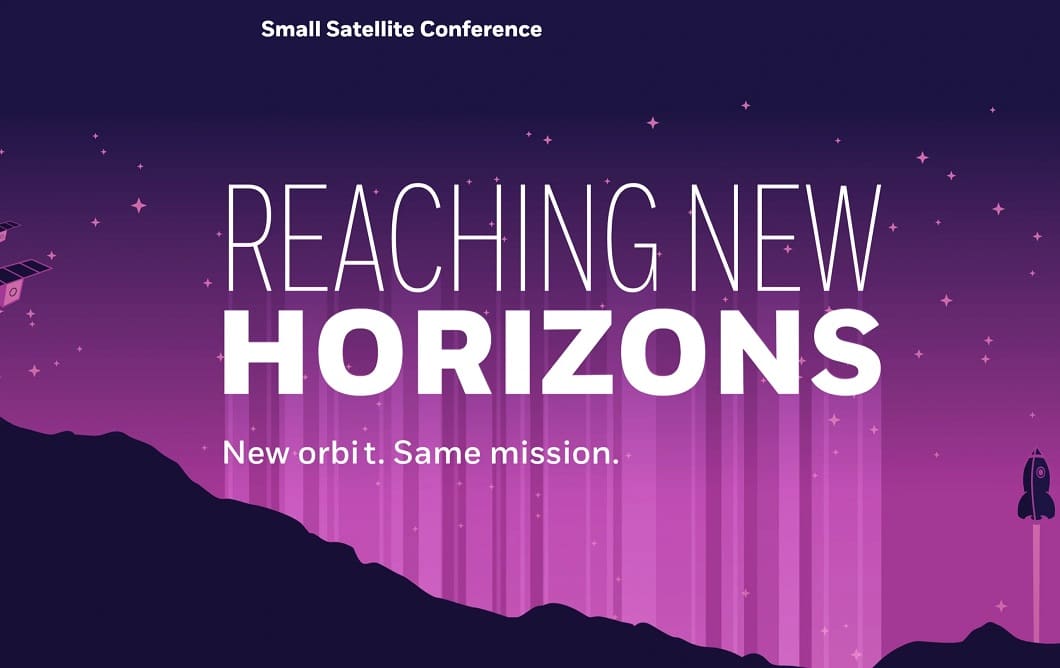
Space-ng has introduced its Sol3 hardware and software ecosystem at the 39th Annual Small Satellite Conference in Salt Lake City, Utah. Running from August 10–13, the showcase highlights the company’s open-architecture approach to computer vision for space applications.
The Sol3 ecosystem combines a low-cost hardware development kit (HDK) with a freely available software development kit (SDK), designed for evaluation, academic research, and non-commercial use. The system supports up to 12 user-configurable camera modules and provides an integrated, software-defined platform for rapid prototyping, testing, and development in both lab and field environments.
Steve Bailey, Space-ng Co-Founder and Chief Engineer, emphasised the value of this open approach: “The main difference between the HDK and our Flight Units is the use of commercial connectors and non-space-grade parts. By ordering the HDK and using the SDK you can jump start development, explore the power of the Sol3 architecture, and move confidently into system level integration and testing.”
Sol3 hardware development kit (HDK)
The HDK features a rugged, air-cooled Base Unit capable of controlling up to 12 high-resolution Camera Modules. It mirrors the functionality and performance of flight hardware while using commercial components to reduce cost. The Base Unit is priced at $5,000, with camera modules starting at $1,000, including power supply and harnesses.
The HDK enables engineers to perform pre- and post-integration testing, accelerating the development cycle and reducing the delays often associated with flight hardware integration. Full workflows using proven lunar navigation and mission operations software can be executed in hours rather than weeks, providing a practical bridge from field experiments to flight-ready systems.
Software-defined, open-architecture
Sol3’s SDK allows users to harness the full computing and sensor capabilities of the hardware, unlocking advanced autonomous applications for spacecraft. “To deploy state of the art navigation algorithms we need access to a GPU, neural accelerator, hardware encoding, high bit depth high resolution imagery, tightly integrated IMUs, and modern environments (C++20, Linux, containers) and open source software (GTSAM, ceres-solver, OpenCV, Eigen, PyTorch). We want our partners and customers to innovate alongside us and have access to the same tools the Space-ng team is using everyday,” said Ethan Rublee, CEO and Co-Founder of Space-ng. “We’re releasing our SDK, free for academic research and non-commercial use, to empower our community to build the next generation of space flight software.”
Sol3 is a software-defined, open-architecture system that supports every stage of the spacecraft lifecycle—from design and testing to integration, simulation, and mission operations. The platform enables optical navigation, lunar landing, autonomous rendezvous, proximity operations, and space situational awareness, providing engineers with flight-like tools early in development.
Proven performance and industry adoption
Space-ng’s computer vision systems, including its Vision Navigation System (VNS) software, have been successfully deployed by Firefly Aerospace on its Blue Ghost Mission 1. Will Coogan, Chief Engineer at Firefly Aerospace, noted: “Optical navigation is critical in situations where you need precise maneuvering and a GPS signal is not available. We chose Space-ng for the Blue Ghost mission to the Moon because their software provides a precision landing location on the lunar surface that avoids hazardous obstacles like rocks and craters. Space-ng provides excellent support and expertise, and we look forward to working with them for future missions to the Moon and beyond!”
Availability
Reservations for Sol3 HDK Base Units and Camera Modules are now open, with initial shipments expected in September 2025. The SDK, emulation environment, and documentation are accessible online for free upon submission of an evaluation license request.
By combining an open source software approach with flight-like hardware, Space-ng positions Sol3 as a platform for rapid innovation in space exploration, enabling engineers to develop and test autonomous and computer vision capabilities earlier and more efficiently than traditional systems allow.