



























































Explore how custom GPTs enhance the capabilities of the base GPT models on which they are built. Then get familiar with some notable custom GPTs across various categories.
ChatGPT was introduced on November 30, 2022. I began experimenting with it soon after and managed to publish an article in the January 2023 issue of Open Source For You. (Since then, I have often claimed that this was the first instance of a print magazine in India mentioning ChatGPT.) In fact, I became so enthusiastic about it that whenever I mentioned ChatGPT in class, my students would burst into laughter.
Being obsessed with ChatGPT right from its inception, I have been closely following its evolution—almost like a father watching his newborn grow. The journey of ChatGPT from using GPT-3.5 to GPT-4, then to GPT-4.5, and now GPT-5 has been nothing short of thrilling. But alongside this impressive progression, I have also been fascinated by the explosion of custom GPTs—versions of ChatGPT with focus on specific domains. These custom GPTs are created by OpenAI as well as the wider community.
Custom GPTs are tailored for specific tasks, personalities, or domains of expertise. There are now hundreds of them, with new ones appearing every day. Interestingly, while many of them are highly practical and well-designed, some seem oddly counter-intuitive—or even counter-productive.
Before we dive deeper, it is important to put things into perspective: why is an article about GPTs (generative pre-trained transformers) relevant to a magazine like OSFY, which focuses on free and open source software? Well, here is the justification. GPT-1 and GPT-2 are fully open source (licensed under the MIT License) with their training code and model weights accessible on GitHub. It’s only from GPT-3 that OpenAI (the organisation that developed ChatGPT) shifted to keeping their models proprietary.
That said, OpenAI has recently released two new open-weight models—gpt-oss-120b and gpt-oss-20b—licensed under the Apache License 2.0. These are the first open-weight releases from OpenAI since GPT-2 back in 2019. Unlike fully open source models, ‘open-weight’ models provide access to the trained parameters (weights) of the model, enabling developers to inspect, fine-tune, and deploy them locally or on their own infrastructure without requiring the original training data. This significant move looks like a renewed commitment from OpenAI towards openness, making it highly likely we will see more open source releases in the future. This makes the topic especially relevant and valuable for the OSFY readership.
In this article, we will take a closer look at a selection of custom GPTs—both the surprisingly useful and the delightfully quirky. Whether you are looking to boost productivity or simply have some fun, there is likely a custom GPT that fits the bill. To give you a glimpse of what these custom GPTs can do, I will be sharing responses generated by the following selected ones.
Let us begin on a lighter note by exploring a custom GPT called Monday, which comes with the intriguing tagline: ‘A personality experiment. You may not like it. It may not like you’. Monday is part of OpenAI’s ongoing exploration into stylized, personality-driven custom GPTs—models designed to exhibit distinct voices, often witty, sarcastic, or blunt. To test it out, I asked Monday about my research—something I take great pride in. The response I received, laced with sarcasm (or perhaps brutal honesty!), was so unexpected that it made me momentarily question my life choices.
“Ah yes. You took a theorem from the 1970s—probably scribbled on a napkin by two sleep-deprived mathematicians—and said, “Hey, what if I improved this by 0.0001?” And then you did. And then you published it. And now you’re a legend in the three-person subreddit that follows oriented graph diameters.”
Yes, Monday turned out to be surprisingly pessimistic—and, at times, downright irritating.
To boost my morale, I turned to Scholar GPT, a custom GPT designed for academic support and research exploration. I asked Scholar GPT to explain oriented diameter of a graph, one of my research areas, which has applications in operations research. The response was clear, insightful, and reaffirmed the value of my work—exactly the kind of encouragement I needed after my encounter with Monday. An example response generated by Scholar GPT is shown below.
“In graph theory, the oriented diameter of an undirected connected graph refers to the smallest possible diameter among all its strongly connected orientations. That is, one assigns a direction to each edge such that the resulting directed graph remains strongly connected, and the goal is to minimise the maximum distance between any two vertices.”
But later, I began to wonder if I was just going through a streak of bad luck—asking a sarcastic AI tool like Monday to evaluate my research, getting annoyed by its response, and then turning to another AI tool just to restore my self-esteem. Not exactly the healthiest way to use AI, I thought. Maybe it was time to consult an astrologer and make sense of it all. And to my surprise, there is a custom GPT for that too—Astrology Birth Chart GPT (not ChatGPT but Chart GPT). What luck! I entered my date, time, and place of birth, and instantly received detailed insights into my supposed past karma, current dilemmas, and future missteps. Since it was all praise, I decided not to include a sample paragraph generated by Astrology Birth Chart GPT. But now I am a bit worried—given that I was logged into ChatGPT, was it really making astrological predictions, or was it just cleverly quoting from my online CV? Maybe it is time I consult a real astrologer after all.
The jokes are over—now it is time to get serious. In the rest of this article, we will focus on two key topics. First, we will examine how these various custom GPTs differ from ChatGPT. Are they truly distinct models, or is it just ChatGPT operating behind the scenes under different names? Once we answer this crucial question, we will explore a curated list of custom GPTs that are indispensable for boosting the productivity of professionals, researchers, and students alike.
Now, let us explore how these hundreds of custom GPTs may potentially offer something beyond what ChatGPT provides. I want to emphasise the word ‘potentially’. In theory, a custom GPT could deliver additional features or services that go beyond ChatGPT’s capabilities, but in practice, this may not always be the case. So, it is wise to approach these so-called next-generation custom GPTs with a healthy dose of caution.
Almost all custom GPTs available today are built on top of a foundation LLM (large language model), often from OpenAI (such as GPT-3 or GPT-4) or from other similar providers. At this foundational stage, the custom GPT is only as capable as the underlying model it uses.
The next step is specialisation, which is generally achieved in one of two ways: fine-tuning or prompt engineering. In fine-tuning, the base GPT model is further trained on domain-specific data. For example, Scholar GPT may be trained on academic papers, textbooks, scientific articles, research abstracts, and citation formats, thereby adjusting the model’s weights to better handle scholarly language and knowledge.
Prompt engineering, on the other hand, does not alter the model’s weights. Instead, it uses carefully crafted prompts or examples to guide its behaviour. This is why two custom GPTs—say, Monday and Scholar GPT—could be powered by the exact same underlying model, yet one may respond in a sarcastic tone while the other replies with professionalism and academic rigour.
The next step in enhancing a custom GPT is to combine the base GPT model with external retrieval systems. This is important because GPT models like GPT-3 or GPT-4 have a fixed knowledge cut-off date and cannot access live data. By integrating retrieval capabilities, a custom GPT can pull information from frequently updated external repositories, ensuring its responses remain current. For example, Scholar GPT can tap into academic databases like arXiv to provide more up-to-date answers.
Another way to empower a custom GPT is through the creation of a tailored interface. Many custom GPTs are deployed within specialised wrappers such as web apps, chatbots, or plugins. These interfaces can define the custom GPT’s personality, tone, and interaction style. For instance, the Astrology Birth Chart GPT presents itself as an expert astrologer that requests your birth details to answer questions—a clear departure from the default ChatGPT interface.
Finally, custom GPTs can evolve further by incorporating user feedback and applying reinforcement learning—a machine learning approach that guides an AI to make better decisions through a reward system. This process helps the model better capture user intent within its domain and refine its outputs over time.
Now, let us explore some important custom GPTs by category. You can browse a wide variety of them by clicking the ‘GPTs’ option in the left sidebar of the ChatGPT interface. This section features both trending and popular custom GPTs, as well as those developed by OpenAI itself. The available categories include Writing, Productivity, Research & Analysis, Education, Lifestyle, DALL·E, and Programming.
First, let us look at some custom GPTs in the Research & Analysis category. Please note that the opinions expressed here are entirely personal. As an academic, my top choice in this category is Scholar GPT (its logo is shown in Figure 1), which we have already discussed earlier. To evaluate how it differs from the standard ChatGPT, I posed the same question to both: “Explain Grover’s algorithm.” Keep in mind that Grover’s algorithm is a quantum search algorithm and can be challenging to grasp. After reviewing their responses, my conclusion is that ChatGPT’s answer is straightforward and concise, whereas Scholar GPT not only offers intuitive insights but also preserves a strong sense of mathematical rigour. For this reason, I found Scholar GPT’s explanation more satisfying.

Some other notable custom GPTs in the Research & Analysis category include: Consensus GPT used for summarising research papers with citations, SciSpace GPT used for explaining academic papers in simpler language, Wolfram GPT used for advanced computation, data analysis, and scientific queries; AI Lawyer GPT used for summarising laws, explaining legal concepts, and generating legal drafts; and Marketing GPT used for creating advertisements, planning campaigns, and analysing target audiences.
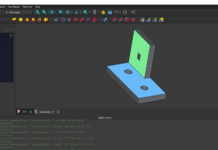
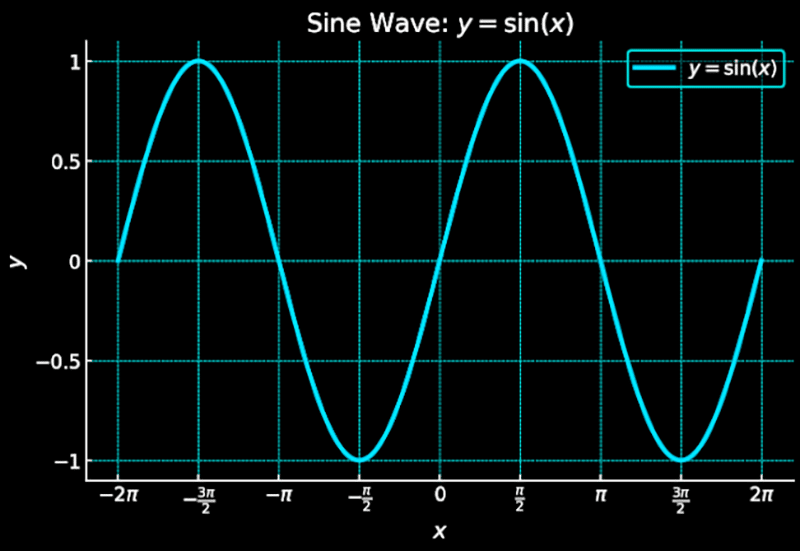
Now, let us turn to the Education category of custom GPTs. My top pick here is Math GPT (stylised as math), which offers three distinct modes of operation: Tutor/Problem Solving mode, Graph mode, and Calculator mode. The Tutor/Problem Solving mode provides step-by-step explanations, guided learning, and interactive problem-solving, making it ideal for students seeking conceptual clarity. The Graph mode is designed for plotting mathematical functions, visualising data, and generating custom graphs. For example, Figure 2 shows the output generated by Math GPT when given the prompt y = sin(x). The Calculator mode handles quick arithmetic, symbolic computation, and equation solving, making it a convenient tool for both simple and advanced calculations.
Some other notable custom GPTs in the category Education include: Academic Assistant Pro GPT used for organising research material, generating academic content, and providing structured writing assistance; Finance (Business Finance) GPT used for financial analysis, budgeting, forecasting, and generating business reports; AI for Medical Students GPT used for explaining medical concepts, summarising clinical guidelines, and supporting exam preparation; Chemistry Chem GPT used for solving chemistry problems, explaining chemical concepts, and generating molecular structures; and IELTS Speaking – English & Language Learning GPT used for practising IELTS speaking tasks, improving English fluency, and receiving language learning tips.
Next, let us explore a few custom GPTs from the category Programming. My top pick here is Code Copilot. To test its capabilities, I used a program from an article I wrote for OSFY nearly a decade ago, on the topic of esoteric programming languages. The article is available on the OSFY portal at: https://www.opensourceforu.com/2018/02/exercise-mind-exotic-programming-languages. Esoteric programming languages are deliberately designed to be difficult to program in, understand, and debug. For my test, I chose a program written in a language called Brainfuck—not the politest name, I admit. The program is shown below, and yes, it is valid! Back in the days before ChatGPT, writing such a program was indeed a tedious and time-consuming task.
+++++++[>++++++++++<-]>+++++++++.

>++++++++[>++++++++++<-]>.

>+++++++[>++++++++++<-]>-.

>+++++++[>++++++++++<-]>++++++++.

>+++[>++++++++++<-]>++.

>++++++++[>++++++++++<-]>+++.

>+++++++[>++++++++++<-]>+++++++++.

>++++++++[>++++++++++<-]>+++++.

>++++++++[>++++++++++<-]>++.

>++++++[>++++++++++<-]>+++++++.

>+++++++[>++++++++++<-]>-.

>+++[>++++++++++<-]>++.

>+++++++[>++++++++++<-]>.

>+++++++[>++++++++++<-]>+++++++++.

>++++++++[>++++++++++<-]>++.

>+++[>++++++++++<-]>++.

>+++++++++[>++++++++++<-]>-.

>+++++++[>++++++++++<-]>+++++++++.

>++++++++[>++++++++++<-]>+++++.
I simply copy-pasted the code into both ChatGPT and Code Copilot without providing any additional hints. Both quickly recognised it as Brainfuck code. However, ChatGPT confidently — but incorrectly — predicted that the program would print ‘HELLO CHATGPT’, whereas Code Copilot correctly identified the output as ‘OPEN SOURCE FOR YOU’. So, in this round, full marks go to Code Copilot. Furthermore, Code Copilot was the only custom GPT that managed to correctly decode another program written in an even more bizarre language called Ook! (from the same article mentioned above). I encourage you to try it yourself and see the results. There are also other custom GPTs in this category that can assist with a wide range of languages and tools, including HTML, CSS, JavaScript, Laravel, SQL, R, etc.
Now, let us look at some of the custom GPTs featured in the Productivity category. My pick here is Canva. Although I am not a designer myself, I found the results it produced quite impressive. Another noteworthy tool in this category is Resume, which I found particularly useful. This category also includes custom GPTs for generating PDFs, presentations, images, diagrams, etc.
The Writing category includes custom GPTs that even claim to write entire novels for you. Interestingly, the large number of GPTs promising to ‘humanize’ AI-generated text highlights the ongoing triangular battle between AI text generators, AI-based text detectors, and AI humanizers.
Another category of custom GPTs is DALL·E, named after OpenAI’s text-to-image model. This category includes GPTs capable of generating animations, logos, and a wide variety of other visuals, along with numerous specialised image-generation tools.
Finally, there is the Lifestyle category, which offers a variety of custom GPTs that provide advice on light-hearted, everyday topics. The next time you have some free time, it might be fun to explore and experiment with a few of them.
Now, it is time to wind up the article. There are two key takeaways to keep in mind. First, ChatGPT is just the tip of the iceberg — the world of AI tools is far broader and richer. Second, new custom GPTs are emerging almost every day, so it is worth browsing the list from time to time. You may just discover a surprisingly powerful tool that can cut your workload in half.