



























































Anthropic has updated its open source Model Context Protocol with MCP Tool Search, enabling Claude Code to load tools on demand, cut token usage dramatically, and unlock scalable, tool-rich AI agents.
Anthropic has released a major update to Claude Code, introducing MCP Tool Search, a long-requested feature that significantly upgrades its open-source Model Context Protocol (MCP). Released in late 2024, MCP is designed as an open standard for connecting AI models and agents to external tools and data sources in a structured and reliable way.
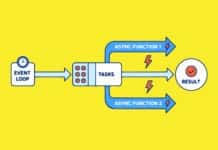
The new MCP Tool Search fundamentally changes how tools are loaded. Instead of preloading all tool definitions into the model context, Claude Code now uses lazy loading, dynamically fetching only the specific tool required for a given task. This replaces a brute-force architecture with a more scalable software engineering approach.
Previously, Claude Code had to load documentation for every available tool, consuming large portions of the context window before any user prompt was entered. MCP servers can expose more than 50 tools, and users often ran multiple servers simultaneously.
“We’ve found that MCP servers may have up to 50+ tools. Users were documenting setups with 7+ servers consuming 67k+ tokens,” said Thariq Shihipar, Member of Technical Staff at Anthropic.
With Tool Search, Claude Code monitors context usage and switches to a lightweight search index when tool descriptions exceed 10% of available context. Gupta noted that internal testing showed token usage dropping from ~134k to ~5k—an 85% reduction.
Beyond efficiency, the update improves accuracy. Community benchmarks show MCP evaluation accuracy rising from 49% to 74% for Opus 4, and from 79.5% to 88.1% for Opus 4.5.
“Every Claude Code user just got way more context, better instruction following, and the ability to plug in even more tools,” said Boris Cherny, Head of Claude Code.
The update is rolling out immediately.