




























































DensePose, an open source project released on GitHub by developer ruvnet enables WiFi-based detection of human posture and movement through walls using signal analysis and machine learning.
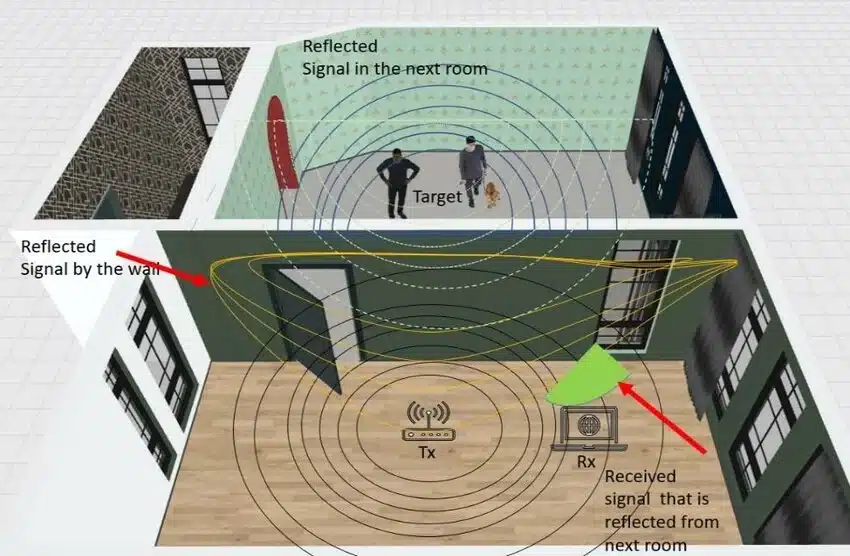
An open source software project called WiFi DensePose is drawing global attention after demonstrating how WiFi signals can be used to detect human movement behind walls without cameras. The code has been released publicly on GitHub under an open-source licence, enabling developers to experiment with WiFi-based human motion detection.
Created by a programmer known online as ruvnet, the system combines WiFi signal sensing, advanced signal processing and machine learning models to translate radio signal reflections into a digital skeletal representation of human movement.
Demonstrations show the system can track human posture and movement inside rooms, generating skeletal motion outputs similar to motion-capture systems used in animation and sports analysis. In some experiments, it has also detected subtle breathing-related micro-movements of the chest.
The project builds on more than a decade of academic research into WiFi-based sensing. Researchers at Carnegie Mellon University previously demonstrated similar techniques, including the study “DensePose from WiFi”. Dina Katabi, whose work helped pioneer radio-based sensing, explained the principle: “Wireless signals don’t just carry data. They also carry information about the environment they move through.”
The system analyses Channel State Information (CSI), which measures changes in the strength and phase of WiFi signals as they travel between transmitters and receivers. When people move, these signal patterns shift, allowing neural networks to estimate body position and motion.
Running the system requires specialised hardware rather than standard routers, typically using multiple ESP32-S3 microcontroller boards with external antennas. These devices collect CSI data, which is processed locally using Rust or Python software without cloud computing.
Researchers see potential uses in healthcare monitoring, fall detection and disaster search-and-rescue, although the technology has also raised privacy concerns. Serge Egelman noted: “When devices designed for communication suddenly become sensors, it changes the privacy landscape.”