






















































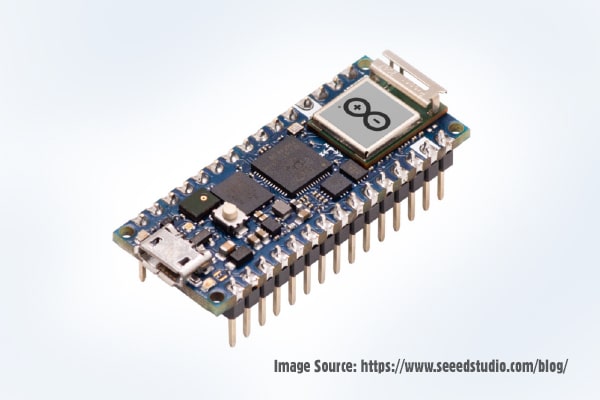

Built on open source frameworks, TinyML is enabling complex machine learning models to run on the microcontrollers embedded in connected devices, bringing artificial intelligence to the very edge of the network.
Imagine a world where the hum of a factory machine can be analysed in real-time to predict a failure before it happens, not by a powerful cloud computer, but by a small chip embedded in the machine itself. Envision a wildlife tracker so efficient it can identify a specific bird species by its song without ever connecting to the internet, conserving its battery for months in the wild. This is not a distant future; it is the tangible present, powered by a technological revolution called TinyML, and its engine is built on open source frameworks.
From the cloud to the ground: The paradigm shift of TinyML
For years, the promise of artificial intelligence was synonymous with massive data centres. We grew accustomed to sending our voice commands, photos, and sensor readings to vast cloud servers for processing. This approach, while powerful, has inherent limitations: latency, bandwidth consumption, energy drain, and significant privacy concerns. TinyML shatters this paradigm. It is the art and science of shrinking complex machine learning models to run on low-power, resource-constrained microcontrollers—the kind found in everyday devices like thermostats, wearables, and kitchen appliances. The goal is to perform AI inference at the very edge of the network, right where the data is born, enabling a level of responsiveness and efficiency previously unimaginable.
The open source engine room: Frameworks powering the revolution
This democratisation of intelligence would be impossible without the collaborative innovation fostered by open source software. These frameworks provide the essential tools that allow researchers and engineers to take massive neural networks and meticulously compress them into a form that can fit into a device with only a few kilobytes of memory. They are the bridges between the world of data science and the world of embedded systems.
At the forefront is TensorFlow Lite for Microcontrollers (TFLite Micro). As a direct descendant of the colossal TensorFlow framework, it is specifically designed for the deepest edge. It operates with a minimal core runtime, capable of running models as small as 20KB, and supports foundational operations for deep learning on platforms like Arm Cortex-M series processors. Its integration with the broader TensorFlow ecosystem allows for a smooth transition from training a model on a powerful computer to deploying it on a microcontroller with just a few lines of code.
Another standout is Edge Impulse, which takes a more holistic and user-friendly approach. It provides a web-based studio that guides developers through the entire TinyML lifecycle—from data acquisition and labelling to model training and deployment. By abstracting away much of the underlying complexity, Edge Impulse empowers not just seasoned ML engineers but also embedded developers and students to create powerful, real-world applications. It exemplifies how open source platforms are lowering the barriers to entry and accelerating innovation.
Beyond these giants, the landscape is rich with specialised tools. Apache TVM acts as a compiler to optimise models from various frameworks for a wide range of hardware backends. MicroTVM brings these capabilities specifically to microcontrollers. Meanwhile, projects like STM32Cube.AI from STMicroelectronics demonstrate how chip manufacturers are embracing open source principles, providing tools to convert pre-trained models into optimised code for their specific hardware families.
A silent symphony of intelligent devices
The true power of TinyML emerges in its applications, which are as diverse as they are impactful. In agriculture, tiny sensors can analyse soil conditions and decide when to irrigate, conserving precious water resources. In healthcare, low-cost wearable monitors can detect abnormal heart rhythms in real-time, triggering immediate alerts without compromising patient privacy. Industrial equipment can listen to its own operation, identifying the acoustic signature of a worn-out bearing and scheduling maintenance autonomously. Our homes are becoming smarter, with wake-word detection running locally on voice assistants, ensuring that our private conversations never leave the living room. This silent symphony of intelligent devices is creating a more efficient, responsive, and private world.
The future is small, open, and intelligentVinayak Ramachandra Adkoli
TinyML, fuelled by the collaborative spirit of open source, is fundamentally reshaping our relationship with technology. It moves intelligence from a remote, centralised resource to a pervasive, integrated capability. The frameworks we have today are just the beginning. As they evolve, they will enable even more complex models and applications on ever smaller and more efficient hardware. This convergence of open source software and ultra-low-power hardware is not just a technical trend; it is the foundation for the next generation of intelligent devices that will work quietly, efficiently, and smartly all around us, whispering the future into existence.