
























































CNCF’s 2025 Annual Survey shows Kubernetes has become the open source backbone for production AI, with enterprises standardising on cloud-native platforms as AI moves cautiously into scale.
Kubernetes has solidified its position as the de facto “operating system” for AI workloads, according to the Cloud Native Computing Foundation’s (CNCF) 2025 Annual Survey. The term is used in an operational sense, reflecting Kubernetes’ role as the common layer for managing, scaling and running AI systems in production rather than as a traditional operating system.
The survey shows Kubernetes now underpins scale, stability and production readiness for AI, with 82% of container users running Kubernetes in production, up sharply from 66% in 2023. What began as a container orchestration tool has evolved into the backbone of enterprise infrastructure.
Cloud-native adoption is now near-universal. Ninety-eight per cent of organisations report using cloud-native techniques, while 59% say much or nearly all of their development and deployment is cloud native. Only 10% remain in early adoption or are not using cloud native at all.
Kubernetes is also emerging as the preferred platform for AI inference. Sixty-six per cent of organisations hosting generative AI models use Kubernetes to manage some or all inference workloads. However, AI production maturity still lags infrastructure readiness. Only 7% deploy AI models daily, and 44% do not yet run AI or ML workloads on Kubernetes, indicating most remain AI consumers rather than producers.
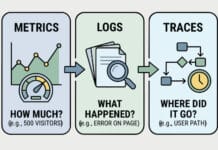
Operational maturity is increasingly driven by standardisation, with organisations adopting GitOps workflows and internal developer platforms to manage complexity at scale. Observability has become central, with OpenTelemetry among the fastest-growing CNCF projects, signalling a shift towards vendor-neutral, real-time visibility.
For the first time, organisational challenges, not technical ones, are the primary barrier, highlighting the growing importance of culture, communication and platform alignment in the next phase of open-source, cloud-native AI adoption.