










































Tether launches Apache-licensed MiningOS, a self-hosted, hardware-agnostic Bitcoin mining stack designed to cut vendor lock-in and make mining accessible to everyone from hobbyists to industrial operators.
Tether has released MiningOS (MOS), an open-source operating system for Bitcoin mining, positioning it as a direct challenge to proprietary mining stacks and a push towards decentralised infrastructure.
Designed to simplify, scale and decentralise mining for both individuals and institutions, the modular platform supports everything from home setups to large industrial farms operating across multiple geographies.
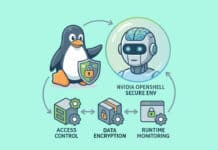
MiningOS runs on a self-hosted architecture and communicates through an integrated peer-to-peer network, removing reliance on centralised services. Released under the Apache 2.0 licence, it allows users to freely use, modify and build on the software.
Built on Holepunch P2P protocols, the stack offers no centralised services, no backdoors and no third-party dependencies, while a management platform lets miners easily adjust configurations based on scale and output.
“The mining industry has long been limited by closed systems and proprietary tools. MiningOS changes that — introducing transparency, openness, and collaboration into the core of Bitcoin infrastructure,” Tether said. The company added: “No black boxes. No lock-in. No Limits.”
CEO Paolo Ardoino described it as a “complete operational platform that can scale from a home setup to industrial grade site, even across multiple geographies.”
Unlike competitors such as Jack Dorsey’s Block, whose software is tied to its own hardware, Tether’s system is hardware-agnostic. MiningOS is “open source under the Apache 2.0 License — free to use, free to build on, free to improve,” enabling new miners to be “able to enter the game and compete” without costly vendors.
The launch expands Tether’s footprint beyond stablecoins into broader infrastructure and decentralised technologies.