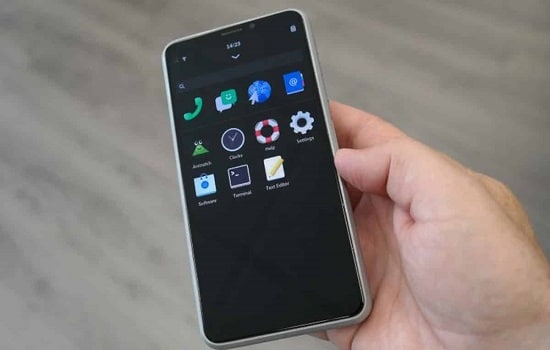
The Free Software Foundation has launched the Librephone initiative with developer Rob Savoye to create a truly open source smartphone—free from every proprietary driver, blob, and closed component.
The Free Software Foundation (FSF) has announced a landmark open source initiative during its 40th anniversary celebration—the Librephone project, a mission to create a fully free and open source smartphone offering what it calls “full computing freedom.”
Unlike past attempts that relied on partial openness, the Librephone aims to eliminate every proprietary element, including firmware and drivers, by reverse engineering existing systems. Rather than building from scratch, developers plan to base it on an existing operating system such as Android, reworking it until no non-free code remains.
The effort is being developed in partnership with Rob Savoye, a veteran free software developer who “has worked on free software (including the GNU toolchain) since the 1980s.” Together, the FSF and Savoye aim to achieve a milestone that has long eluded the open source community—a smartphone free from all closed components.
While several Android-based and Linux-based systems like GrapheneOS, /e/OS, postmarketOS, Mobian, and PureOS have stripped out proprietary apps or services, they still depend on non-free “blobs” for hardware compatibility. The Librephone, by contrast, seeks complete independence from proprietary code.
The FSF’s no-compromise stance on software freedom is reflected in its limited lists of “entirely free” operating systems and officially endorsed hardware—highlighting how rarely full freedom is achieved. The organisation previously attempted a similar free phone operating system in 2017, which was eventually abandoned, underscoring the technical and logistical challenges that lie ahead.
If successful, the Librephone could redefine privacy-first, user-controlled smartphones, setting a new benchmark for transparency, autonomy, and ethical computing in the mobile era.