



























































A global team led by St. Jude’s Jasmine Plummer has released Spatial Touchstone – a open source framework finally brings standardisation and quality control to spatial transcriptomics
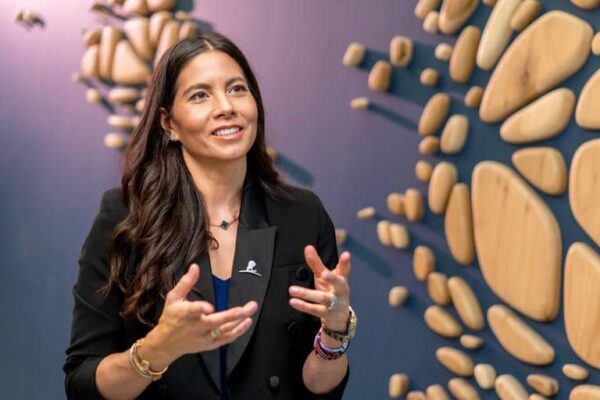
Spatial Touchstone, a multi-institute initiative co-led by Jasmine Plummer, Ph.D., Director of the St. Jude Center for Spatial Omics, has introduced the first global open-source quality-control framework for spatial transcriptomics. Published in Nature Biotechnology (2025), the project provides a unified repository, standard operating procedures, statistical metrics, and an open suite of tools designed to standardise data quality across the field.
The framework addresses long-standing inconsistencies in spatial transcriptomics, which has expanded rapidly without shared benchmarks. Researchers have lacked reliable metrics to understand whether variability stemmed from samples, machines, or technicians. As Plummer explained, “The project started because I was frustrated with the field lacking quality metrics. Other technologies have established baseline expectations using set cell lines to tell if variation is due to the sample, machine or technician.”
To solve this, the team compiled public imaging datasets and paired them with newly generated curated samples from breast, prostate, colon, appendix, ileum and pancreas tissues, spanning both healthy and diseased states. These cross-institute replicates create a reference standard for what high-quality tissue data should look like.
The open source suite includes Spatial QM, which reports platform-level performance metrics, and the Spatial Touchstone Portal (STP), enabling researchers to screen preliminary samples before full-scale analysis. “The portal is designed to view metrics by tissue so you can see how samples perform,” Plummer said. “Users can understand if their samples pass or fail the quality check, which is important because analysing a terabyte of data is a lot of work.”
The accompanying Spatial Touchstone Standard Operating Procedures (STSOP) further democratise best practices. As Plummer noted, “Every individual lab is different, but we wanted a set of protocols where people can feel confident in their methods and the expected outcomes.”