






























































Organisations should invest in a detailed data governance policy to stay ahead of the game and to make the most of their data.
Data governance (DG) enhances data accuracy, consistency, and cleanliness through well-defined roles, organised policies, and well-enforced standards, enabling more intelligent and confident decision-making throughout the organisation. By formally delegating ownership to data stewards, custodians, and owners, it also improves accountability by guaranteeing that governance is both transparent and enforceable.
Key aspects of data management include:
- Establishing policies that dictate how data is managed and used across the organisation.
- Ensuring the accuracy, completeness, and reliability of data.
- Designing the structure of data systems, including databases and data warehouses.
- Choosing appropriate storage solutions (e.g., databases, data lakes) based on data type and access needs.
- Combining data from different sources to provide a unified view.
- Protecting data from unauthorised access and breaches.
- Using statistical and computational methods to analyse data and extract valuable insights.
Though this is a subjective concept and requires a well-thought-out information management approach, there are several tools available to implement DG within an establishment. Open source tools, too, enable easy and elegant implementation of data management (DM). The distributed streaming platform Apache Kafka is a tool for creating real-time data pipelines and streaming applications. A robust, open source object-relational database system with a wide range of features and a solid reputation for dependability is PostgreSQL. For small and medium-sized applications, another popular open source relational database management system is MySQL. Using basic programming concepts, Apache Hadoop is a system that enables the distributed processing of massive volumes of data across computer clusters. Apache Airflow is a framework for developing, scheduling, and monitoring processes programmatically. It is frequently used for orchestrating data pipelines. Metabase is an open source business intelligence application that facilitates simple data processing and visualisation. Druid is a high-performance, distributed, column-oriented data storage system for real-time analytics.
The different data governance policies
A data governance policy is a collection of standards and guidelines aimed at the management, processing, and protection of data within an organisation. The policy is used to ensure security, consistency, and accuracy in all areas of an organisation.
This policy generally outlines the data collection, storage, processing, and disposal procedures. It also defines the roles and responsibilities of various staff members who handle the data. It aims to improve data quality and security, comply with regulations, and enhance the overall decision-making process.
Effective data classification and labelling according to its type, sensitivity, and business value are essential to the successful adoption of data governance policies.
There are a few typical kinds of data governance policies that businesses may use.
Data access and authorisation policy
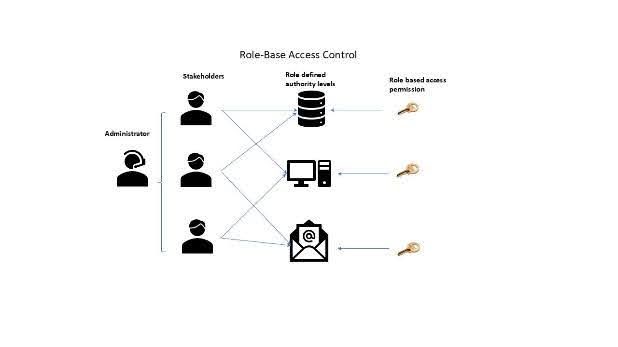
Specifies who can view which information, under what circumstances, and to what extent. Such a policy makes it possible to ensure that sensitive information is viewed only by authorised individuals, ensuring privacy and security.
Data quality policy
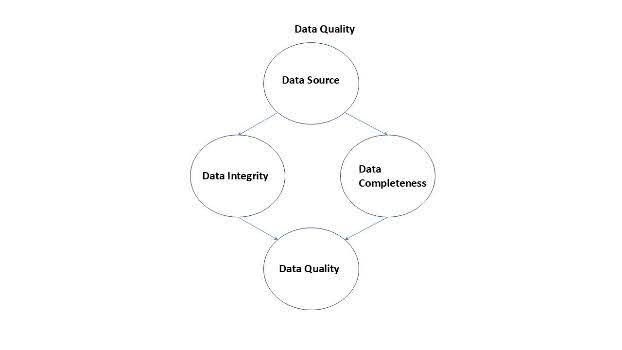
Establishes standards and procedures for accurate, complete, and reliable information. It outlines data entry, validation, and correction procedures to maintain data integrity.
Data privacy and compliance policy
It governs how personal and sensitive data is collected, stored, used, and shared. Creates controls to meet applicable data protection regulations (e.g., General Data Protection Regulation or GDPR, Health Insurance Privacy Regulation or HIPR).
Data classification policy
Classifies information into levels of sensitivity and importance, specifying how information is to be treated and secured based on its level of classification.
Data usage policy
Sets boundaries for acceptable uses of data within the organisation, including restrictions on sharing or using data for purposes beyond the organisation’s scope.
Data stewardship and accountability policy
Assigns roles and responsibilities for managing data to provide data accountability for quality, security, and compliance across departments.
Data integration and sharing policy
Offers standards for the consolidation of information from various sources and exchange of information internally or externally with data integrity and security.
Together, these policies provide a foundation that supports an organisation’s data governance strategy to build transparency, compliance, and sound data management practices. Organisations can improve decision-making, ensure regulatory compliance, and safeguard their data assets by putting such diverse data governance rules into place.
In this era of strict regulations, where privacy and data security are highly valued, businesses must record how they use, handle, and govern their data. To preserve accuracy, integrity, and safety while addressing problems as they emerge, it is necessary to write a data governance policy that outlines the guidelines and processes for handling data.
| The purpose of data governance policies |
|
Essential components of a data governance policy
Policy purpose and scope
The policy should outline its purpose and objective, and the areas of its jurisdiction within the organisation.
Data governance structure
It must clearly describe the unique responsibilities of data owners, stewards, and custodians in preserving the privacy, security, and quality of data.
Data access and usage rules
The policy must identify who has the right to utilise various forms of data, the authorised method of utilisation, and any restrictions on utilisation. There must also be clear procedures for data release and transfer.
Data quality standards
It should define rigorous data quality checking, including accuracy, consistency, completeness, and reliability. It may also define data cleansing and validation practices.
Data security and privacy guidelines
The policy should outline how the organisation will protect sensitive information against security breach incidents and unauthorised use. This includes data encryption, data anonymization, and data access control requirements.
Adherence to regulatory standards
It must include compliance obligations under laws such as GDPR, Consumer Privacy Act (CPA), etc. All regulatory updates must be covered under the policy.
Evaluation and examination procedures
The policy must have provisions for carrying out regular audits and reviews to ascertain compliance and determine the effectiveness of existing practices.
Procedure for policy violations
It must detail the sanctions for any violations, ranging from retraining and warnings to dismissal, and even prosecution in extreme cases.
| Components of a data governance policy document |
| 1. Title: e.g., Data Security Policy v1.0 2. Purpose and scope 3. Roles and accountability 4. Definitions: Key terms, vocabulary, and classification tiers 5. Policy directives: Controls for each area (e.g., encryption, access, retention, different stakeholders’ data authorisation policies) 6. Implementation procedures and standards: Step-by-step enforcement 7. Audit and monitoring: Monitoring and upgrading process 8. Risk and exceptions handling 9. Review policy 10. Glossary and references |
Steps for making a data governance policy
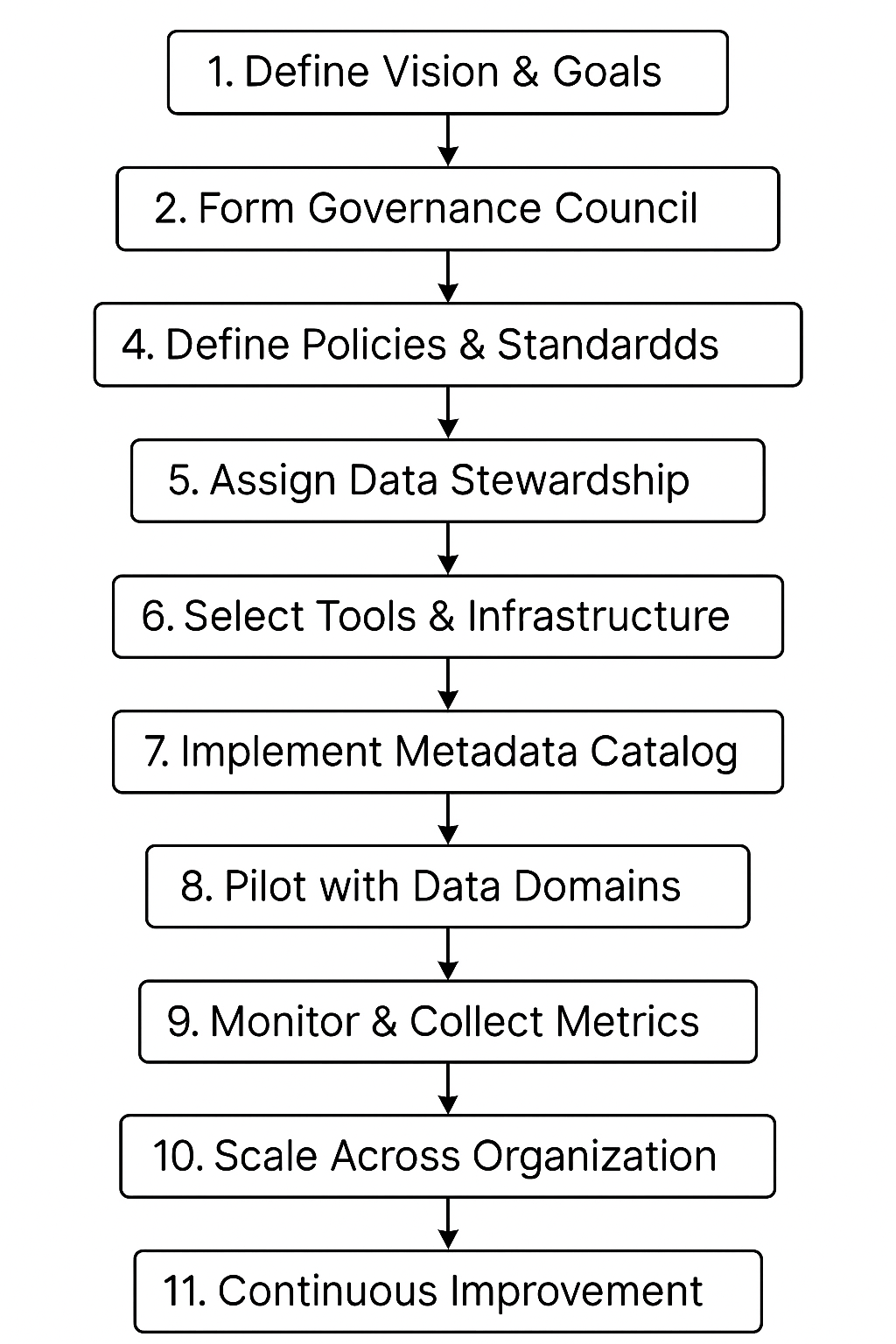
Vision and goal setting
A clear strategy and vision are required to implement data governance, as data is a strategic asset of an organisation.
Governance council (GC)
A data governance council should be formed to ensure the implementation of the policy. The size of the council should be large enough for diversity and small enough for effective discussion making. It should include individuals with financial, legal, and industry-specific skills. Independent members who have vast experience in data management can add to the strength of the council.
Policy definition and objectives
The policy definition and objective preamble should state the purpose of the policy and its aim. It should state the scope of the DG, clearly mentioning the type of data, systems, and the departments and geographic regions included. This policy definition should match the stated goal of data governance and comply with regulations like GDPR, CPA, and HIPR.
The council should classify data into the public, internal, confidential, and restricted classes, and specify data handling procedures. It should also define the authentication methods and data access privileges for stakeholders. Data security and quality should be ensured with proper encryption, masking, tokenization, and anonymization.
A data retention and disposal policy is also important for data governance. It deals with retention periods per data classification and legal/regulatory mandates. It also automates archiving and deletion processes beyond retention thresholds.
Monitoring
Data governance requires periodic audit and maintenance of all the stored data for access, changes, and deletions. Audits are essential for risk monitoring and exception handling.
The GC must review policies and their implementation at least once a year or when new regulations come into force. It may also review the policy adherence rate, audit findings, and incident count.
Training and awareness
The success of data governance requires regular training on policies and procedures. This enables data owners and stewards to learn about the changed rules/regulations and standards.
Data governance is ultimately about using data as a competitive differentiator; it positions data as a strategic advantage. It’s not just about safeguarding assets; mission-critical compliance is supported, stakeholder confidence is increased, and raw data is transformed into trustworthy insights with the aid of effective governance. However, it takes constant labour to implement and maintain this framework.