






















































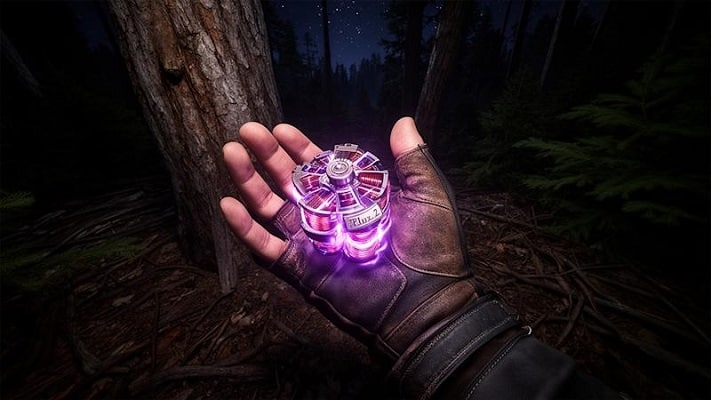

Black Forest Labs’ FLUX.2 introduces a fully open source VAE under Apache 2.0, enabling enterprises to integrate high-fidelity image generation into self-hosted workflows while avoiding vendor lock-in.
German AI startup Black Forest Labs (BFL) has released FLUX.2, a production-focused image generation and editing system that combines commercial and open-weight models. The standout feature is the fully open-source FLUX.2 VAE, licensed under Apache 2.0, which provides the latent space shared across all FLUX.2 variants. This allows enterprises to maintain consistent reconstruction quality, streamline multi-model pipelines, and perform lightweight fine-tuning without vendor lock-in.
FLUX.2 supports multi-reference conditioning of up to 10 images, 4-megapixel resolution, improved prompt adherence, and refined text rendering. Its architecture integrates a rectified flow transformer with a Mistral-3 (24B) vision-language model, while the retrained latent space improves semantic alignment, learnability, and reconstruction fidelity.
The system includes five model variants: Flux.2 [Pro] for high-fidelity hosted deployments, Flux.2 [Flex] for adjustable speed vs. quality, Flux.2 [Dev] open-weight checkpoint for self-hosted experimentation, Flux.2 [Klein] upcoming open-source model, and the open-source Flux.2 VAE. Benchmarks show FLUX.2 [Dev] leads open-weight alternatives with win rates of 66.6% in text-to-image, 59.8% in single-reference editing, and 63.6% in multi-reference editing, while offering significant cost efficiency compared with competitors such as Nano Banana Pro and Google Gemini 3.
BFL continues its open-core strategy, combining hosted endpoints for reliability with open models for research and experimentation. By releasing the VAE and future models like Flux.2 [Klein] under open source licenses, the company strengthens its commitment to transparency, interoperability, and enterprise-ready AI image generation.
Founded in 2024 by Robin Rombach, Patrick Esser, and Andreas Blattmann, BFL has rapidly established itself as a leader in open source AI imaging, supported by $31M in seed funding led by Andreessen Horowitz.