


















































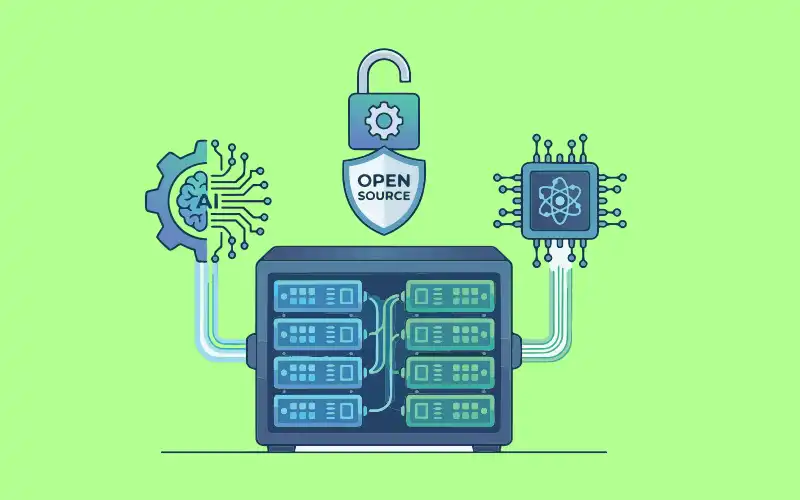

Hybrid infrastructure models in which classical and quantum computing work in tandem are the future.
Over the past decade, cloud computing has revolutionised the way application development and deployment are carried out, and it is now possible to deploy infrastructure in just minutes. However, two technology revolutions are changing the landscape of computing and the way infrastructure needs to be built and deployed. These are: large language models (LLMs) and quantum computing.
The adoption of AI systems, especially LLMs, has led to an enormous need for computing infrastructure. Traditional infrastructure built on the concept of virtualization is no longer sufficient for AI workloads. These now need specialised AI-native clouds that can manage the complex pipelines of computing and scale dynamically. However, simultaneously, a new technological frontier is unfolding. Quantum computing, which was previously accessible only through experimental environments, is slowly and steadily being made accessible through the cloud. Instead of deploying and running quantum processors locally, which is almost impossible due to the extreme operating environments necessary for running them, it is now possible to access them remotely through APIs running in the cloud. This is called Quantum Computing as a Service (QCaaS).
The union of AI infrastructures and quantum computing is leading to a new paradigm of hybrid computing environments, where classical computing resources like CPUs and GPUs are being combined with new quantum processors. The role of open source technologies is significant in the unfolding of a new era of hybrid infrastructures. Kubernetes is being accepted as the de facto backbone of cloud-native infrastructures, and it is enabling organisations to orchestrate complex distributed environments. At the same time, open source technologies are playing a significant role in the democratisation of AI and quantum infrastructures. As organisations are increasingly exploring the union of AI and quantum technologies, a new paradigm of infrastructure is unfolding, where AI clouds, HPC environments, and quantum computing services are being combined into a single environment.
LLM infrastructure at scale: Open source AI cloud stack
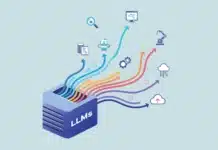
Large language models have quickly become the core of many modern applications, ranging from intelligent chatbots and coding assistants to research and enterprise knowledge systems. To deploy large language models at scale, however, it takes significantly more than just running a simple machine learning script — it requires the development of infrastructure that can handle enormous computational demands while remaining efficient and reliable.
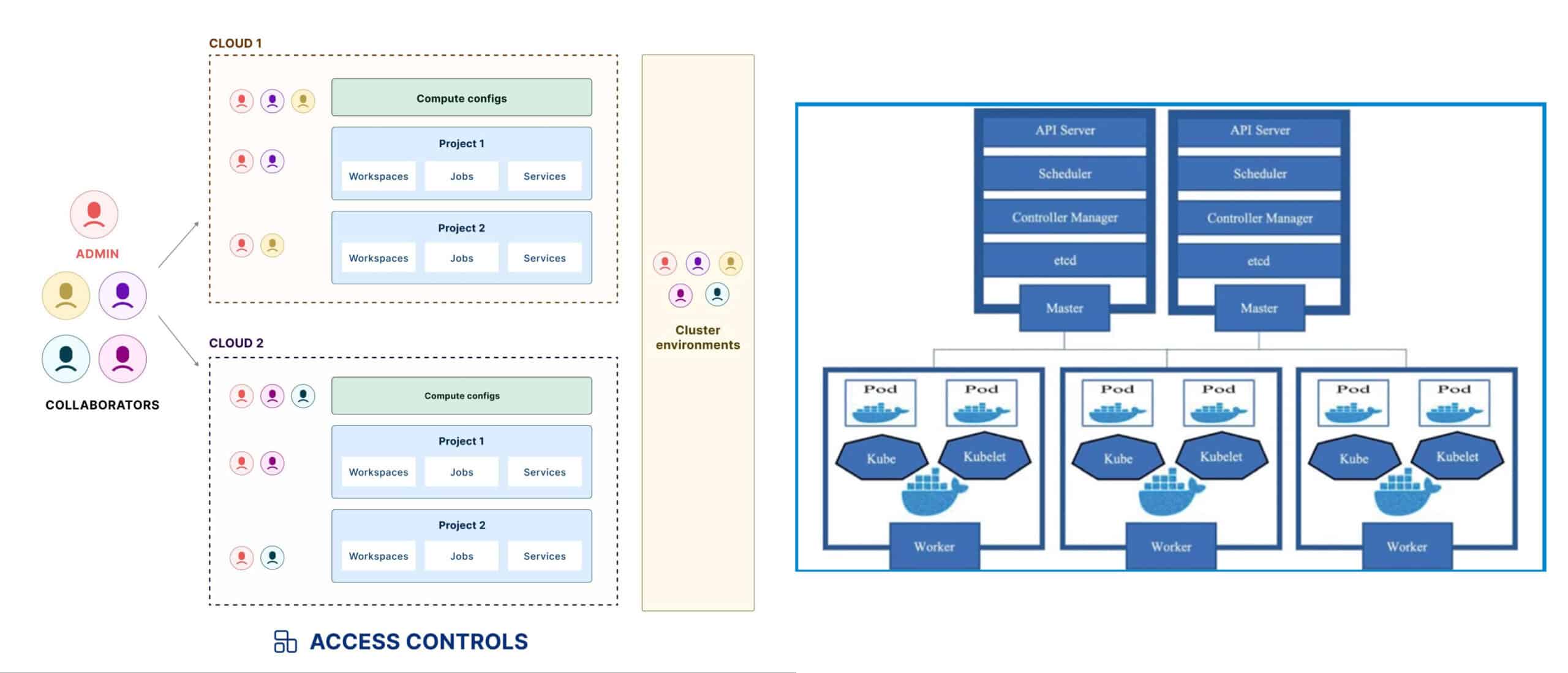
The core of any AI-based cloud infrastructure is container orchestration. Container orchestration platforms, such as Kubernetes, enable developers to efficiently handle distributed applications across a series of machines.
GPUs are essential in modern AI systems. Technologies such as NVIDIA CUDA enable the use of thousands of cores in parallel computations, which are necessary to reduce the time taken in machine learning model training and inference. These GPUs can be dynamically assigned to various applications based on their needs using container orchestration platforms. In addition to compute services, it is also important to have efficient services for serving models. For example, vLLM and Ollama are models that make it easy to deploy LLMs by optimising the inference pipeline. They ensure that models are loaded into memory and requests are batched appropriately, and that memory is utilised efficiently within the GPU.
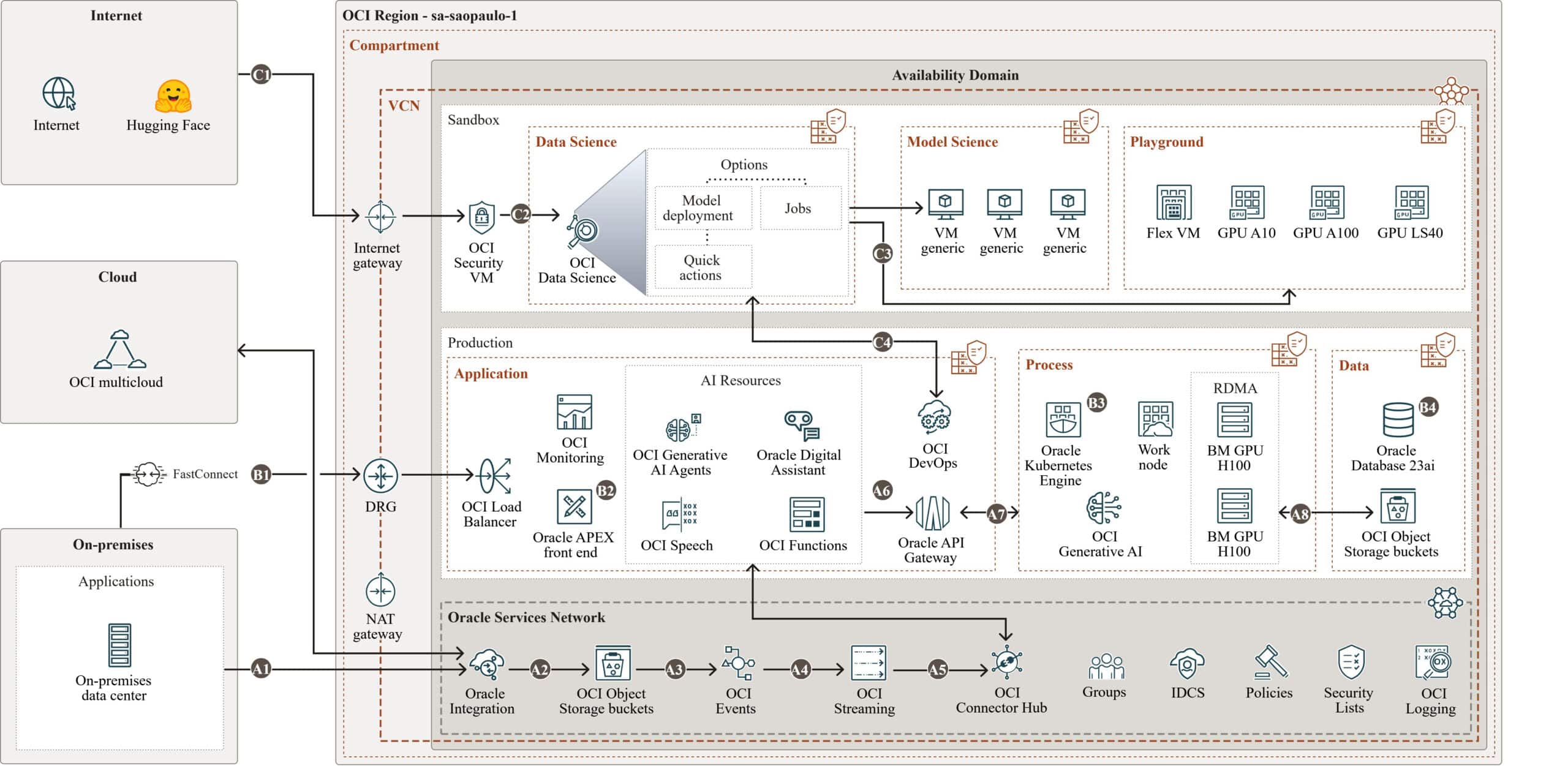
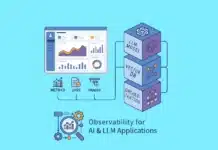
Observability is also an important component of an efficient AI stack. For instance, the Prometheus tool is helpful in monitoring different metrics in a system. Additionally, tools like Grafana are important for visualisation. These tools are important when dealing with large-scale AI services to avoid cost inefficiencies.
An example of an open source AI cloud stack could be:
- Kubernetes, an orchestration tool
- GPU-enabled compute nodes, which can be utilised for training and inference
- Distributed storage, which can store data and models
- Model serving frameworks, like vLLM
- Observability tools, like Prometheus and Grafana
All these tools are essential for creating an AI platform that is efficient in supporting LLM workloads. One of the most important aspects of using an AI platform is that it is customisable.
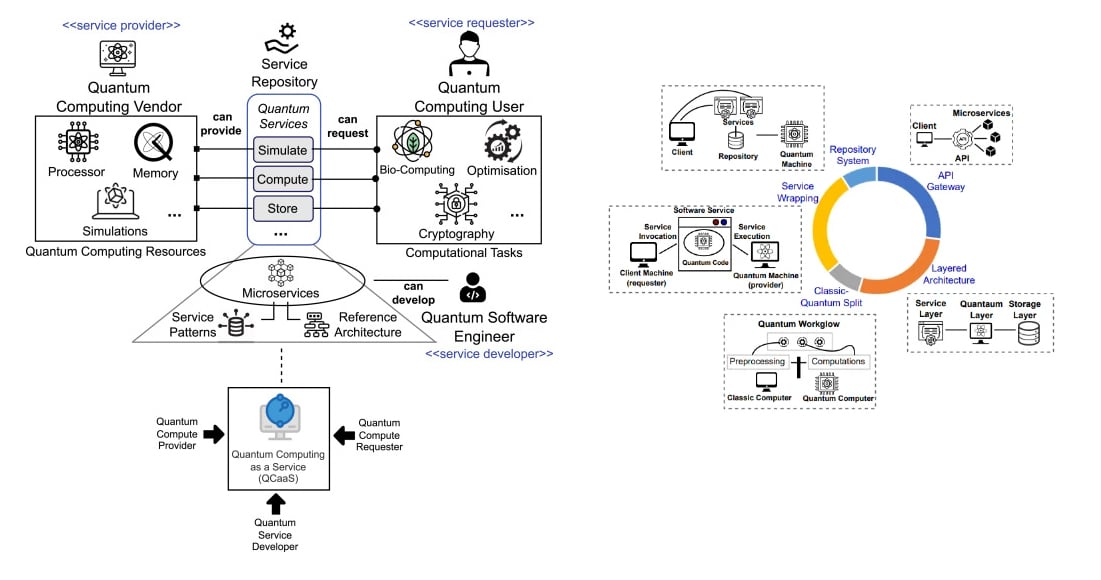
Quantum Computing as a Cloud Service (QCaaS): Architecture and integration
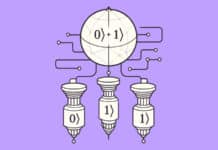
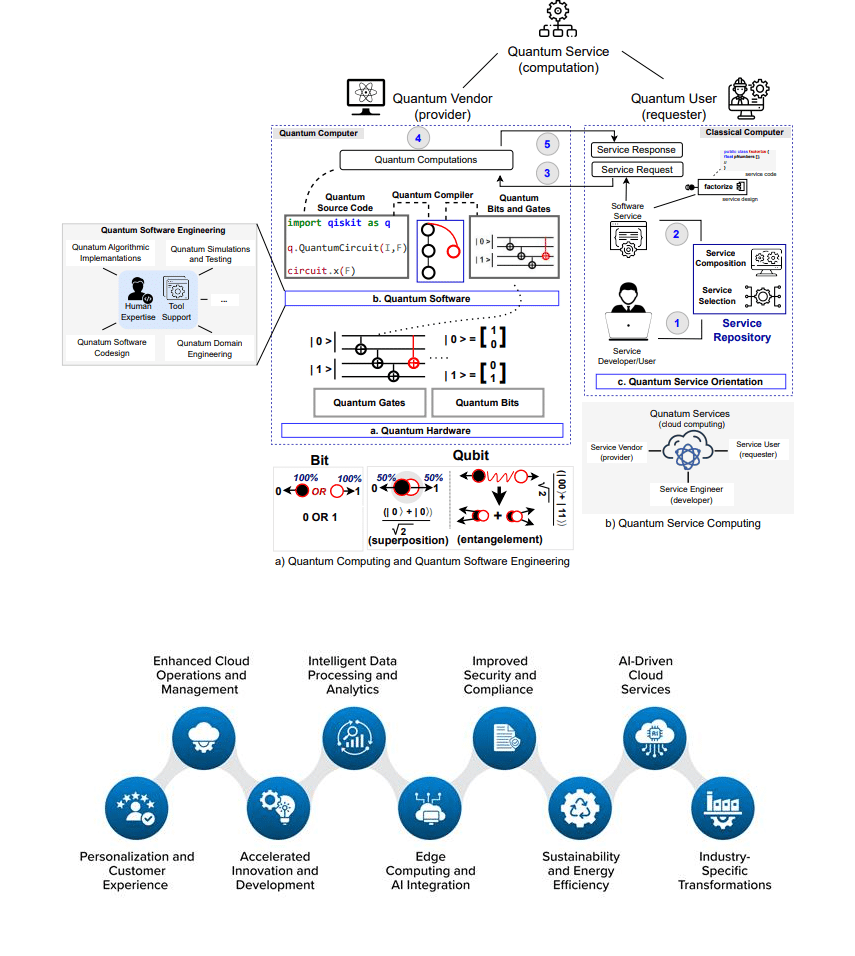
Quantum computing has greatly changed the way we approach problem-solving. Quantum computers have quantum bits or qubits, which can be in more than one state at a time and can perform calculations that are impossible by other means. However, the problem with quantum computers is that they are very sensitive and complicated machines and must be maintained at a temperature that is close to absolute zero. It has become impossible to put quantum computers in a data centre.
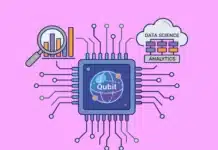
Quantum Computing as a Service, or QcaaS, is a service that provides users with the ability to access quantum computers remotely via software. Instead of developers needing to have quantum computers, they can simply send in their quantum circuits and computations, and these will be run on a remote platform. One of the most popular quantum computing development frameworks is Qiskit. The framework is useful for developing quantum computing applications as well as for performing experiments using quantum hardware that is accessible through the cloud. For example, IBM Quantum offers quantum processors that are accessible through the cloud. This enables users around the world to perform experiments on quantum algorithms. Similarly, quantum computing services such as Amazon Braket offer unified interfaces that allow users to access multiple quantum hardware providers. With the use of these quantum computing services, users will be able to develop hybrid computing applications that leverage classical and quantum computing.
The architecture that can be expected from a typical QCaaS platform includes:
- User interface layer: This includes development environments and SDKs that can be used to write quantum programs.
- Cloud orchestration layer: This includes job scheduling and authentication.
- Classical processing layer: This includes classical processing.
- Quantum hardware layer: This includes the actual quantum processors.
This layered architecture enables developers to integrate quantum computing into existing workflows without requiring any specialised hardware infrastructure.
Hybrid quantum-classical infrastructure: Orchestrating HPC and quantum workloads
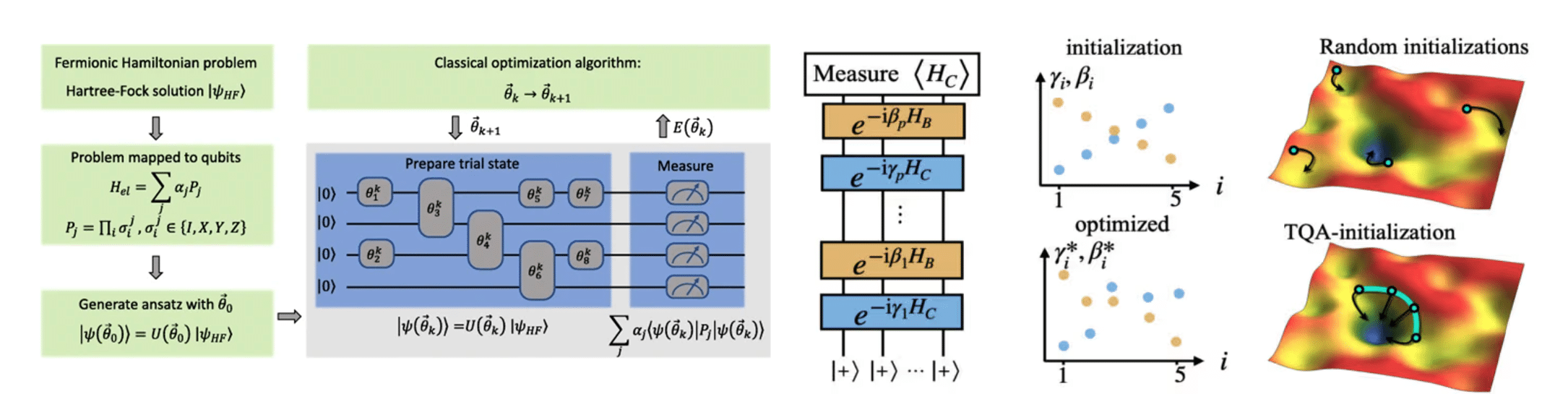
Despite its tremendous potential, quantum computing is not intended to replace classical computers altogether. Instead, the most promising areas of application for quantum technology are those that will use a hybrid model of computing. In a hybrid system, classical computers can be used for tasks such as data preparation, optimisation, and control of algorithms. Quantum processors can be used for specific areas of the calculation where it is believed that a quantum computer may be useful. The results can then be passed back to the classical computers for further analysis. This is the case for the Variational Quantum Eigensolvers algorithm and the Quantum Approximate Optimization Algorithm (QAOA) — both use a loop of iterations where classical optimisation techniques are used, and a quantum circuit to evaluate the potential solution.
Here’s a simple form of a hybrid workflow:
- The classical system processes the input data.
- The quantum circuit is generated and run on a quantum processor.
- The quantum processor runs the circuit and sends back the measurements.
- The classical system optimises the parameters.
- The process is repeated until convergence is reached.
Such complex workflows are managed by complex orchestration tools like Kubernetes that help in managing distributed processes over CPUs, GPUs, and quantum computing. The other prominent player in the hybrid computing arena is high-performance computing, which is utilised for simulations, data processing, and creating intricate machine learning models.
The potential application areas for hybrid quantum and classical computing are:
- Drug discovery and molecular simulations
- Financial portfolio optimisation
- Logistics and supply chain optimisation
- Cryptography and cybersecurity research
With advancements in the hardware of quantum computers, hybrid infrastructures will play a significant role in bridging the gap between experimental quantum computers and practical application areas.
The future: Convergence of AI, HPC, and quantum computing in open cloud
The convergence of high-performance computing with AI and quantum technology represents one of the most interesting advances in computing today. Each of these three areas is focused on different types of computational problems, and together, they create the opportunity to develop new types of applications. AI has the capability to assist in the optimisation of quantum algorithms, which can improve the design of quantum circuits and decrease the noise generated by quantum computing operations. On the other hand, quantum computing has the possibility of speeding up machine learning tasks such as optimisation and probabilistic modeling. The form of cloud infrastructure will provide the foundation for the unification of these three technologies into a single unified computing platform.
Open source ecosystems are providing the flexibility necessary to integrate a wide diversity of tools, frameworks and hardware architectures into a common unified computing platform. In the future, many companies may run a hybrid cloud in which workloads using AI will execute on GPU clusters, while simulations executed using HPC systems will run on specialised compute nodes and jobs submitted to remote quantum processors via cloud-based APIs. Developers will access all three types of resources through unified orchestration frameworks that will hide the complexities of using these disparate technologies from the application developer.
Open communities have been instrumental in the development of open source software and cloud computing, along with container orchestration and distributed systems, thus far. As quantum and artificial intelligence technologies become more established as research areas, there is a widespread expectation that community development will continue to encourage innovation, transparency, and access through these types of developments. While scalable quantum computers are still years away from being developed as an enterprise computing platform, the groundwork for hybrid AI/quantum infrastructures is already being laid by individuals who are experimenting with these technologies. By getting involved early in the exploration of these technologies today, engineers, developers, and researchers will be well positioned to be part of the next computing era.
The transition from artificial intelligence cloud computing to quantum computing infrastructure has barely begun, but many of the leaders in this area are working with open source platforms to ensure that tomorrow’s computing capabilities will be available to everyone.