















































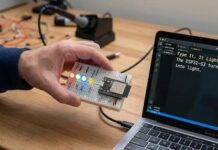

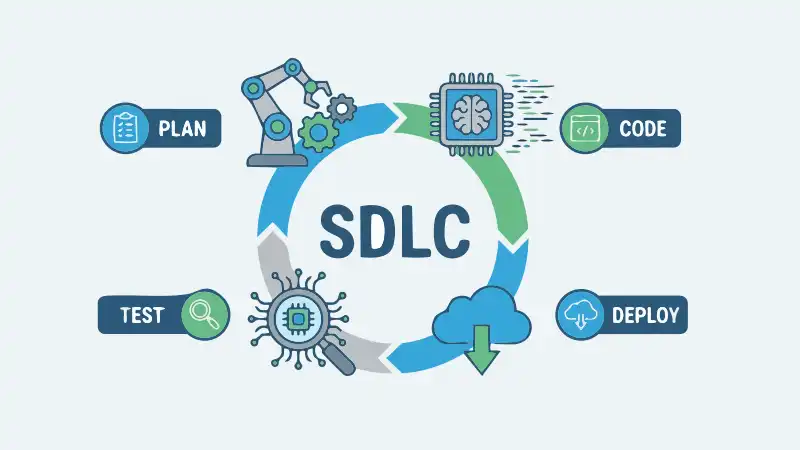

The integration of artificial intelligence into the software development life cycle marks a watershed moment in the evolution of programming.
The software development landscape is undergoing an unprecedented transformation, driven by the infusion of artificial intelligence into the software development life cycle (SDLC). This is not merely an incremental improvement but a fundamental reimagining of how software is conceived, built, and maintained. Modern AI-powered tools such as Google Antigravity, Claude Cowork, and GitHub Copilot are at the forefront of this revolution, dramatically accelerating and enhancing every phase of the SDLC. For software engineers, technology leaders, and IT professionals, understanding this new era is essential to remain competitive and innovative in an ever-evolving industry.
AI tools transforming the SDLC
Artificial intelligence is now deeply embedded in the fabric of software engineering, with several advanced platforms leading the charge. Google Antigravity leverages state-of-the-art machine learning to orchestrate and automate SDLC workflows, making them more adaptive and context aware. Claude Cowork, designed as an AI-powered collaborative assistant, refines team interactions and knowledge sharing, ensuring seamless cooperation across distributed teams.
GitHub Copilot, perhaps the most widely adopted among developers, brings intelligent code generation and contextual suggestions directly into the coding environment, thereby augmenting productivity and reducing manual effort. Each tool, while unique in its approach, collectively underpins the next generation of software development practices.
Requirement gathering and discovery
The initial stages of the SDLC, namely, requirement gathering and discovery, have traditionally been fraught with ambiguity and manual effort. AI-infused tools are now changing this narrative. Google Antigravity, for instance, employs natural language processing to analyse stakeholder conversations, emails, and documentation, automatically extracting actionable requirements and highlighting potential ambiguities. This reduces the risk of misinterpretation and ensures that development starts on a solid foundation. Claude Cowork enhances these activities by facilitating real-time collaboration, organising brainstorming sessions, and summarising discussions into structured requirement documents. Its ability to synthesise information from multiple sources enables teams to reach consensus more efficiently. GitHub Copilot, while primarily focused on coding, assists in prototyping by generating sample code snippets based on high-level requirement descriptions, enabling rapid validation of ideas during the discovery phase.
Design and documentation
Moving into the design and documentation stages, AI further demonstrates its transformative potential. Google Antigravity automatically generates architectural diagrams and design artefacts by interpreting requirement documents and user stories, ensuring alignment between business objectives and technical implementation. This capability not only accelerates the design process but also ensures traceability and consistency across the project. Claude Cowork acts as an intelligent scribe, recording design meetings, capturing key decisions, and converting these discussions into formal design documents. It also offers contextual suggestions, drawing upon industry best practices and previous project experiences. GitHub Copilot contributes by generating boilerplate code, configuration files, and even inline comments, thereby reducing the documentation burden on developers and ensuring that codebases remain well-annotated and maintainable.
Application development
The coding and implementation phase is perhaps where AI’s impact is most visible. GitHub Copilot stands out by providing real-time code suggestions, auto-completing functions, and even writing entire modules based on brief prompts. This not only accelerates development but also reduces the likelihood of errors and inconsistencies. Google Antigravity further augments development by integrating with diverse code repositories and orchestrating automated builds, ensuring that the latest code is always tested and ready for deployment. Claude Cowork supports developers by offering contextual advice, flagging potential issues, and facilitating peer reviews, all within a collaborative environment that bridges the gap between remote and in-person teams.
| Feature | Google Antigravity |
Claude Cowork | GitHub Copilot |
| Requirement analysis | Automated extraction from conversations and documents | Collaborative brainstorming and structured documentation | Prototype code generation from requirements |
| Design automation | Generates architectural diagrams and artefacts | Records design meetings and formalises documents | Boilerplate code and configuration generation |
| Development assistance | Automated build orchestration and code integration | Contextual advice and peer review facilitation | Real-time code suggestions and auto-completion |
| Testing and QA | Automated test case generation and execution | Test plan management and defect coordination | Unit and integration test code suggestions |
| Operations and monitoring | Deployment automation and anomaly detection | Aggregates logs, feedback, and incident analysis | Deployment scripts and monitoring dashboard generation |
| Collaboration | Integrates with multiple tools and platforms | Optimised for distributed team interactions | Integrates with code editors and version control |
Test case and strategy development
Testing and validation, long considered bottlenecks in the SDLC, are being redefined by AI-driven strategies. Google Antigravity automatically generates comprehensive test cases from requirement documents and user stories, ensuring that every business rule is thoroughly validated. It also orchestrates test execution across multiple environments, collecting and analysing results to pinpoint areas of concern. Claude Cowork supports quality assurance by facilitating the creation of test plans, managing test data, and coordinating defect triage meetings. Its collaborative features ensure that all stakeholders are kept in the loop, reducing delays and miscommunication. GitHub Copilot assists developers by suggesting unit and integration test code, thereby embedding quality directly into the development workflow and enabling test-driven development with minimal overhead.
Operations and monitoring
The operational phase of the SDLC benefits immensely from AI’s predictive and analytical capabilities. Google Antigravity automates deployment pipelines, monitors application health in real time, and proactively identifies anomalies before they escalate into critical issues. Its integration with cloud platforms ensures that scaling and resource allocation are handled dynamically, optimising performance and cost. Claude Cowork acts as a central hub for operations teams, aggregating logs, incident reports, and user feedback, and providing actionable insights to improve system reliability. GitHub Copilot’s contributions extend to generating scripts for deployment automation and creating monitoring dashboards, ensuring that the transition from development to production is seamless and robust. Given below is the feature comparison table of popular AI-infused SDLC tools to understand them better.
Cost benefits and quality improvement
AI-powered SDLC tools reduce costs primarily by compressing cycle times, reducing rework, and shifting defect discovery to the left. During the requirement and design stages, NLP-based extraction and summarisation reduce the time analysts spend on transcription, deduplication, and traceability maintenance, and promote requirement consistency — a major source of downstream change requests. Code-assist technologies also speed up development of typical constructs (scaffolding, API wiring, configuration, migrations) and enforce conventions that lower onboarding costs and risk of ‘tribal knowledge’ loss. In testing, model-assisted test creation helps cover more edge cases obtained from user stories and code paths, enhancing defect containment and reducing the cost of fixing bugs in late-stage testing and production.
Quality is better when AI is a control layer rather than pure generator. Static analysis extensions can warn of unsafe idioms, unused code, dependency concerns, and anti-patterns in performance at an early stage, while AI-assisted reviews bring increased uniformity in the way styles, error handling, and observability (structured logs, metrics, traces) are applied. In production, anomaly detection and root-cause summarisation reduce mean time to detect (MTTD) and mean time to recover (MTTR), with a direct positive impact on incident cost and SLA penalties. To track benefits in a believable way, teams should take measurements of lead time for changes, deployment frequency, change failure rate, MTTR (DORA metrics), escaped defects, test flakiness, code churn, and security findings per release. Cost savings are greatest when governance mandates human approval gates, deterministic builds, reproducible prompts/config, and robust feedback loops from production telemetry back into a requirements and test approach.
Future trends in AI-driven SDLC
The next level in the SDLC powered by AI is transitioning from ‘code completion’ to agentic, workflow-native engineering, where AI agents plan tasks, make tool calls, and reconcile outputs with constraints (tests, linters, policies, architecture rules). You should expect to see tighter integration of AI with the software supply chain: automatic PR creation, multi-repo refactoring, dependency upgrades with risk scoring, and continuous compliance evidence generation (controls-as-code). Along with this is the emergence of AI-native IDEs that keep long-lived project memory—architecture decisions, domain models, runbooks, and past incidents—making suggestions contextual and auditable.
RAG (Retrieval-Augmented Generation) will evolve towards hybrid retrieval + program analysis by weaving embeddings with AST/CFG/code-property graphs for more robust change impact analysis. Testing will be more model-based and property-based with AI generating invariants, fuzz harnesses, and contract tests based on API specs and observed production traces. Observability will become a first-class citizen input — tools will suggest instrumentation, SLO (service level objective), and canary conditions, and then validate deployments against these guardrails.
A big theme is policy-constrained generation — companies will transform architectural, security, and data-handling constraints into machine-checkable rules that AI will have to follow before code can be merged. Lastly, as LLMs enter production systems (LLMOps) the SDLC will grow to include prompt/version management, evaluation suites, drift monitoring, and red-teaming—considering models, prompts, and retrieval indexes as deployable artefacts with strict release engineering.
Security and privacy considerations
Integrating AI into SDLC creates new attack surfaces in code, data, and identity. The greatest immediate risk is data leakage — prompts may contain proprietary source code, credentials, customer data, incident logs, or architectural information that should not be taken outside of the approved boundaries. Stronger controls include tenant-isolated deployments, encryption at rest/in transit, and strict retention policies.
AI products are also subject to prompt injection and tool misuse, particularly when products include features such as agents that can read repos, open tickets, or modify CI/CD. Guardrails should enforce least-privilege, allow listed tool actions, sandboxed execution, and manual approval for high-risk operations such as merges, deploys, and IAM (Identity and Access Management) changes.
Supply-chain security must now include AI-generated code and dependencies. AI may also suggest usage of a typosquatted package or insecure patterns (unsafe deserialisation, SSRF, injection flaws) unintentionally. Consider AI as you would other untrusted sources of outputs until it’s validated by tests and policy checked.
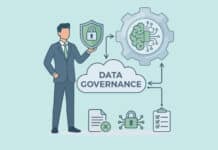
Next, consider model integrity — poisoned training data or compromised retrieval indexes can drive suggestions towards the backdoor. Use provenance checks, controlled knowledge bases, and monitoring for anomalous recommendations. Then there’s governance, which needs entirely new policies, such as defining acceptable usage, audit logging of prompts and actions, mapping to compliance (e.g., data residency, access control). For regulated sectors, implement ʽprivacy-by-design’, including role-based access, minimal data exposure, and clear responsibility when decisions are influenced by AI.
Tools like Google Antigravity, Claude Cowork, and GitHub Copilot are not only accelerating traditional activities but also reshaping the very nature of software engineering. By automating mundane tasks, enhancing collaboration, and embedding intelligence throughout the SDLC, these platforms empower professionals to focus on innovation, problem-solving, and delivering value. As AI continues to advance, the boundaries between human ingenuity and machine assistance will blur further, ushering in an era where software development is not just faster and more efficient, but also more creative and resilient.