
























































MiniMax has launched its M3 coding model with a one-million-token context window and claims benchmark wins over GPT-5.5 and Gemini 3.1 Pro. However, the company has yet to release key training code and inference components, highlighting the growing divide between open-weight AI and fully open-source models.
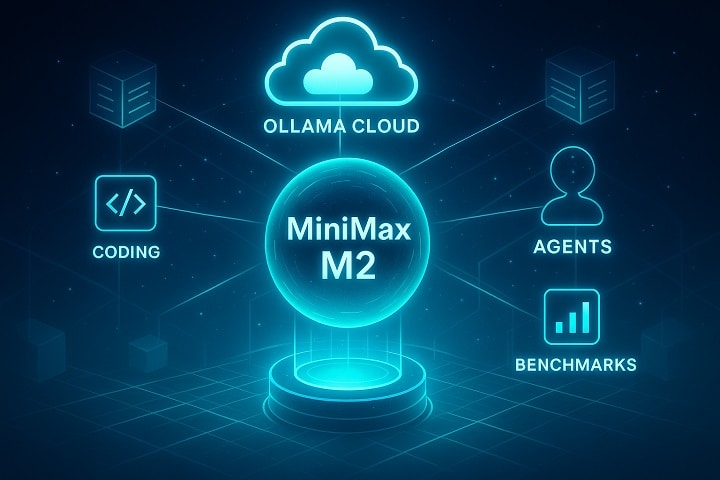
Chinese AI startup MiniMax has unveiled MiniMax-M3, a flagship coding-focused AI model that positions the company more aggressively in the increasingly competitive open-source and open-weights AI landscape, even as it stops short of fully open-sourcing the technology.
The company said M3’s redesigned architecture cuts computational requirements to as little as one-twentieth of previous levels, reducing inference costs while improving response speeds. M3 can also process up to one million tokens at a time—five times more than its M2.7 predecessor—allowing it to handle long software projects, complex coding tasks, and large-scale automated workflows.
MiniMax claims M3 outperformed OpenAI’s GPT-5.5 and Google’s Gemini 3.1 Pro on the SWE-Bench Pro coding benchmark. In a company-cited test, the model also successfully identified ways to optimise software running on Nvidia Hopper chips.
The model serves as the foundation of MiniMax’s broader agentic AI strategy, supporting multi-agent systems, autonomous project execution, and complex task orchestration. It also underpins Mavis, the company’s recently launched multi-agent platform.
The launch comes as Nvidia’s Nemotron 3 Ultra, Moonshot AI’s Kimi, and DeepSeek continue advancing open-source and open-weights AI development. However, MiniMax has not released M3’s training code or inference operators, meaning the model cannot currently be classified as fully open source.
The launch follows MiniMax’s IPO preparations and comes amid strong business momentum, with 2025 revenue reaching US$79 million, up 159% year on year.