



























































A newly proposed graphics driver adds Linux kernel support for a software-based graphics core running on FPGA hardware, simplifying development and testing.
A new direct rendering manager (DRM) graphics driver is being developed for a software graphics processing unit (GPU) core implemented in VHSIC hardware description language (VHDL), where VHSIC stands for very high speed integrated circuit on field programmable gate array (FPGA) platforms. The driver aims to enable graphics support with the Linux kernel and to help developers in gathering feedback on the feasibility of integrating the driver into the mainline Linux kernel.
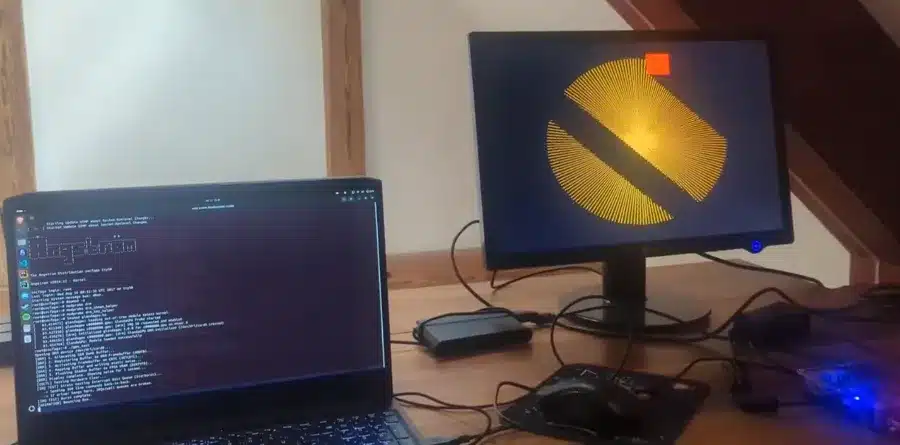
The software GPU core is currently implemented on a Cycle V FPGA SoC and can produce VGA output in 640 × 480 pixel resolution at 60Hz through a 2D acceleration engine. For those who lack an appropriate FPGA platform to test the software, a QEMU emulation is also included in the project.
The proposed graphics driver is currently being reviewed, and feedback from Linux kernel developers is being sought about the suitability of incorporating this driver into the mainline Linux kernel. As of now, there has been no feedback from DRM maintainers on whether to include a driver for a non-commercial software GPU project in the Linux kernel.
The existing version of the DRM driver consists of less than 1000 lines of code, which makes it sufficiently small to analyse and further develop. The source code, documentation, and demonstration video showing how the graphics core works are located on the GitHub repository.
Although the existing software GPU provides only some basic functions of graphics operations, the described project is another step towards the development of open and software-based GPU technologies. The combination of FPGA implementation, Linux kernel support, and software emulation provides a practical platform for further development and testing.