An industry-led open-source initiative brings together AI, cybersecurity, and technology companies to develop shared tools for securing AI models, agents, and digital infrastructure.
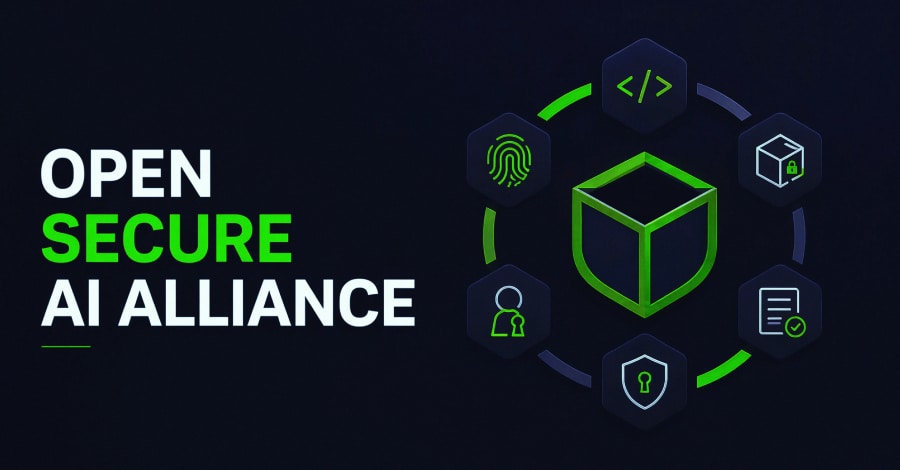
NVIDIA has announced the Open Secure AI Alliance (OSAIA), which is a consortium made up of 37 founding organisations, working together to make AI safer and more secure by harnessing the power of open source technologies. The alliance builds on the Akrites initiative at the Linux Foundation and OpenSSF community and is aiming to develop, validate, and distribute tools that will assist organisations in finding vulnerabilities, auditing AI systems and cyber defences.
The founding members include technology, cybersecurity, and enterprise software companies such as Adobe, Cisco, Cloudflare, CrowdStrike, Databricks, Dell Technologies, Hugging Face, IBM, Microsoft, Palantir, Red Hat, SAP, Siemens, Snowflake, and SpaceXAI. Members will contribute open models, datasets, testing tools, and security tools that can be inspected, modified and deployed across different AI environments.
Among the initial contributions made by the founding organisations include NVIDIA’s NOOA, an open platform for testing and auditing AI agent behavior. Other contributions include Microsoft’s MDASH, a tool for multi-agent vulnerability discovery and SpaceXAI’s Grok Build coding agent.
According to NVIDIA, one of the factors behind the creation of the alliance is a recent security incident involving Hugging Face, which highlighted the limitations of relying solely on closed AI systems during cyber incident investigations. It became clear that only open AI models and security tools make it possible for defenders to inspect, modify, and use advanced artificial intelligence models on their own infrastructure.
The Open Secure AI Alliance aims to increase trust and transparency in AI systems and make these technologies more resilient through collaborative development of artificial intelligence security tools.