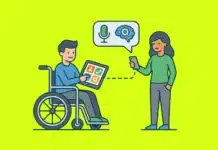






















































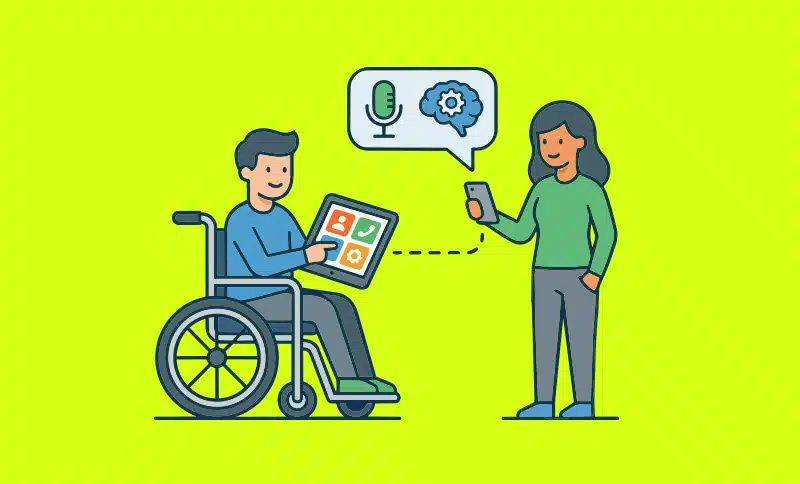

My work with Endosulfan-affected communities in northern Kerala led me to explore AAC tools and open source solutions that can help individuals with communication challenges express themselves more effectively.
I am from northern Kerala, and for nearly two decades I have been associated with groups working with people affected by Endosulfan exposure in Kasaragod district. Through this work, I have interacted with many individuals with Down syndrome, autism spectrum disorder, and cerebral palsy.
One thing I observed repeatedly was the challenge of communication. Many of these individuals have thoughts, emotions and needs just like everyone else, but expressing them is often difficult. This motivated me to look more closely at technologies that can help people communicate better.
Down syndrome, autism spectrum disorder and cerebral palsy are not the same. Down syndrome is a genetic condition caused by an extra copy of chromosome 21. Autism spectrum disorder primarily affects social interaction and behaviour, although it varies widely from person to person. Cerebral palsy mainly affects movement and motor functions, and many individuals with cerebral palsy may have perfectly normal intelligence.
I remember a professor from Kasaragod who had cerebral palsy. He had completed his higher education, cleared national-level examinations and was working as a faculty member. Yet he was denied entry into an aircraft because people assumed he could not travel independently. Experiences like these remind us that we should not judge a person’s abilities based solely on appearance.
Why communication matters
Over the years, I have met many people who faced significant communication barriers. In some cases, communication becomes a bigger challenge than the condition itself.
Today, we have the resources and technology to address many of these issues. Communication is closely linked to dignity, independence and participation in society. If a person cannot communicate effectively, opportunities in education, employment and everyday life become limited
This is where Augmentative and Alternative Communication (AAC) systems become important. AAC refers to tools and methods that help people communicate when speech alone is not sufficient. These can range from simple communication boards to advanced electronic systems.
Some AAC solutions are very simple. Communication boards, picture cards and sign language systems are examples of low-tech approaches. There are also high-tech systems that use touchscreens, speech generation and eye-tracking technologies.
What matters is not whether a solution is high-tech or low-tech but whether it helps a person to communicate.
Looking for a practical solution
While working with our community, we were exploring the possibility of developing an AAC solution ourselves. During this process, we came across CBoard, a free and open source AAC platform.
What attracted us to CBoard was its simplicity. It works on desktop computers as well as mobile devices. It can be customised easily, works offline and does not require specialised hardware. Its offline capability is particularly valuable in rural and remote areas, where reliable internet connectivity may not always be available, allowing users to communicate without depending on continuous network access.
Most importantly, it is available as open source software. For communities and institutions with limited resources, cost is a major concern. Many proprietary AAC solutions are expensive.
Open source platforms offer an opportunity to build affordable solutions while allowing communities to contribute improvements and local adaptations.
Supporting Indian languages
While using CBoard, we encountered a challenge that I found surprising.
Despite Kerala’s high literacy levels, Malayalam support was not available on the platform until recently. We approached the developers, and Malayalam was eventually added. The localisation effort was carried out by a team of student volunteers led by Febin K. Dominic, who worked with me to translate and adapt the communication boards into Malayalam. This collaborative effort showed how community participation can make open source assistive technologies more accessible and relevant to local users. However, this experience highlighted a larger issue.
Even today, support for Indian languages remains limited. Languages spoken by millions of people, including Tamil, Telugu, Kannada, Marathi, Gujarati and Odiya, need stronger representation in assistive communication technologies.
Language support involves much more than translation. The quality and naturalness of speech output depend not only on the AAC software but also on the underlying text-to-speech (TTS) engine available for the selected language. Pronunciation is often inaccurate; speech output may sound anglicised and automated translations can produce poor results. These issues affect the overall usability of AAC systems.
Why localisation matters
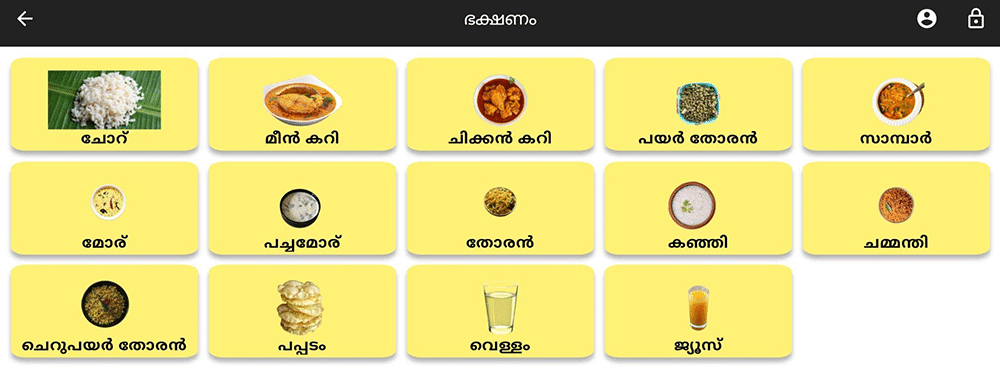
Many communication boards are designed for users in the West. For example, consider communication boards representing various food items, where the pictures and vocabulary should reflect foods that are used daily. These often contain items such as pancakes, pasta or porridge.
When we worked with Malayalam-speaking users, we found it more useful to create customised boards containing familiar items such as rice, sambar, papadam and water. A communication tool becomes more effective when it reflects the language and culture of the people using it.
Beyond software
Software alone is not enough. During our work, we tested the software on a Lenovo IdeaPad Flex 5 convertible laptop powered by an AMD Ryzen 5 7530U processor with 16GB RAM and a 35.56 cm (14-inch) touchscreen display. For audio output, we used a Mivi Play portable Bluetooth speaker, which provided clear and sufficiently loud speech synthesis during demonstrations.
Based on our experience, a touchscreen laptop of this kind is the most recommended hardware for AAC applications because the larger interactive display and full computing capabilities make it easier for many users to communicate effectively. However, specialised hardware is not essential. CBoard also runs well on tablets and even smartphones, making assistive communication accessible to individuals and institutions with limited resources.
We found that touchscreen laptops often work better for many users than smartphones or tablets. Some individuals have difficulty holding devices, while others require larger interfaces for interaction. The customised software and the touchscreen laptop used during testing were later donated to a special school, demonstrating that the project was not merely a proof-of-concept but a practical solution deployed for real users.
Screen readers are also important because many users cannot read text independently. Gaze-tracking systems can help individuals who are unable to use conventional input methods. These technologies can significantly improve communication and independence.
There is also a need for affordable open source hardware solutions. Refreshable Braille displays and accessibility devices remain expensive for many users and institutions.
The role of community participation
One lesson I learned is that accessibility cannot be achieved through technology alone. At the same time, accessibility solutions should be developed in accordance with recognised accessibility standards and universal design principles so that they are usable by the widest possible range of people.
Community participation is essential. Automated translation often produces errors, and many words require local knowledge to be translated correctly. Communities can contribute by creating vocabulary sets, correcting translations and developing culturally relevant communication boards.
India also needs better image datasets and audio datasets for regional languages. As AI-powered tools become more common, the availability of quality language resources will become increasingly important.
It was wonderful to see initiatives where communities contribute language recordings and datasets. Such efforts can play an important role in improving accessibility technologies in the future.
Looking ahead
I would like to end with an example that I often think about. María del Mar Galcerán Gadea, a politician from Spain who has Down syndrome, was elected to the Valencian parliament. Her story shows that people can overcome significant challenges when society provides the right opportunities and support.
The same principle applies to communication accessibility. Technology alone cannot solve every problem, but it can remove many barriers. Open source platforms such as CBoard, combined with community participation and stronger support for Indian languages, can help create more inclusive communication systems. If we continue working in this direction, we can ensure that more people have the opportunity to express themselves, participate in society and live with dignity.