















































Meta’s open-weight SAM 3 and DINOv3 are running inside U.S. Department of Energy national laboratories, reducing scientific image analysis from months to 15 minutes while enabling AI deployment where closed cloud models cannot legally operate.
Meta’s open-weight artificial intelligence (AI) models, SAM 3 and DINOv3, have been deployed in a live production pipeline across five U.S. Department of Energy (DOE) national laboratories, becoming the only foundation models that can operate inside the agency’s secure computing infrastructure. Running on 300 NVIDIA A100 GPUs at the National Energy Research Scientific Computing Center (NERSC), the SYNAPS-I initiative has reduced beamline image analysis from months to around 15 minutes.
The deployment is possible because the downloadable model weights can be installed, fine-tuned and run entirely within government-controlled systems. In contrast, cloud-based AI services cannot legally process DOE prepublication scientific data because it must remain inside secure national laboratory infrastructure.
The production deployment also supports the DOE’s Genesis Mission, which spans 278 federally funded projects backed by more than $5 billion in federal commitments across 15 or more agencies.
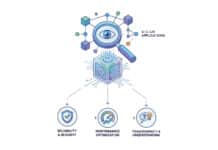
SYNAPS-I combines DINOv3, which interprets scientific images and localises structures, with SAM 3, which performs pixel-level segmentation using natural-language prompts. Together, the models automate analysis of X-ray tomography, neutron scattering and micro-CT imaging, where data volumes have outpaced human annotation.
The system has already demonstrated near real-time analysis of drought-stressed grapevine scans and is designed to expand across all seven DOE Basic Energy Sciences user facilities. Fine-tuned scientific models could eventually be shared through open source channels, extending the benefits to the wider research community.
DOE under secretary Darío Gil said, “By seamlessly combining AI, advanced computing, and experimental systems, SYNAPS-I analyses data as it’s produced and guides experiments in real time, replacing slow manual steps with adaptive, automated decision-making. This compresses discovery time from days to moments and establishes a continuous, self-improving model of science that will be essential to realizing the full potential of the Genesis Mission.”