



























































An open-source remote management system combines Raspberry Pi Pico boards, a Raspberry Pi Zero 2 W, and serial communication to enable centralised monitoring and control of multiple embedded devices.
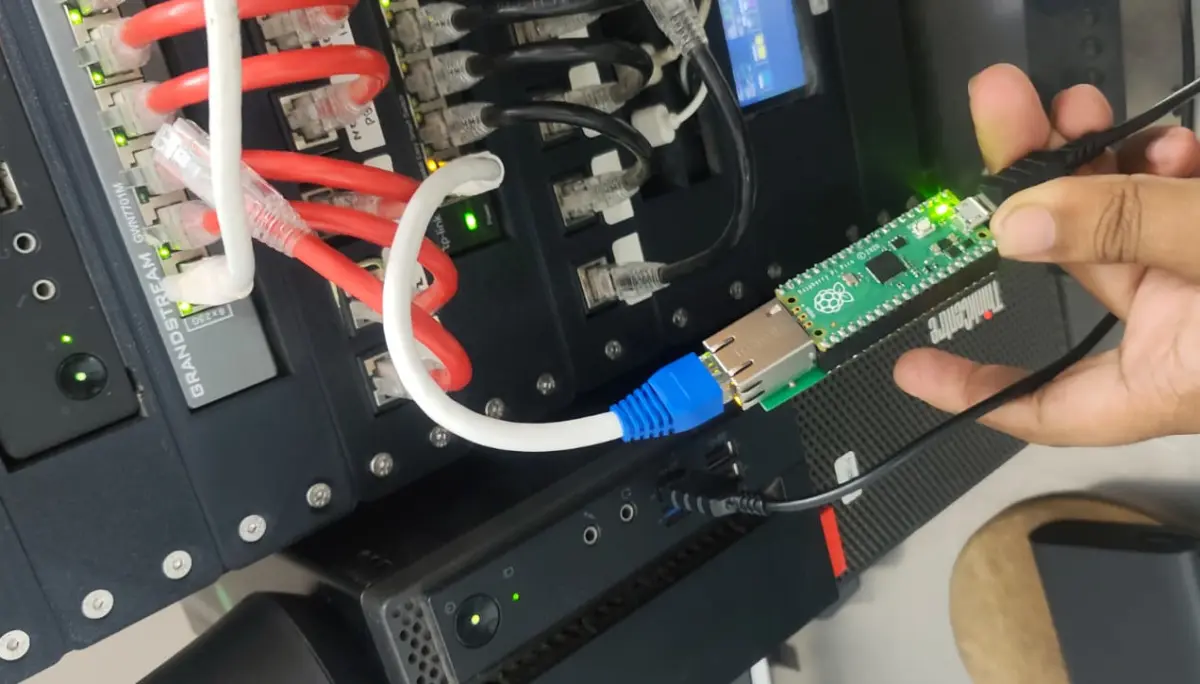
The PicoTTY project introduces an open-source platform for remotely managing multiple serial devices using Raspberry Pi Pico microcontroller boards together with a Raspberry Pi Zero 2 W single-board computer. The system enables developers to access, monitor, and control several serial interfaces through a network-connected management node, simplifying maintenance of embedded hardware installations.
The system uses Raspberry Pi Pico boards as serial interface adapters connected to target devices, while a Raspberry pi Zero 2 W serves as the central controller. This architecture enables multiple serial ports to be managed simultaneously from a single interface, making it suitable for embedded development, testing laboratories, and remote equipment management.
PicoTTY provides remote access to serial consoles without requiring a dedicated server for each device. The modular design allows additional Raspberry Pi Pico boards to be added as required. This enables the system to scale as additional devices are added.
As an open-source project, PicoTTY allows developers to inspect, modify, and adapt its software and hardware resources. This means that developers can use PicoTTY with their systems, automate tasks and integrate it with their existing tools.
By combining Raspberry Pi hardware with open-source software, PicoTTY provides a scalable platform for managing multiple serial-connected embedded devices from a central interface.