






















































Prime Intellects’s Prime Agent, a self-refining harness built around a persistent IPython kernel, surpasses human expert baselines on complex coding and research benchmarks.
On August 6, 2026, Prime Intellect open-sourced Prime Agent, a self-improving coding and research harness released under the MIT Licence. It is designed around two core concepts: the recursive language model (RLM) and the continual harness.
Prime Agent replaces traditional tool schemas and context compaction by providing the model with a single, persistent IPython kernel where tools, skills, and sub-agents operate as Python code. Sub-agents are launched as function calls that return immediately upon admission, delivering their results asynchronously without blocking main execution. Messaging between agents is restricted to immediate parent, child, and sibling instances to prevent cross-session chatter, and inactive sub-agents automatically drop from memory after 30 minutes of idle time.
The continual harness manages the system’s state across four areas: prompt, sub-agents, skills, and memory. Through the /refine command, the agent analyses its execution history to make targeted updates to its working state while leaving its core system prompt untouched. Autonomous execution allows the agent to run within specified turn, token, and time budgets, completing tasks only after passing a designated verification test gate.
When evaluated alongside Opus 5 on the ARC-AGI-3 benchmark, Prime Agent recorded a 95.5 per cent score, surpassing the reported human expert baseline of 95.4 per cent. In practical tests, the system successfully generated working Rust-based emulators for the SEGA Genesis and Game Boy Colour without reference code.
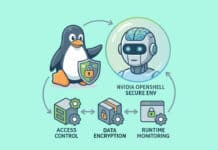
Prime Agent installs on Linux or macOS with a single command and supports major subscription providers, direct application programming interfaces (APIs), and local self-hosted endpoints. Because worker and kernel processes run with local user permissions rather than in a sandbox, isolated or disposable environments are recommended for execution.