


















































TencentDB Agent Memory converts conversations, code, and documentation into secure, reusable assets that AI agents can safely share across teams.
Tencent Cloud released the stable 2.0.0 version of TencentDB Agent Memory on August 3, 2026. It is an open source, team-level memory hub designed for artificial intelligence (AI) coding agents to eliminate the need for repeating project context across separate sessions.
The system converts work outputs into four distinct, reusable memory assets: Chat Memory (interaction history), Skill (reusable procedures), LLM-Wiki (structured document pages), and Code-Graph (indexed code symbols and call relationships). The platform is MIT-licenced, self-hosted, and deployable via three multi-architecture Docker images (linux/amd64 and linux/arm64) using a single command.
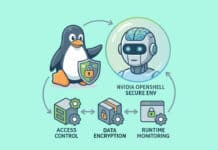
The primary differentiator is its Access Control List (ACL) governance layer, which allows users to share what their AI agents learn with teammates without leaking information marked as private. Chat Memory is processed asynchronously from raw conversations (L0) into distilled layers, namely L1 Atom, L2 Scenario, and L3 Core/Persona, to provide fast context bootstrapping without overcrowding the LLM context window.
When specific facts are required, the system employs a combination of BM25, vector retrieval, and reciprocal rank fusion (RRF) constrained by strict budget caps on item count and characters. The platform includes a memory proxy supporting both Anthropic and OpenAI protocols, alongside official software developer kits (SDKs) for Python and TypeScript.
The 2.0 update introduces scheduled CodeGraph synchronisation, forced archiving for Skills, system-admin asset management, bilingual panel switching, and a “cost guard” feature that routes tasks to cheaper models for specific agents. Tencent Cloud self-reported that the system increased PersonaMem accuracy from 48 per cent to 76 per cent, representing a 59 per cent relative improvement.