
























































The open-source MR-VMU-RT1176 combines an NXP i.MX RT1176 processor with Pixhawk FMUv6X-RT compatibility, redundant sensors and automotive Ethernet for autonomous vehicles.
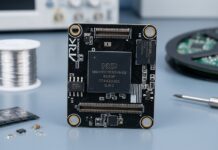
NXP’s MR-VMU-RT1176 is an open-source reference flight controller built around the Pixhawk FMUv6X-RT open standard. Developed with NXP’s mobile robotics team, the PX4 team and industry partners, the design is intended to be replicated, modified and integrated into commercial products while remaining compatible with the broader Pixhawk ecosystem.
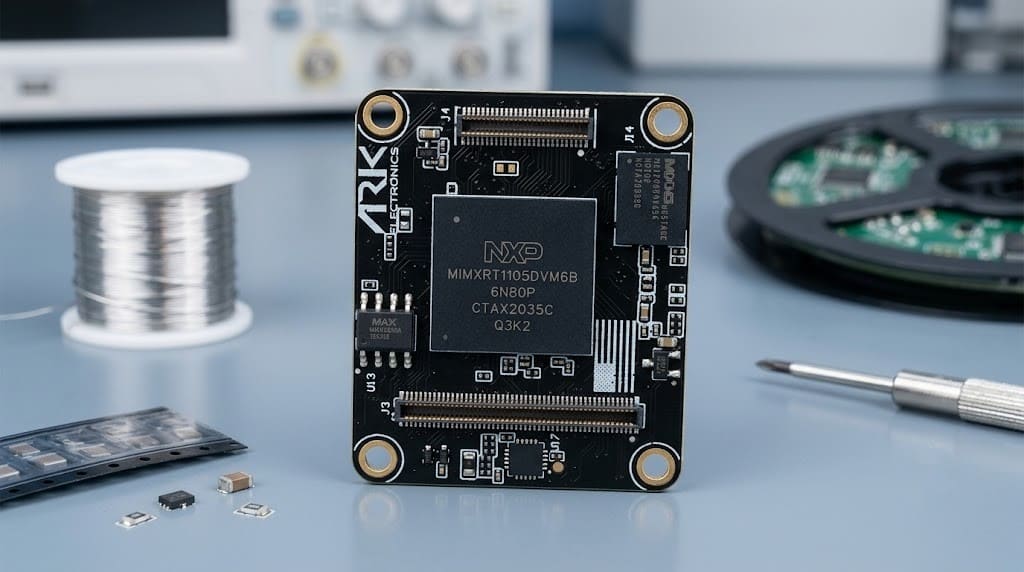
At its core is the i.MX RT1176, a crossover MCU combining a 1GHz Arm Cortex-M7 with a 400MHz Cortex-M4 and 2MB of on-chip SRAM. The controller uses a modular FMU architecture with 64MB of external flash, allowing PX4 to take advantage of the additional processing power for more demanding autonomous-flight workloads.
The hardware is designed for reliability as well as performance. It features triple-redundant IMUs, dual-redundant barometers on separate buses and a temperature-controlled IMU board that allows PX4 to switch automatically to healthy sensors if one fails. Unlike conventional Pixhawk designs, the carrier board removes the separate I/O processor, enabling 12 PWM outputs, with eight supporting DShot for digital motor control.
The controller also expands connectivity beyond the standard Pixhawk feature set. It includes 100Base-T1 automotive Ethernet, a third CAN bus, an NFC antenna connected to an NXP SE051 secure element and support for Pixhawk open standards covering FMUv6X-RT, the Autopilot Bus Standard and the Connector Standard. These additions make it suitable for drones, rovers and other autonomous systems requiring automotive-style networking and secure hardware integration.
As an open-source reference design, the MR-VMU-RT1176 is intended to serve as a foundation for commercial and research flight controllers rather than remaining a single evaluation board. The design has already completed certifications including FCC, CE, RoHS, REACH and UKCA, while compatible products based on the platform are available from third-party manufacturers.
For more information, click here.