
























































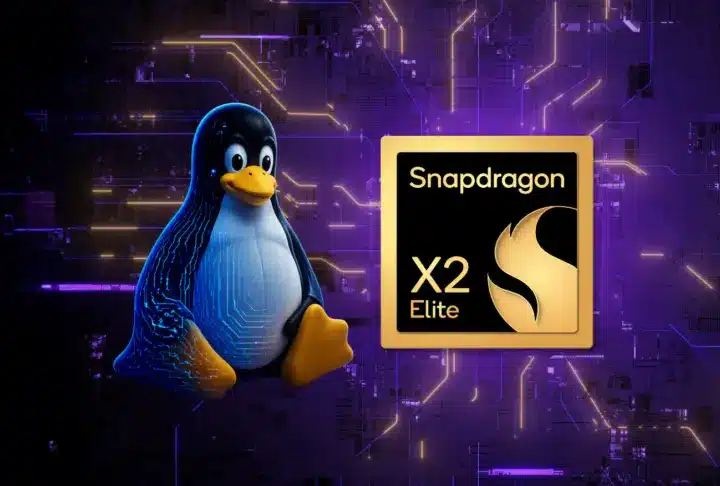

The Early Developer Preview brings upstream kernel support, Adreno GPU enablement and Hexagon NPU work to Snapdragon X2 laptops, giving Linux developers a foundation for native ARM laptop support.
Qualcomm has released an Early Developer Preview of Linux for the Snapdragon X2 Series, marking a major step towards native Linux support on its Arm-based laptop platform. Rather than targeting end users, the release is aimed at Linux distribution maintainers, kernel contributors, toolchain developers and hardware enablement engineers who are working to bring upstream support to Snapdragon-powered laptops.
The preview is built around Debian 13 “Trixie” with a custom Linux kernel and focuses on upstreaming core platform support instead of relying on vendor-specific patches. Qualcomm has included kernel patches, reference device trees and driver work covering the Adreno GPU, Hexagon NPU, USB, PCIe and other core platform components needed for Linux distributions to adopt the hardware more easily.
A key part of the effort is reducing the gap between experimental bring-up and production-ready Linux support. Qualcomm says ongoing work includes broader peripheral enablement, improved system reliability and continued upstream kernel integration, while developers can already build, flash and test Linux images on supported Snapdragon X2 hardware using the published software package and documentation.
The company is positioning the release as the first stage of a broader Linux roadmap. Debian support is expected to mature first, while Canonical is working with Qualcomm to deliver an officially certified Ubuntu image for Snapdragon X2 platforms, currently targeted for 2027.
By releasing the developer preview early, Qualcomm is inviting the open-source community to contribute to kernel, driver and distribution support before consumer-ready Linux laptops arrive. The initiative also reflects a broader push to establish Snapdragon X2 as a Linux platform alongside Windows, giving developers earlier access to the tools needed to build and optimise software for Arm-based AI laptops.