




















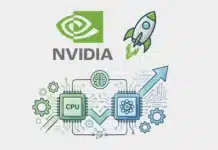































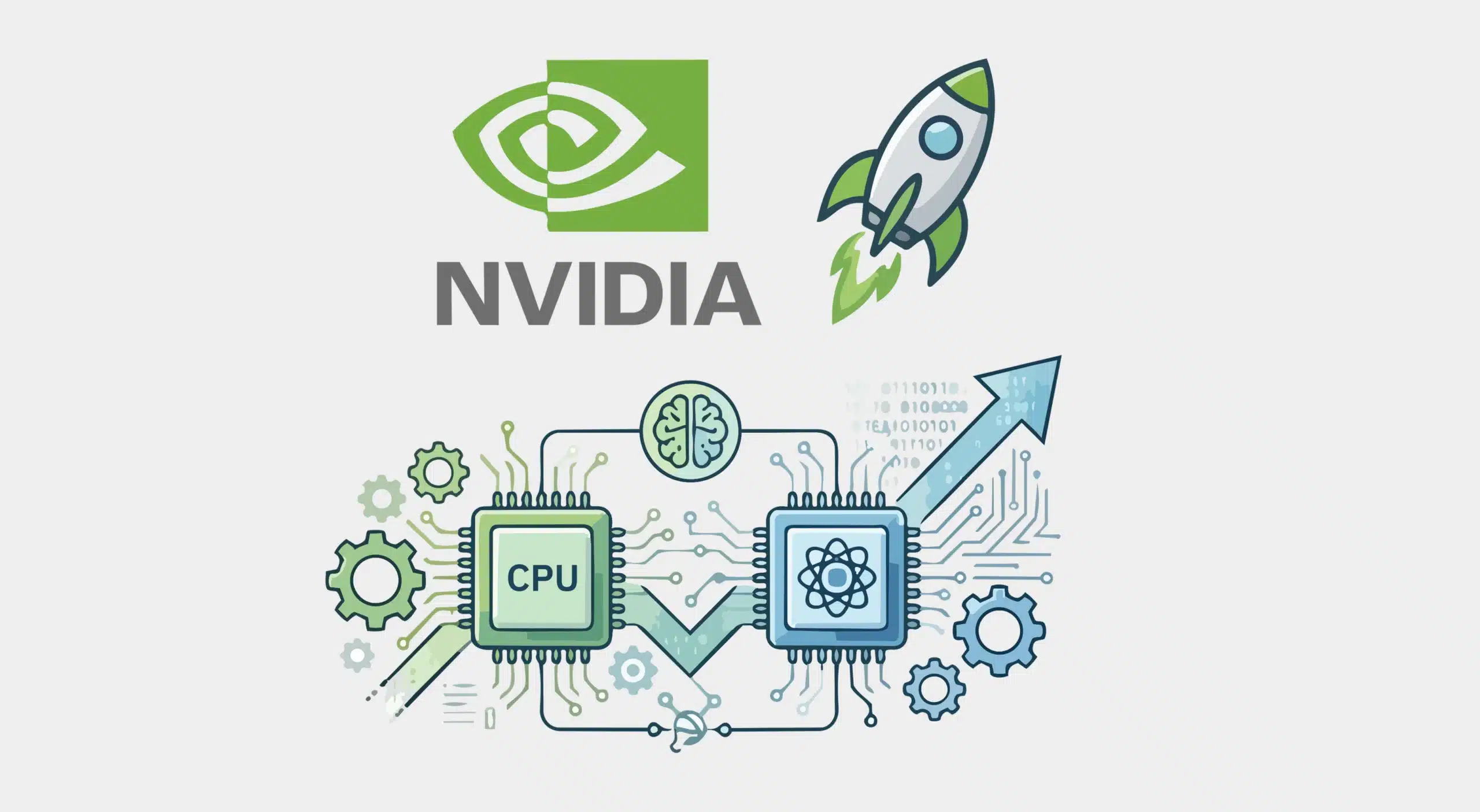

Nvidia is among the front-runners in quantum computing…its open source platform NVIDIA CUDA-Q has a lot to offer in this field.
Quantum computing is an exciting prospect with its promise of solving complex problems at unbelievably fast speeds. Tech giants like IBM and Google are already working at developing quantum systems that make use of qubits rather than classical bits-bytes. Table 1 lists the work that some of these companies are doing at present in this domain.
Table 1: Quantum computers and systems developed by corporates
| Companies | Quantum technology and type |
| IBM, Google, Rigetti, OQC, IQM, Quantum Circuits | Superconducting |
| Quantinuum, Oxford Ionics, IonQ, AQT | Trapped ion |
| QuEra, Pasqal, Atom Computing, Infleqtion | Neutral atom |
| PsiQuantum, ORCA Computing, Xanadu, Quandela | Photonic |
| Intel, Diraq, Quantum Motion | Silicon spin |
| D-Wave | Quantum annealing |
| Microsoft | Topological |
| Quantum Brilliance, XeedQ | Diamond/NV centre |
| Alice & Bob | Cat qubits |
Table 2: Global development on quantum computers by tech giants
| Company | Type | Working pattern |
| Nvidia | Quantum software + GPU/HPC | CUDA-Q, GPU-accelerated quantum simulation, hybrid quantum-classical computing |
| IBM | Superconducting QPU | Qiskit and quantum processors |
| Superconducting QPU | Cirq and quantum processors | |
| IonQ | Trapped-ion QPU | Trapped-ion quantum computers |
| Quantinuum | Trapped-ion QPU | Trapped-ion quantum computers |
| QuEra | Neutral-atom QPU | Neutral-atom quantum computers |
| PsiQuantum | Photonic QPU | Photonic quantum computers |
| D-Wave | Quantum annealing | Quantum annealing systems |
| Xanadu | Photonic | Photonic quantum hardware + PennyLane |
| Intel | Silicon-spin | Silicon-spin quantum hardware |
| Microsoft | Topological | Topological/Majorana approach |
NVIDIA CUDA-Q
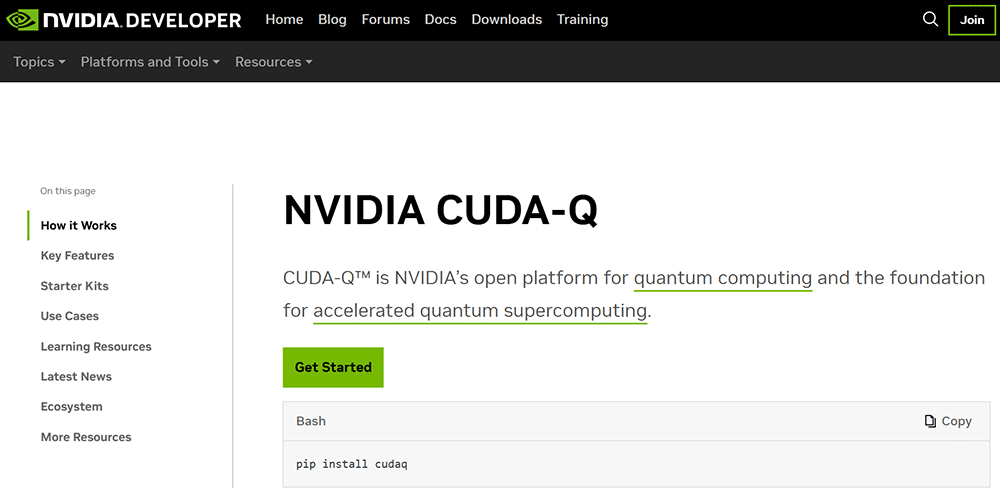
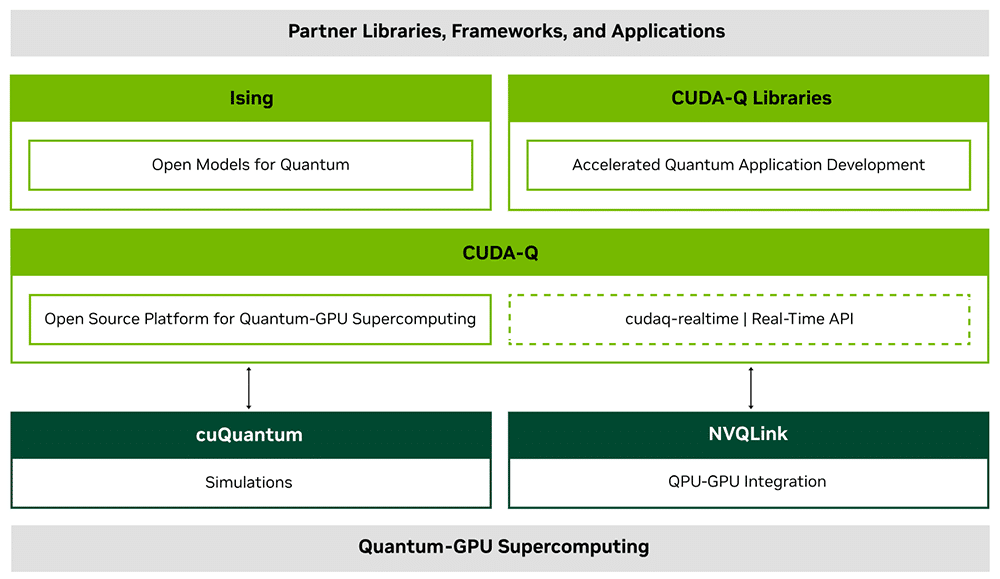
Nvidia, a leader in the AI world, is now also speeding up the arrival of the quantum computing era with the release of the NVIDIA CUDA-Q (https://developer.nvidia.com/cuda-q), a powerful open source platform for the development, simulation and implementation of quantum algorithms. The platform is popularly being referred to as the foundation for accelerated quantum-based supercomputing.
The key features of CUDA-Q are:
- CPU-based quantum simulation
- GPU-accelerated simulation
- HPC integration
- Hamiltonian simulation
- Hybrid quantum-classical computing
- Multi-GPU simulation
- Multiple backend support
- Python and C++ support
- QAOA and VQE
- Quantum algorithm development
- Quantum circuit programming
- Quantum hardware integration
- Quantum machine learning
- Quantum noise simulation
This open source portal can be used for real world, high-performance computing applications that include:
- Fault-tolerant qubits
- Solar energy prediction
- AI for algorithm design
- Divisive clustering
- Molecular generation
- Circuit synthesis
Working with CUDA-Q
To install CUDA-Q, use:
$ pip install cudaq
In addition to a local laptop, CUDA-Q can be used on Google Colab.
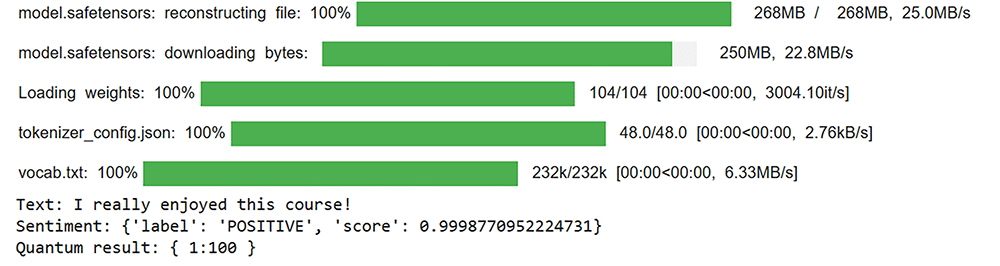
Here’s an example of sentiment analysis using a pre-trained model and CUDA-Q package:
# Import Packages

import cudaq

from transformers import pipeline

# Pretrained model of sentiment for integration with quantum

sentimentanalysis = pipeline(

“sentiment-analysis”,

model=”distilbert/distilbert-base-uncased-finetuned-sst-2-english”

)

mytext = “I really enjoyed this course!”

myresult = sentimentanalysis(mytext)[0]

print(“Text:”, mytext)

print(“Sentiment:”, myresult)

# Conversion of sentiment confidence to a quantum rotation

myscore = myresult[“score”]

# CUDA-Q circuit

currentkernel = cudaq.make_kernel()

q = currentkernel.qalloc()

currentkernel.ry(score * 3.14159, q)

currentkernel.mz(q)

# Quantum simulation

analysiscounts = cudaq.sample(kernel, shots_count=100)

print(“Quantum result:”, analysiscounts)
CUDA-Q Academic
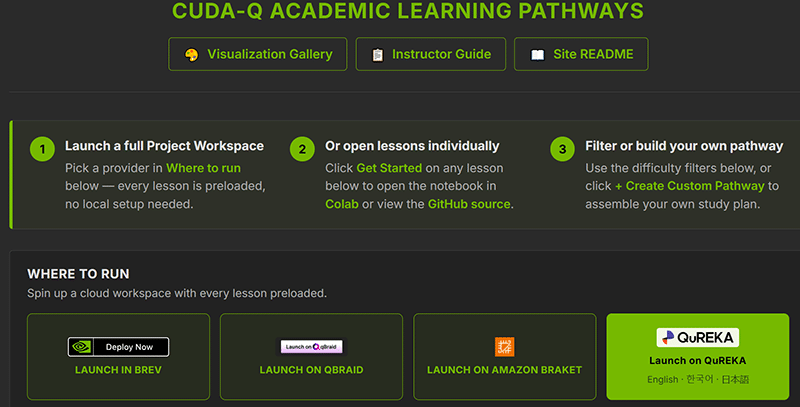
Nvidia’s CUDA-Q Academic (https://github.com/NVIDIA/cuda-q-academic) program is a collection of open source study materials and interactive resources for academics and researchers, which can be used freely for their research work and academic courseware. The portal offers easy to use and understand educational resources for academicians as well as researchers, with the integration of learning pathways.
Nvidia has given an excellent push to the development of quantum computing with its CUDA-Q platforms. By open sourcing them, the tech giant has made these platforms and programs highly available.