



























































OpenObserve has crossed 20,000 GitHub stars, strengthening its position among leading open source observability platforms with an architecture that promises significantly lower costs while supporting enterprise-scale AI and infrastructure monitoring.
OpenObserve’s open source observability platform has surpassed 20,000 GitHub stars, making it one of the world’s most-starred observability projects. Licensed under AGPL-3.0, the company describes its self-hosted edition as production-ready and feature-complete. More than 8000 organisations, including Fortune 100 enterprises processing over 2.5 petabytes of telemetry daily, already run the platform in production.
The company claims up to 140× lower costs than Elasticsearch, crediting its architecture rather than pricing. Instead of using Elasticsearch’s inverted-index design, OpenObserve stores logs, metrics and traces as Apache Parquet files in object storage, with Apache Arrow DataFusion querying the data directly. Combined with Parquet’s approximately 40× compression, this removes index overhead and reduces storage costs.
Written entirely in Rust, the platform runs as a single binary from laptops to petabyte-scale deployments, with stateless nodes communicating through NATS while relying on object storage for durability.
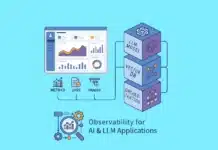
OpenObserve also integrates native LLM observability, correlating AI telemetry with infrastructure logs, metrics and traces. It supports Amazon Bedrock tracing, OpenTelemetry gen_ai semantic conventions, Claude Agent SDK pipelines, MCP server interactions and unified trace correlation across AI and infrastructure workloads.
The self-hosted edition removes per-host and per-seat licensing, with the company claiming customers migrating from Datadog or Splunk typically reduce observability spending by 60–90 per cent. However, independent analysis notes a less mature enterprise support ecosystem, no eBPF-based auto-instrumentation, evolving incident management features and AGPL licensing considerations for commercial deployments. Nevertheless, expansion into AWS Mumbai and continued AI observability enhancements underscore the project’s enterprise ambitions.