
















































An open source MicroPython IDE lets users of Android tablets and iPads program supported microcontroller boards over Bluetooth Low Energy, with local coding, file management, and visual programming.
SciLabPro has developed PyBLE, an open-source, MIT-licensed MicroPython integrated development environment (IDE) that enables programming of microcontroller boards over Bluetooth low energy (BLE). The platform combines a Flutter-based application for Android tablets and iPads with MicroPython support, visual programming through Blockly, and open-source firmware.
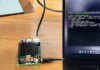
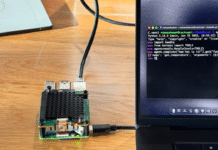
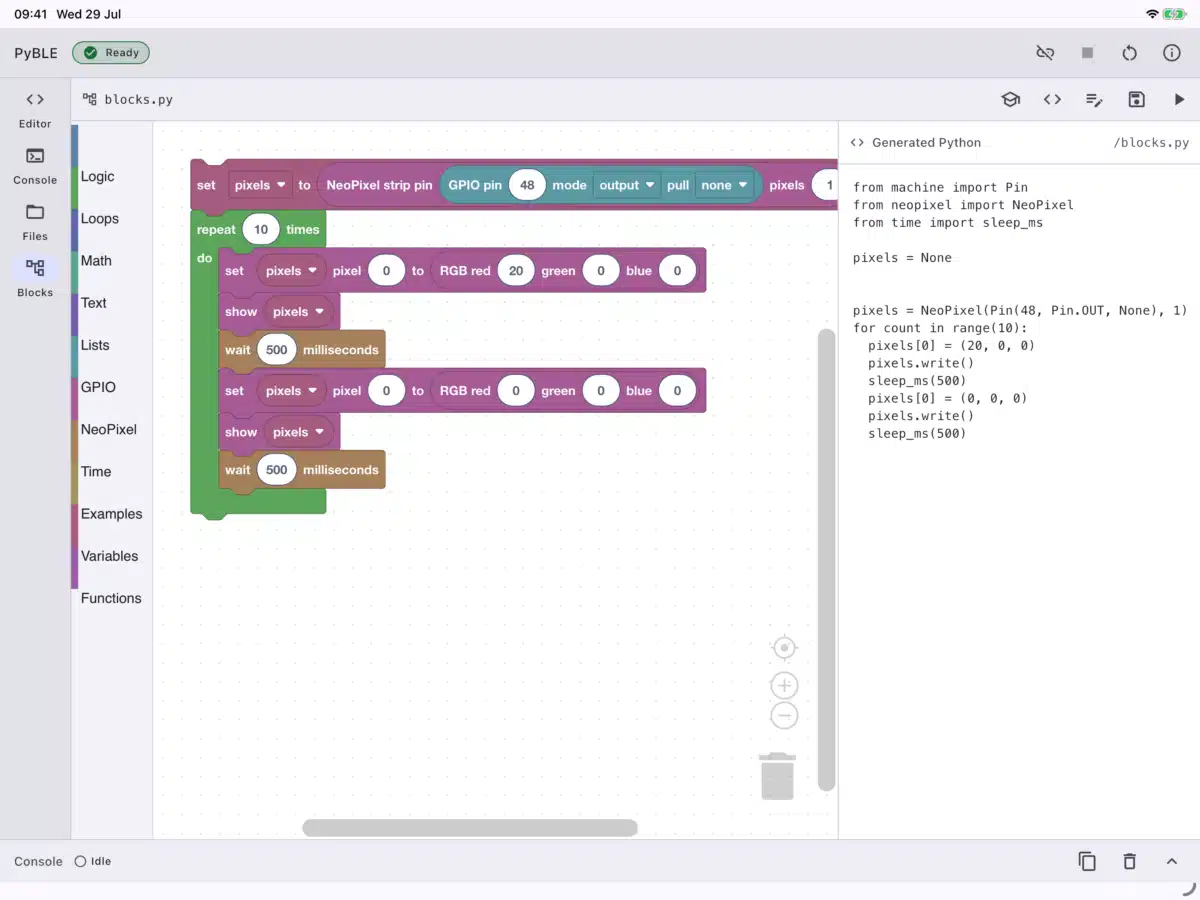
The IDE allows users to edit, save, execute, stop Python programs with the live console option and file management over wireless connections. The BLE discovery process supports the PBLE/1 open protocol, through which the app communicates with compatible boards. Additionally, the application can run without requiring users to log in or connect to the internet.
PyBLE’s Blockly interface contains general-purpose input/output (GPIO) blocks and MicroPython NeoPixel block sets for visual programming. It also provides features for editing beginner tutorials, reopening Blockly projects and importing Python code into Blockly.
The firmware uses MicroPython and implements the PBLE/1 protocol as a Bluetooth low energy GATT peripheral. It supports code execution, program termination, console access, soft reset and wireless file transfer with CRC checksums. Other features include atomic transfers, transfer resumption, board identification and prevention of automatic execution of the main.py script.
PyBLE currently supports firmware for classic ESP32 modules with 4MB of SPI flash, ESP32-S3-N16R8 generic modules with 16MB of flash and 8MB of PSRAM, and the Waveshare ESP32-S3-LCD-1.47B module. Support for ESP32-C3 modules with 4MB of flash is also planned. The firmware source code is available free of charge for developers using custom boards.
Getting started requires an initial PyBLE firmware installation via USB. After installation, users can connect an Android tablet or iPad to nearby boards over Bluetooth and program them using Python or Blockly. An iPad beta version and Android source code are currently available.