






















































This open-source desktop robot combines on-device AI, expressive movement, voice interaction, and touch sensing around Arduino’s dual-brain UNO Q board.
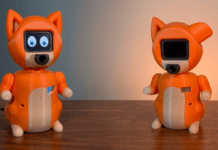
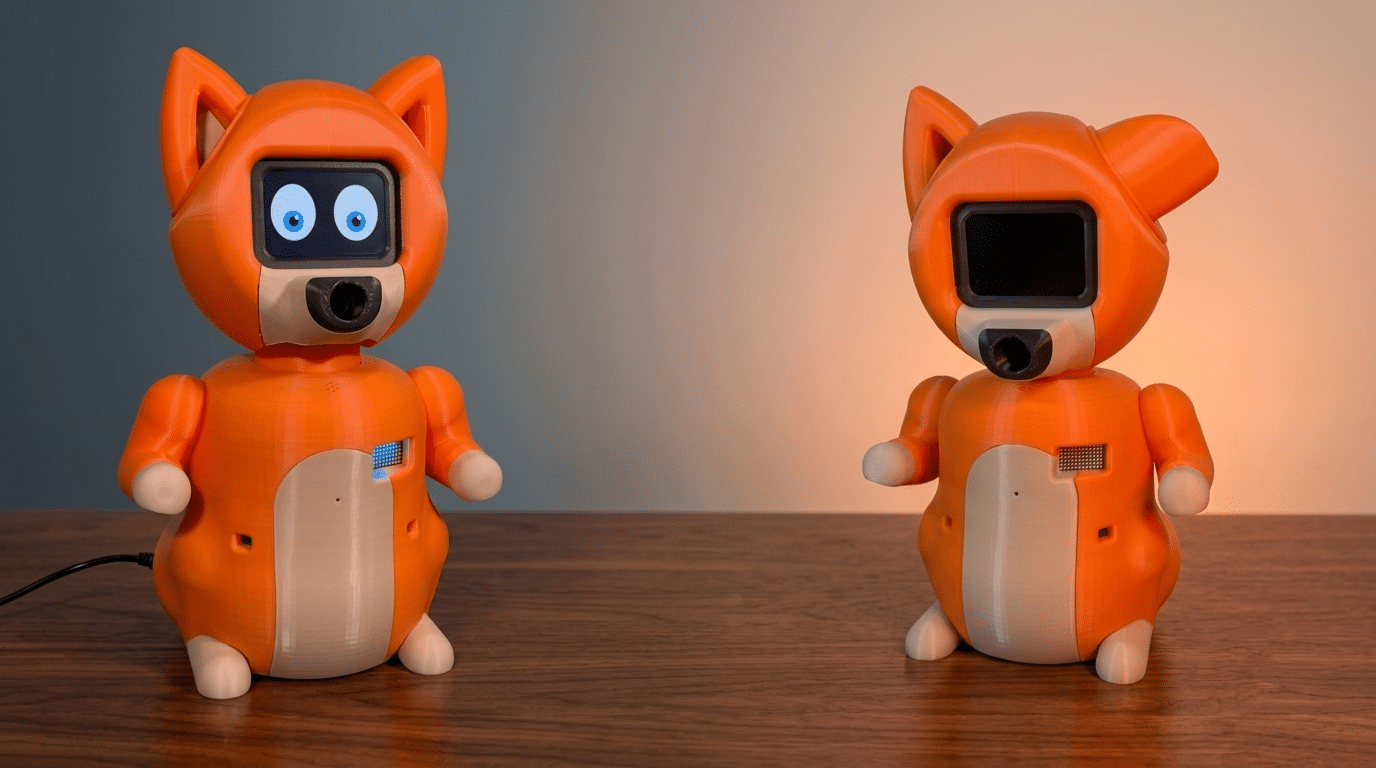
Nuvi is a compact desktop companion developed by Luca Di Lorenzo using the Arduino UNO Q. Standing less than 30 cm tall, the robot can detect when someone approaches, respond to its name and hold conversations. Its design was inspired by Kaito, a Shiba Inu belonging to an Arduino employee, which helped shape Nuvi’s more expressive appearance.
The robot is designed to keep its core functions on the UNO Q rather than depending on a connected PC. Its Linux-capable side runs the AI pipeline, voice engine and application logic, while the real-time microcontroller handles the physical hardware. This includes four servos for the arms and ears, two serial servos for head movement, along with the display, sensors and touch inputs.
For voice interaction, Nuvi uses Gemini to understand speech and generate responses, while Piper provides voice output directly on the board. The robot can also search the web when required and interact with smart-home devices through voice commands or hand gestures. An open-palm gesture can additionally trigger Nuvi to report the room’s temperature and humidity.
Its physical interface combines animated eyes with moving ears, arms and head. Touch sensors on the head and belly provide additional inputs, while the display can show different expressions to match the interaction. The robot also includes a programmed dance, giving the hardware a way to respond beyond conventional voice commands.
The complete project is available through Arduino Project Hub, including 3D files, electronics information, code and a step-by-step build guide. The design can also be customised to resemble a different pet, making Nuvi an example of how the UNO Q’s combination of Linux-based computing and real-time microcontroller control can be used to build interactive AI hardware.