



















































The ESP32-S3-based Open Book Touch combines an e-paper display, capacitive touchscreen, replaceable battery, and open-source firmware for custom e-reader and embedded applications.
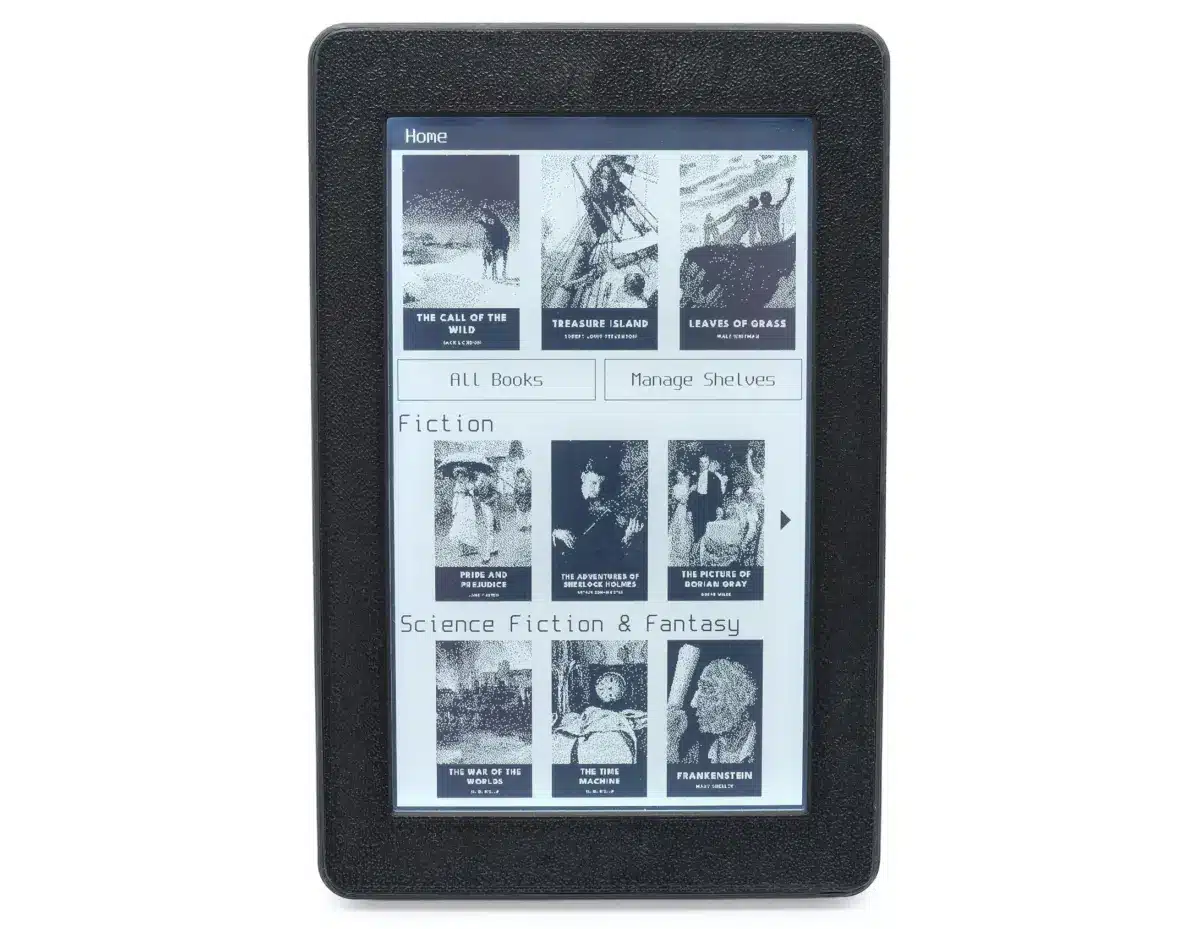
Oddly Specific Objects has launched the Open Book Touch, which is essentially an open source e-reader based on the ESP32-S3 processor. The device is designed not only to serve as an e-book reader but also as an e-paper prototyping platform that boasts a 10.82cm (4.26in) e-paper display (480 x 800 pixels), a capacitive touchscreen, Wi-Fi and Bluetooth LE support, as well as replaceable 800 mAh LiPo battery.
There is 16 MB flash, 8 MB PSRAM, microSD expansion (through a microSD card slot) and a USB Type-C connector for charging and programming. The frontlight features five warm and five cool LEDs that can be adjusted independently. The electronics are protected by a snap-fit 3D-printed enclosure with a CAD file that will come in handy for anyone wanting to customise the mechanical design.
The base firmware is created with the ESP-IDF framework and uses the Focus C++ user interface framework for embedded devices; it is designed to work with limited hardware resources while providing features such as touch navigation, on-screen widgets, gesture recognition and virtual keyboard included. The firmware allows for reading EPUB and plain text files with hyphenation and justification, images inline, multilingual texts via the Unifont library and UI localisation in seven languages, including right-to-left ones. Books can be transferred to the device wirelessly via its web interface without requiring digital rights management.
Besides being an e-reader, the Open Book Touch may also be programmed using either Arduino or CircuitPython and may be used for various e-paper applications, human-machine interfaces and other low power embedded projects. The device is developed following the open hardware principles, with firmware, schematics, PCB files, enclosure design files and source code scheduled to be released under the MIT licence before hardware shipment.