






























































QR decomposition, a classical linear algebra technique, can be used to detect and eliminate linearly dependent and near-dependent columns in the feature matrix.
In machine learning, real-world datasets often suffer from multicollinearity—a phenomenon where feature vectors are linearly dependent or nearly dependent. This redundancy can lead to several critical issues:
Numerical instability: Ill-conditioned matrices make matrix inversion unreliable.
High variance: Unstable regression coefficients that are highly sensitive to small changes in data.
Overfitting: Reduced model generalisation due to noise-sensitive features.
While traditional methods like correlation matrices identify pairwise relationships, they often fail to detect multivariate dependence. This article proposes a systematic approach using QR decomposition, a classical linear algebra technique, to detect and eliminate linearly dependent and near-dependent columns in the feature matrix.
Mathematical foundation
Let…
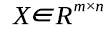
…be a feature matrix, where:
- m = number of samples
- n = number of features
We now introduce QR decomposition as a principled alternative. For a given matrix X, it can be factored as

…where:
- Q is an m×m orthogonal matrix, and
- R is an m×n upper triangular matrix.
In an upper triangular matrix, the diagonal elements reveal the linear dependencies of columns. If any of the diagonal elements are 0 or near 0, it indicates dependency.
Practical implementation in Python
Case A: Full rank matrix
In the case of a full rank matrix all the diagonal entries of R will be non-zero. Let’s take an example:
import numpy as np

# Full rank 3x3 matrix
X_full = np.array([

    [1, 2, 3],

    [0, 1, 4],

    [5, 6, 0]

])

Q_full, R_full = np.linalg.qr(X_full)

print(“Full Rank Matrix R:”)
print(R_full)
print(“Rank:”, np.linalg.matrix_rank(X_full))

Full Rank Matrix R:

[[-5.09 -6.27            -0.58]

 [ 0.             -1.27               -4.96]

 [ 0.             0.                       0.15]]
Rank 3
Observation: The rank is 3, and all diagonal values are significantly different from zero.
Case B: Rank deficient matrix
# Rank deficient 3x3 matrix

X_def = np.array([

    [1, 2, 3],

    [2, 4, 6],

    [3, 6, 9]

])

Q_def, R_def = np.linalg.qr(X_def)

print(“\nRank Deficient Matrix R:”)

print(R_def)

print(“Rank:”, np.linalg.matrix_rank(X_def))

Rank Deficient Matrix R:

[[-3.74 -7.48            -11.22]

 [ 0           1.98*10-15       3.97*10-15]

 [ 0           0             -3.94*10-31]]

Rank: 1
Observation: Here you can see that two of the diagonal elements are almost 0 (1.98×10⁻¹⁵ and -3.94×10⁻³¹). So the rank is 1.
r11 is -3.74 ≠ 0
r22 ≈  0
r33 ≈ 0
In floating-point arithmetic, exact zero rarely appears. Values close to machine precision (≈10-15) are treated as numerical zeros.
Since only the first diagonal entry of R is significantly non-zero, the matrix has rank 1. This implies that only the first column of X is linearly independent, and the remaining two columns are linear combinations of it.
Case C: Real-world application:
NASA Turbofan dataset
To demonstrate this at scale, we apply QR decomposition to the NASA C-MAPSS Turbofan Engine Degradation Dataset.
Now let’s take a real database from Kaggle.com at
https://www.kaggle.com/datasets/bishals098/nasa-turbofan-engine-degradation-simulation?resource=download&select=train_FD001.txt:
import numpy as np
import pandas as pd

# Load NASA dataset
df = pd.read_csv(“train_FD001.txt”, sep=” “, header=None)

# Keep only sensor columns (columns 0 to 25)
X = df.iloc[:, :26].values   # 26 sensor columns

print(“Shape:”, X.shape)

# QR decomposition
Q, R = np.linalg.qr(X)


rank = np.linalg.matrix_rank(X)

print(“Rank:”, rank)
print(“Number of columns:”, X.shape[1])
print(“Redundant columns:”, X.shape[1] - rank)

print(“\nAbsolute diagonal of R:”)
print(np.abs(np.diag(R)))

Shape: (20631, 26)
Rank: 20
Number of columns: 26
Redundant columns: 6

Absolute diagonal of R:
[8.50622114e+03 1.21149103e+04 3.14141179e-01 4.20835556e-02
5.77042252e+03 3.97731246e-10 5.99454189e+01 6.65820338e+02
7.72601912e+02 3.36614676e-13 1.97019588e-01 7.08089878e+01
5.97296214e+00 2.45961341e+03 4.41360662e-14 1.67406676e+01
4.74133747e+01 4.84852689e+00 6.59181616e+02 2.98356370e+00
1.91411652e-16 1.39192962e+02 3.10864101e-11 6.71705315e-13
1.48371815e+01 8.80322651e+00]
Results and interpretation: The output reveals that out of 26 columns, 6 are redundant. When looking at the diagonal of R, several values appear in the range of 10-10 to 10-16.
These near-zero values indicate features that provide no new information to a model. By identifying these via QR decomposition, data scientists can perform feature selection with mathematical certainty, ensuring more stable and efficient machine learning pipelines.