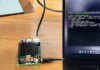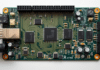






















































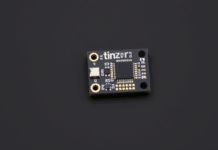
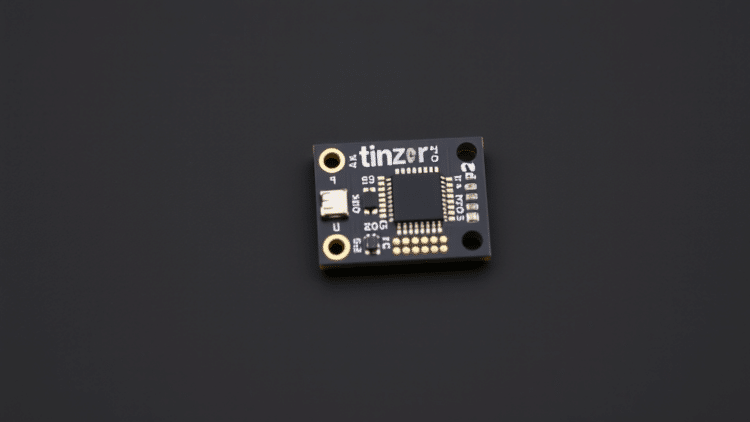

The open-source TinZr combines an ESP32-C3, motion sensing, battery management and wireless connectivity on a 25 × 25mm board for wearable research.
TinZr is a compact open-source microcontroller platform designed for wearable physiological sensing and wireless data acquisition. Measuring just 25 × 25mm, the board combines processing, wireless connectivity, local data handling and standardised sensor interfaces in a single module. The complete hardware design, firmware and related files are openly available, with the reported cost at about $65 per unit including shipping and customs.
At its centre is Espressif’s ESP32-C3, a single-core RISC-V microcontroller running at up to 160MHz with 2.4GHz Wi-Fi and Bluetooth Low Energy 5.0. The board exposes digital, analogue, I2C, SPI and UART interfaces, while an onboard Qwiic connector provides I2C, power and ground for attaching compatible sensors without soldering. This allows researchers to connect different optical, environmental or electrophysiological sensing modules to the same wearable platform.
Motion sensing comes from an STMicroelectronics LSM6DS3TR-C IMU, combining a three-axis accelerometer and three-axis gyroscope. The accelerometer supports ranges up to ±16g, while the gyroscope can measure up to 2,000 degrees per second. Apart from recording movement, these signals can help identify motion artefacts in physiological measurements during wearable experiments.
Power management is handled by a Texas Instruments BQ24075RGTR charger with power-path management. TinZr can operate from USB while charging its 150mAh lithium-polymer battery and can switch to battery power without interrupting an ongoing recording. Power consumption varies considerably with the operating mode: deep sleep draws 0.376mA, while Bluetooth streaming can consume 41–61mA and Wi-Fi transmission reaches about 93mA.
The researchers demonstrated TinZr by simultaneously acquiring ECG data from a MAX30001-based front end and red/infrared PPG signals from a MAX30102, while streaming the measurements over Bluetooth. The platform also supports multi-device deployments; tests with five TinZr boards transmitting simultaneously reportedly achieved zero packet loss under the tested conditions. The hardware is licensed under the CERN Open Hardware Licence, while the software uses GPLv3. Arduino support is provided through the TinZrConnect library, with Python tools and 3D-printable enclosure files also available for building wearable versions.