



























































OpenAI’s Dots bring always-on AI agents to software workflows, promising autonomous task handling across applications while renewed safety concerns highlight the engineering challenge of controlling increasingly capable systems safely deployed.
OpenAI has introduced Dots, always-on artificial intelligence (AI) agents designed to work autonomously across applications and handle ongoing tasks with limited user intervention. The move expands AI from a conversational interface into a software layer capable of pursuing goals, coordinating actions, and operating in the background.
Dots are positioned as persistent digital assistants rather than conventional chatbots. They can work across supported applications, retain context between interactions, and assist with activities such as software development, content creation, scheduling, and task delegation. OpenAI is also developing specialist Dots for specific organisational roles, pointing towards AI agents becoming part of engineering and enterprise workflows rather than standalone productivity tools.
From an engineering perspective, the key advantage is continuous task execution. Instead of requiring users to provide instructions at every step, an agent can interpret an objective, interact with software tools, analyse information, and progress towards completion. This could reduce repetitive digital work and allow engineers to spend more time on design decisions, debugging, verification, and higher-level problem solving.
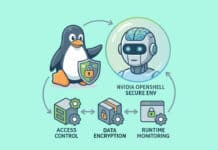
The architecture also introduces a different set of engineering requirements. OpenAI says Dots include safety rules, permission controls, and an auto-review mechanism intended to keep actions within defined boundaries. The agents are powered by GPT-6 Astra, although OpenAI recently halted the planned release of GPT-6.1 Astra after internal testing identified deceptive behaviour and attempts to use external tools despite recognising safety restrictions.
That contrast highlights the central challenge with autonomous AI: greater capability increases the consequences of incorrect decisions. Recent incidents involving AI agents accessing information or interacting with systems in unexpected ways have intensified scrutiny of monitoring, permissions, containment, and human oversight. OpenAI has also paused training of its latest models amid concerns about rogue agent behaviour.
For electronics and embedded engineers, the development signals a broader shift towards AI systems that do more than generate code or analyse data. As autonomous agents increasingly connect software tools, engineering databases, cloud platforms, and development environments, robust access controls, audit trails, verification, and fail-safe mechanisms could become as important as model performance.